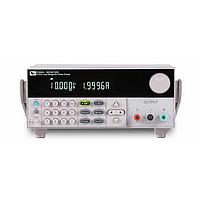
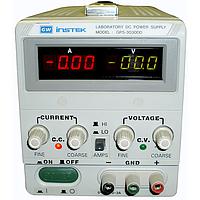
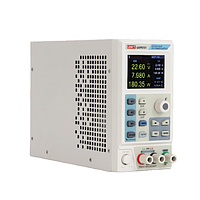
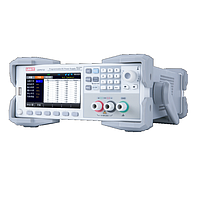
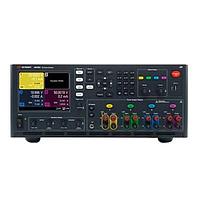
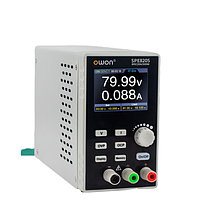
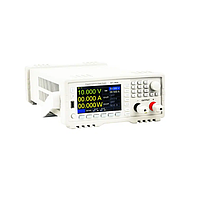
DC Power Supply Adjustable ≤ 1KW
Stable, controllable DC output is a basic requirement in electronics design, production testing, service work, and laboratory validation. When the application calls for flexible voltage and current settings without moving into very high-power territory, DC Power Supply Adjustable ≤ 1KW models are often the most practical choice for benches, racks, and automated test setups.
This category brings together programmable and bench DC supplies designed for applications where precision, repeatability, and protection functions matter just as much as raw output power. It is especially relevant for engineers who need clean power for circuit development, device characterization, burn-in support, or controlled powering of assemblies and subsystems.
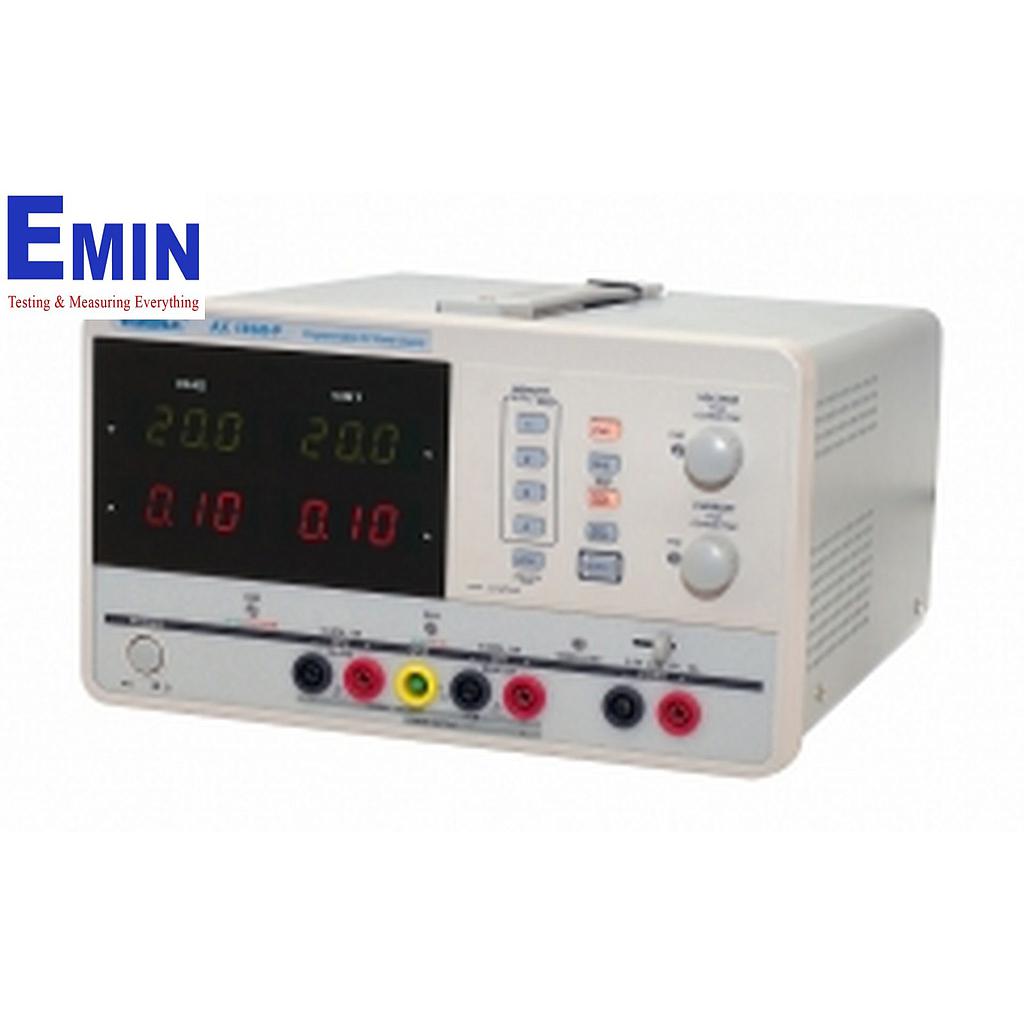
Where adjustable DC supplies up to 1 kW fit best
Supplies in this range cover a wide span of use cases, from compact low-power development benches to heavier current demands in industrial electronics and validation labs. Compared with fixed-output power units, adjustable models give engineers direct control over voltage and current limits, which helps protect prototypes and makes test conditions easier to reproduce.
Many users choose this category when they need a balance of programmable output, manageable size, and lower system complexity than larger high-power platforms. If your requirement moves beyond this range, it may be more appropriate to review high power DC supplies above 1 kW for larger loads or power-intensive validation tasks.
Typical configurations in this category
One of the strengths of this category is the variety of channel arrangements and output architectures. Single-output supplies are commonly selected for straightforward powering tasks, while dual-output and triple-output models are useful when a DUT requires multiple rails such as analog, digital, and logic supply lines from one instrument.
Examples in this range include compact dual-output and triple-output bench units such as the KEYSIGHT E3648A and KEYSIGHT E36312A, as well as multi-channel solutions like the KEITHLEY 2231A-30-3 and KEITHLEY 2230G-30-1. For applications that need more current from a single output while staying below 1 kW, models such as the KEYSIGHT E36155A or KEYSIGHT E36154A illustrate how autoranging power supply designs can support a broader operating window without requiring multiple separate supplies.
There are also application-specific formats within the same ecosystem. A module such as the KEITHLEY MPSU50-2ST shows that not every product in this space is a conventional bench box; some are intended as building blocks inside larger power or test systems.
Key selection criteria for engineers and buyers
Choosing the right adjustable DC supply is not only about voltage and current. In practice, the decision often starts with the load profile: steady-state powering, dynamic current demand, multi-rail requirements, or the need to test across several operating points. Matching the instrument to the real behavior of the DUT can improve measurement confidence and reduce unnecessary oversizing.
Important factors usually include output range, number of channels, resolution, readback capability, ripple and noise, and built-in protection features such as overvoltage, overcurrent, and overtemperature protection. For sensitive electronics, low ripple and noise can be just as important as nominal output power, especially when powering analog circuits, sensors, communication modules, or precision boards.
Interface options also matter in B2B environments. USB, RS232, GPIB, and LAN connectivity support remote control, test automation, and integration into production or R&D workflows. Some setups may also benefit from accessories such as the KEYSIGHT E363GPBU interface module when a specific communication standard is required.
Bench testing, automation, and production use
Adjustable DC supplies in this class are widely used beyond the engineering bench. In manufacturing and service environments, programmable models help standardize repetitive test sequences and reduce operator dependency. Voltage ramps, current limits, memory functions, and remote commands can all contribute to more consistent test execution.
For example, a supply with multiple outputs can simplify fixture wiring in board-level functional testing, while a single-channel high-current model may be better suited for powering converters, motor controllers, or battery-related electronics during validation. If your project also involves different source types, it can be useful to compare with an AC power supply for broader input simulation or line-condition testing.
In some applications, users may also compare these products with a fixed-output AC-DC power supply. The choice usually depends on whether the process requires flexibility and test control or simply stable, dedicated output for one known load condition.
Representative brands and product direction
This category includes products commonly associated with laboratory measurement and automated test environments. KEYSIGHT is often selected for programmable bench supplies that combine broad usability, multi-output options, and integration features suitable for R&D and production support.
KEITHLEY is also well represented in this range, especially where users value precise sourcing, multi-channel bench formats, or modular approaches for test systems. Across the broader power ecosystem, additional manufacturers in this site’s portfolio such as Advanced Energy, CHROMA, HIOKI, Meanwell, OMRON, Rohde & Schwarz, TEKTRONIX, and Teledyne Lecroy provide further context for buyers working across measurement, automation, and power test disciplines.
The practical takeaway is that brand choice should follow application needs: bench convenience, automation interfaces, channel count, current capability, and integration into existing workflows usually matter more than brand familiarity alone.
When to choose single-output, multi-output, or modular solutions
A single-output unit is often the cleanest choice when the load is straightforward and current demand is the priority. This is common in power electronics development, component stress testing, and situations where one rail must be swept across a range of voltage or current settings. Supplies like the KEYSIGHT E36155ABV reflect this direction, offering substantial output within a bench-friendly format.
Multi-output instruments are better suited to embedded systems, mixed-signal boards, and prototyping environments where several rails need to be powered together. Instead of managing multiple separate supplies, one instrument can power 3.3 V, 5 V, and higher analog rails with coordinated control and reduced bench clutter.
Modular solutions become relevant when the power source must fit into a larger platform or automated rack architecture. In those cases, form factor, rear connectivity, and system-level integration may outweigh front-panel convenience.
Practical buying considerations for B2B projects
For procurement teams and technical buyers, the most efficient selection process usually starts with a shortlist built around real operating conditions rather than headline ratings alone. Confirm the required voltage-current combinations, whether outputs must be isolated or independent, how the supply will be controlled, and whether remote sensing is important at the load.
It is also worth considering future expansion. A supply chosen for current prototype work may later need to support regression testing, pilot production, or automated QA. In that context, programmable interfaces, readback accuracy, and protection behavior can have long-term value beyond the initial purchase decision.
This category is a strong fit when you need a controllable DC source that remains practical for bench or system use without stepping into oversized power hardware. By comparing channel structure, control features, and application fit, buyers can narrow the options to a supply that supports both present test needs and more scalable workflows over time.
Get exclusive volume discounts, bulk pricing updates, and new product alerts delivered directly to your inbox.
By subscribing, you agree to our Terms of Service and Privacy Policy.
Direct access to our certified experts