Frequency Counter & Analyzer
Accurate timing and frequency measurements are essential when validating clocks, RF sources, pulse trains, and digital control signals. In many labs, service benches, and production environments, the challenge is not only reading frequency, but also checking period, duty cycle, pulse width, ratio, and long-term stability with confidence. That is where Frequency Counter & Analyzer instruments become especially useful.
Compared with general-purpose test tools, this category focuses on instruments built to resolve time and frequency parameters with high precision, stable triggering, and measurement functions suited to electronic design, communications, calibration, and manufacturing workflows. Depending on the task, users may need a compact handheld counter for field checks, a benchtop universal counter for mixed-signal work, or a higher-frequency analyzer for microwave applications.
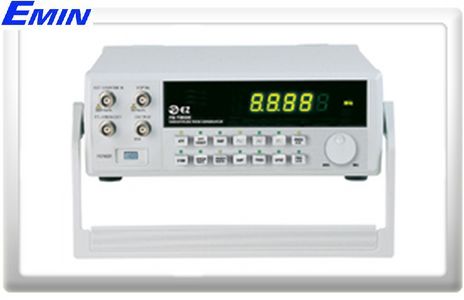
Where frequency counters and analyzers fit in the test workflow
A dedicated counter is typically chosen when the priority is precise numerical measurement rather than waveform visualization. These instruments are widely used to verify oscillator output, measure repetition rate, compare references, and monitor pulse-related parameters in embedded systems, telecom equipment, RF modules, and automated test setups.
They also complement other instruments in the measurement chain. For example, engineers often use a counter alongside an multimeter for broader electrical verification, or combine it with an oscilloscope when both waveform shape and timing accuracy matter. In practical terms, the counter answers “how accurate and stable is the signal,” while the oscilloscope helps show why a signal behaves that way.
Common measurement functions users look for
Modern instruments in this category do far more than display a single frequency value. Typical functions include frequency and period measurement, totalize counting, pulse width, duty cycle, time interval, and ratio measurement between channels. These capabilities are valuable when checking PWM control signals, clock domains, switching behavior, or frequency relationships in communication and timing circuits.
For higher-frequency or more advanced applications, some models extend into microwave ranges and support multi-channel measurement. This is especially relevant in RF development, frequency source verification, and test environments where an internal or external reference is used to improve consistency across instruments. A stable timebase, low-noise triggering, and appropriate input impedance options can make a meaningful difference in repeatability.
Representative instruments in this category
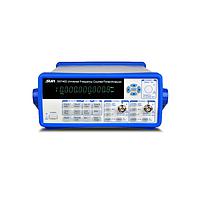
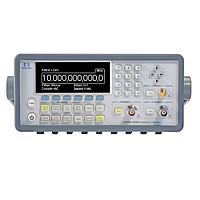
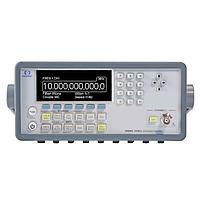
This category includes a range of solutions from portable counters to advanced bench instruments. The TTI TF930 and TF960 are examples of universal counters designed for bench or portable use, with multi-channel capability and support for measurements such as frequency, period, pulse width, duty cycle, and ratio. The TF960 extends coverage further with a 6 GHz channel, making it suitable for users who need broader signal range without moving into a much larger system.
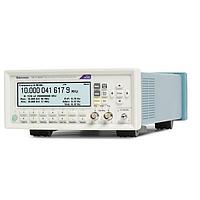
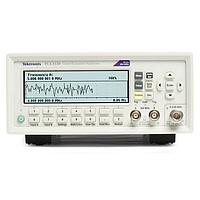
For compact field work, the TTI PFM3000 handheld frequency counter offers a more portable approach for quick checks up to 3 GHz. On the higher-performance side, the Tektronix MCA3027 provides three channels and frequency measurement up to 27 GHz, which makes it relevant for microwave and RF tasks where wider bandwidth and fine time resolution are required.
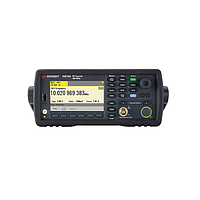
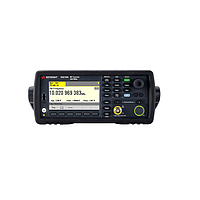
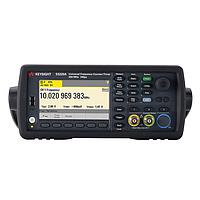
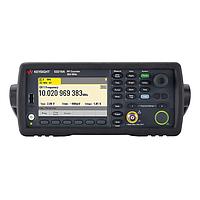
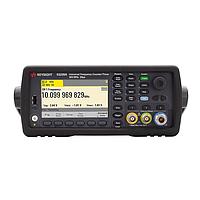
KEYSIGHT also appears strongly in this category with models such as the 53210A, 53220A, and 53230A. These benchtop RF frequency counters differ in channel configuration, resolution, and expansion path, so they can fit anything from routine lab measurements to more demanding automated environments.
How to choose the right model
The first selection factor is the frequency range you actually need to measure. Low-frequency logic, sensor outputs, and standard clock signals may only require coverage in the MHz range, while RF generators, wireless modules, and microwave links can push requirements into several GHz or beyond. Choosing too little bandwidth limits future use, but overspecifying without need can increase cost and complexity.
Next, consider channel count and measurement type. A two-channel instrument may be enough for straightforward frequency verification, but three-channel models are more flexible for ratio measurements, multiple signal paths, or mixed low-frequency and RF tasks. Resolution, gate time, sensitivity, and reference options are also important if you care about small frequency changes, low-level signals, or traceability in calibration-oriented work.
Interface and workflow matter as well. USB and LAN-style connectivity can simplify logging, remote control, and integration into automated systems. If your work involves repetitive validation or production testing, a bench counter with better display, I/O, and memory handling will usually provide more long-term value than an entry-level portable unit.
Why input characteristics and accessories matter
Counter performance depends not only on headline bandwidth, but also on how the signal is presented to the instrument. Input coupling, impedance, attenuation, trigger behavior, and low-pass filtering all influence stability and measurement confidence. Signals with low amplitude, added noise, or fast edges can produce inconsistent readings if the input setup is not matched correctly to the source.
This is why accessories and signal handling components should not be treated as secondary. In some setups, options or add-on channels expand the usable range of the main instrument, while suitable probes or transport accessories help protect equipment and maintain practical usability. Products such as the KEYSIGHT 53210A-106 option illustrate how a system may be extended for higher-frequency CW work, while accessories like transit cases support safer movement between lab and field locations.
Typical applications across industries
Frequency counters and analyzers are used in electronics R&D, communications, industrial maintenance, and education. Common tasks include validating crystal oscillators, checking PLL behavior, monitoring pulse outputs from controllers, and verifying timing performance in embedded boards. In service environments, they help confirm whether a source is present, stable, and within expected range before deeper troubleshooting begins.
They are also useful in more specialized test ecosystems. For semiconductor characterization or device validation, users may work with complementary platforms such as SMU semiconductor test systems when electrical sourcing and frequency-related observations need to be considered together. In RF or motion-related applications, related categories such as Doppler Radar can provide additional context for how frequency measurement supports signal interpretation.
Practical buying considerations for B2B users
In a business environment, the right choice is usually the one that matches both current test requirements and the expected growth of the measurement workflow. A service team may prioritize portability and fast setup, while an R&D lab may focus on channel flexibility, external reference capability, and higher resolution. Production users often care most about repeatability, interface support, and dependable operation over long test cycles.
It is also worth considering whether the instrument will be used as a standalone bench tool or as part of a larger automated system. If reporting, logging, or remote operation is important, select a model with the connectivity and software support needed for that environment. Looking at actual signal type, expected frequency span, and required measurement functions will usually narrow the choice faster than comparing only maximum bandwidth.
Find a counter that matches your signals and workflow
This Frequency Counter & Analyzer category brings together instruments for routine frequency checks, pulse and timing analysis, RF validation, and higher-frequency laboratory work. From handheld TTI units to benchtop KEYSIGHT counters and higher-range Tektronix models, the available options support different levels of precision, portability, and integration.
If you are selecting for a new lab, replacing an older counter, or building a more automated measurement setup, focus on real operating needs: signal range, number of channels, timebase stability, and how the instrument will fit into your daily process. A well-matched counter does more than display numbers; it helps turn frequency and timing data into reliable engineering decisions.
Get exclusive volume discounts, bulk pricing updates, and new product alerts delivered directly to your inbox.
By subscribing, you agree to our Terms of Service and Privacy Policy.
Direct access to our certified experts