Audio analyzer
Accurate audio testing matters wherever engineers need to verify signal quality, distortion, level, frequency response, or channel behavior across analog and digital paths. On this page, you can explore Audio analyzer solutions used for bench testing, product validation, maintenance, and performance troubleshooting in laboratories, manufacturing environments, and professional service applications.
From compact impedance and distortion measurement tools to advanced multi-I/O analyzers, this category covers instruments designed to evaluate how audio equipment actually performs under real test conditions. That includes tasks such as THD+N measurement, FFT-based analysis, level and frequency checks, IMD testing, and switching between balanced and unbalanced signal paths where required.
Where audio analyzers fit in practical test workflows
An audio analyzer is commonly used when standard waveform observation alone is not enough. In many cases, engineers need to quantify distortion, noise, frequency accuracy, and amplitude behavior with greater precision than a general-purpose instrument can provide, especially when working with amplifiers, receivers, transducers, digital audio interfaces, or telecom-related audio circuits.
These instruments support both development and verification. During design, they help compare circuit revisions and confirm target performance. In production or repair, they are valuable for repeatable pass/fail checks, troubleshooting channel imbalance, identifying unexpected harmonics, or confirming that analog and digital stages remain within acceptable limits.
Common measurement tasks in this category
The scope of this category goes beyond a single test function. Many systems combine signal generation and analysis so users can stimulate a device under test and measure the response in one workflow. Typical tasks include THD+N, SINAD, signal-to-noise ratio, frequency sweeps, level measurements, crosstalk checks, and harmonic analysis.
For applications that require broader RF or spectral context, users may also compare audio-focused instruments with a signal analyzer. When the requirement is to inject controlled test tones or sweep signals into a DUT, a dedicated signal generator can also complement the test setup naturally.
Representative instrument types and examples
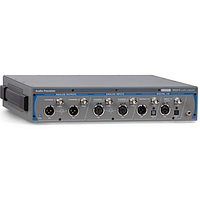
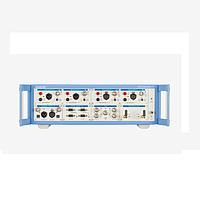
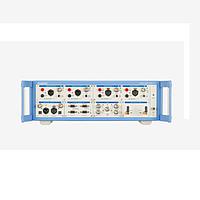
This category includes several different equipment roles. At the higher end, platforms from Audio precision are widely used for detailed analog and digital audio characterization. Models such as the APX515, APx525B, and APX586 illustrate how modern analyzers can cover low-noise measurements, wide frequency ranges, FFT analysis, and multiple input/output configurations for more demanding bench and validation work.
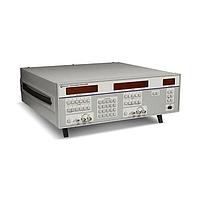
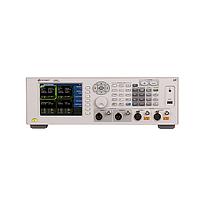
Other examples show how the category serves specialized needs. The KEYSIGHT U8903B is aligned with precision audio measurement tasks such as low crosstalk and input/output analysis, while the Boonton 1121A represents a practical solution for frequency, level, distortion, SINAD, and signal-to-noise measurements. For harmonic and distortion-focused applications, the Clarke-hess 7600 Distortion Analyzer provides a different angle, emphasizing distortion measurement over a wide frequency span.
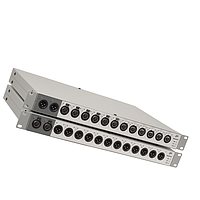
Not every product in this category is a standalone analyzer mainframe. The Audio precision CAB-525 APx525 cable kit is an example of a support accessory that helps integrate an analyzer into a repeatable test environment. Likewise, switching components such as the Stanford Research Systems SR10, SR11, and SR12 support more efficient routing of balanced and unbalanced audio paths in automated or semi-automated setups.
How to choose the right audio analyzer
The most practical selection approach starts with the device under test and the measurements you need to trust. If your work centers on amplifier, codec, or interface verification, check whether the analyzer supports the required analog or digital formats, the expected level range, and the bandwidth needed for your signals. For users focused on production test, interface flexibility and repeatability may matter more than the most advanced analysis functions.
It is also important to match the analyzer to the signal environment. Some applications need balanced and unbalanced I/O, while others depend on digital audio generation, FFT depth, harmonic analysis, or support for IMD methods such as SMPTE, MOD, or DFD. In multi-channel systems, input/output count and switching capability can have a major impact on throughput and test consistency.
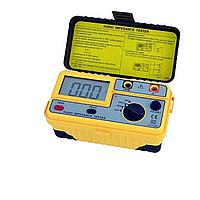
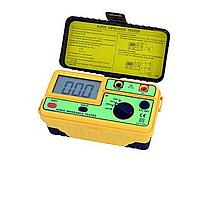
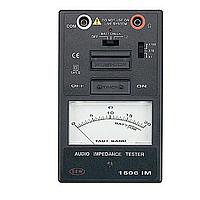
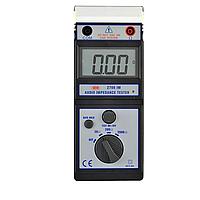
For narrower service or installation tasks, a more specialized instrument may be enough. The SEW 2706 IM Audio Impedance Tester, for example, is more relevant when the priority is audio impedance checking rather than full waveform and distortion characterization. That makes it useful in a different part of the audio test ecosystem than a full-featured lab analyzer.
Single-function tools versus integrated test platforms
One useful way to evaluate this category is to separate special-purpose instruments from integrated audio test platforms. Special-purpose tools are often easier to deploy for one clear task, such as impedance measurement or distortion checking. They can be a good fit for maintenance benches, educational labs, or routine verification where the same test is repeated regularly.
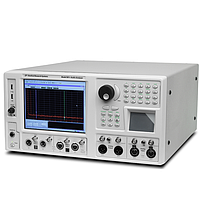
Integrated platforms are better suited to R&D, qualification, and advanced troubleshooting. Instruments like the Stanford Research Systems SR1 Dual-domain audio analyzer or the Audio precision APX series are intended for workflows that combine generation, acquisition, and deep analysis in the same environment. This can reduce setup complexity and improve consistency when comparing multiple designs or product variants.
Manufacturer coverage and application depth
Several established brands appear in this category, each relevant to different use cases. Audio precision is strongly associated with dedicated audio performance analysis and multi-format testing. KEYSIGHT is often considered when users need a measurement-oriented workflow backed by a broader test and instrumentation ecosystem. Stanford Research Systems contributes analyzers and switchers that are especially useful in flexible lab setups, while Clarke-hess and BOONTON represent practical options for distortion and general audio measurement tasks.
This range is useful for B2B buyers because requirements vary widely between engineering labs, production lines, field support teams, and calibration or service environments. Some users need deep audio characterization with low residual noise and high accuracy, while others prioritize straightforward measurements, interface convenience, or switching support for repeated test sequences.
Building a more complete audio and telecom measurement setup
Audio analyzers are often part of a larger measurement chain rather than a standalone purchase decision. Depending on the application, users may pair them with dedicated generators, switching hardware, or other analysis tools to validate both source and response behavior. In mixed-signal environments, comparing audio results with adjacent telecom or electronic measurements can improve fault isolation and speed up debugging.
If your workflow extends beyond audio path verification alone, related categories may also be useful. For example, broader signal characterization may call for a signal analyzer, while source-side validation may benefit from a dedicated signal generator. Choosing the right combination depends on whether your priority is waveform creation, distortion measurement, spectral analysis, or fast routine checking.
Finding a suitable instrument for your test objective
This category is best approached by first defining what must be measured reliably: impedance, distortion, THD+N, SINAD, crosstalk, level, frequency response, or multi-channel routing behavior. Once that is clear, it becomes much easier to narrow the shortlist between compact testers, dedicated distortion instruments, and full-featured analyzers with generation and digital audio capability.
Whether you are evaluating products like the APX515 or APX586 for advanced lab work, considering the KEYSIGHT U8903B for precision audio measurements, or selecting a more specialized tool such as the SEW 2706 IM, the right choice depends on measurement depth, interface needs, and workflow complexity. A well-matched analyzer helps reduce uncertainty, improve repeatability, and make audio test results more actionable across development, production, and service tasks.
Get exclusive volume discounts, bulk pricing updates, and new product alerts delivered directly to your inbox.
By subscribing, you agree to our Terms of Service and Privacy Policy.
Direct access to our certified experts