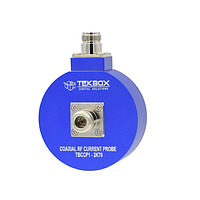
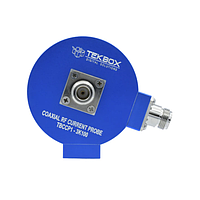
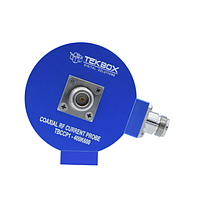
RF Voltmeter
Accurate RF level measurement is essential when working with transmitters, receivers, EMC setups, telecom labs, and high-frequency production lines. In these environments, even small voltage differences can affect matching, signal integrity, compliance checks, or troubleshooting results. This is where the RF Voltmeter category becomes relevant: it supports precise measurement of RF voltage and related signal behavior across a wide frequency range.
On this page, buyers can explore instruments and related RF monitoring solutions used in test benches, development labs, and maintenance workflows. The category is especially useful for engineers who need dependable visibility into RF amplitude, current-induced RF behavior, and measurement chain performance without relying only on general-purpose low-frequency tools.
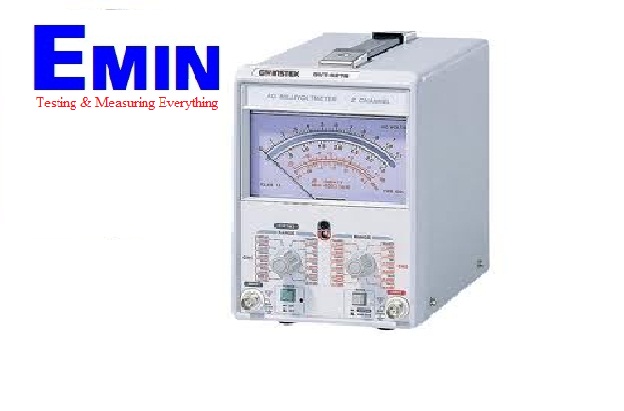
Where RF voltmeters fit in practical measurement work
An RF voltmeter is typically used when conventional voltage measurement methods are no longer adequate at higher frequencies. In RF and telecom applications, parasitics, impedance effects, bandwidth limits, and probe loading can change the reading significantly, so dedicated measurement instruments or compatible RF sensing accessories are often required.
These tools are commonly used in signal path verification, RF circuit development, test setup validation, and electromagnetic compatibility work. In many cases, users pair RF voltage measurement with instruments such as a signal analyzer to understand both amplitude and spectral behavior, especially when evaluating unwanted emissions or signal stability.
Typical applications across telecom, electronics, and EMC
Search intent for this category often comes from engineers who need to verify signal levels under real operating conditions. Typical use cases include checking RF voltage in communication modules, evaluating RF leakage, monitoring induced current on cables, and supporting bench measurements in telecom and broadcast-related environments.
In EMC and pre-compliance work, RF voltage measurement is often part of a broader diagnostic process. A test engineer may inject a known signal from a signal generator, observe system response, and then use RF measurement accessories to localize current paths, coupling effects, or high-frequency disturbances on cables and assemblies.
Understanding the product mix in this category
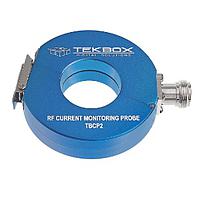
Although the category title focuses on RF voltmeters, the available product examples show that the ecosystem can include RF current monitoring probes and surface current probes that support voltage-related RF diagnostics. In practical measurement work, these accessories are valuable because RF voltage and RF current are closely linked through impedance, coupling, and transmission behavior.
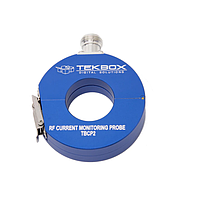
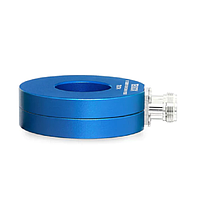
Several representative products in this range come from Tekbox, including the Tekbox TBCP4-500 RF Current Monitoring Probe, Tekbox TBCP4-750 RF Current Monitoring Probe, and Tekbox TBCP3-1000 RF Current Monitoring Probe. These are suited to different frequency windows and physical constraints, making them useful for cable monitoring, bench investigation, and high-frequency troubleshooting.
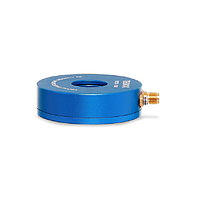
For applications that require monitoring on conductors or surfaces where clamping geometry matters, products such as the Tekbox TBSCP1-10M500 RF Surface Current Monitoring Probes and Tekbox TBSCP1-5M300 RF Surface Current Monitoring Probes can help identify where RF energy is propagating. Larger clamp-style options such as the Tekbox TBCCP1-400K600 and TBCCP1-3K100 also support broader diagnostic workflows where cable size, current tolerance, or bandwidth range are key selection factors.
Key factors when selecting an RF voltmeter or RF monitoring accessory
The first point to review is frequency range. RF measurements are highly dependent on bandwidth, and the suitable model depends on whether the task is focused on lower-frequency conducted effects, VHF/UHF work, or wider broadband diagnostics. Some products shown here extend from very low frequencies up to hundreds of MHz, while others reach 1 GHz for more demanding RF tasks.
The second consideration is connection and physical access. Aperture size, connector type, and probe form factor can determine whether a device fits the cable, conductor, or test point being evaluated. For example, N female and SMA female interfaces appear across the listed models, which matters when integrating the accessory into an existing RF measurement chain.
A third factor is the relationship between transfer impedance, primary current handling, and the intended measurement scenario. In troubleshooting or comparative testing, engineers often need a probe that provides stable, interpretable response across the range of interest rather than simply the widest nominal bandwidth. When working around feed lines or matching networks, it can also be useful to compare results with a VSWR analyzer or a cable and antenna analyzer for a more complete view of the RF path.
Representative models and how they differ
The Tekbox TBCP4-500 is a practical option for users who need broad RF current monitoring from low kHz into the hundreds of MHz. The Tekbox TBCP4-750 extends that usable range further, which can be helpful when testing higher-frequency systems or when maintaining one probe for multiple RF tasks.
For more compact setups, the Tekbox TBCP3-1000 offers a smaller aperture and supports measurements up to 1 GHz, making it relevant where space is limited or higher-frequency content must be captured. Meanwhile, the Tekbox TBCP5-150K400 provides a different aperture size and current capability profile, which may better suit specific cable diameters or setup geometries.
Other models such as the Tekbox TBCP2-30K400 and Tekbox TBCP2-750 can be considered when users need alternative transfer characteristics across a broad range. Rather than choosing by model number alone, it is better to match the probe to conductor size, expected signal content, required connector compatibility, and the instrument chain already used in the lab.
Brands commonly considered in RF voltage measurement
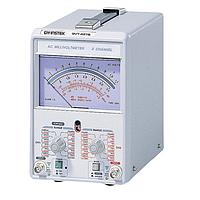
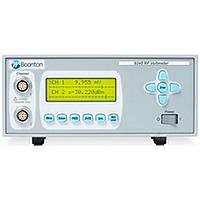
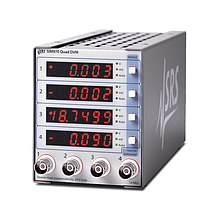
This category highlights manufacturers such as BOONTON, GW INSTEK, Stanford Research Systems, and Tekbox. Each name is relevant in the broader RF and electronic measurement space, and selection often depends on whether the buyer is looking for a standalone instrument, a lab-oriented measurement solution, or an RF accessory that supports an existing test setup.
For procurement teams and engineering buyers, brand choice is usually tied to application fit, measurement workflow, and compatibility with current equipment. Instead of treating all products as interchangeable, it is more useful to compare actual test objectives: calibration needs, bandwidth targets, connector standards, physical installation constraints, and whether the measurement is for development, service, or pre-compliance verification.
How to choose more efficiently for B2B purchasing
In industrial and lab purchasing, the fastest way to narrow down an RF voltmeter or related RF monitoring solution is to define the measurement point first. Clarify whether the task involves direct RF voltage reading, current monitoring on a cable, surface current investigation, or signal-path validation in a telecom or electronics environment.
From there, review the required frequency span, current limits, aperture or geometry constraints, and how the device will connect to the rest of the bench. This approach avoids over-specifying the solution and helps ensure the selected model aligns with real operating conditions rather than only nominal catalog values.
Final notes
This RF Voltmeter category is most useful when viewed as part of a broader RF measurement workflow. Whether the need is direct RF level verification or support tools for diagnosing current-related RF behavior, the right choice depends on bandwidth, mechanical fit, and integration with the rest of the test setup.
By comparing application needs against available models from recognized manufacturers and reviewing complementary RF test instruments where needed, buyers can make a more practical selection for telecom, electronics, and high-frequency laboratory work.
Get exclusive volume discounts, bulk pricing updates, and new product alerts delivered directly to your inbox.
By subscribing, you agree to our Terms of Service and Privacy Policy.
Direct access to our certified experts