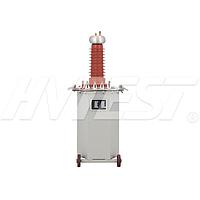
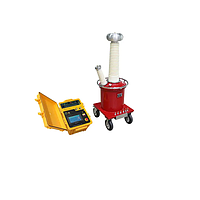
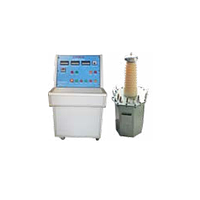
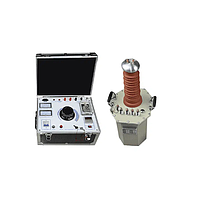
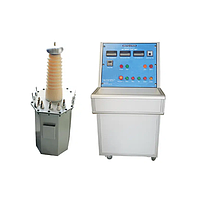
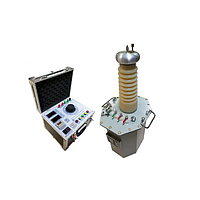
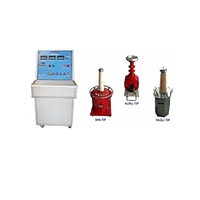
High voltage tester
When insulation quality, dielectric strength, and equipment safety must be verified before commissioning or maintenance, selecting the right high voltage tester becomes essential. These systems are widely used in power utilities, transformer workshops, cable testing, switchgear service, motor production, and electrical laboratories where controlled high-voltage output is required for routine testing or fault prevention.
On this category page, you can explore high-voltage test equipment suited to different voltage levels, capacities, control formats, and insulation media. The range covers compact units for standard AC hipot work as well as AC/DC systems designed for broader dielectric testing tasks.
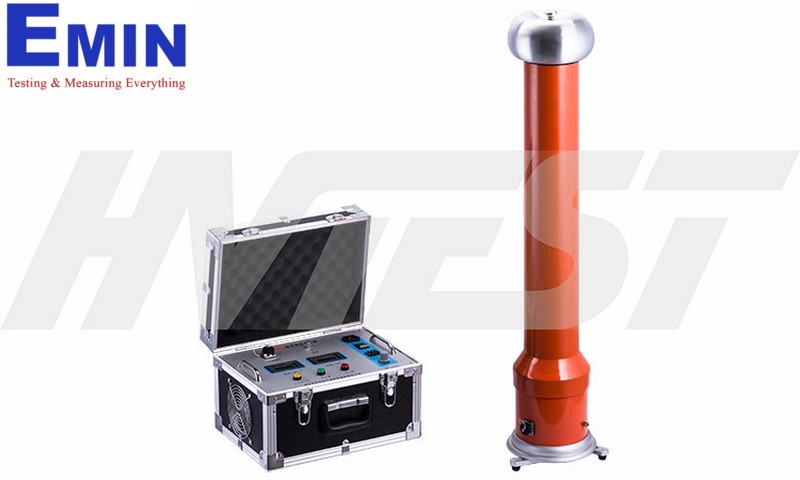
Where high voltage testers are used
In industrial and utility environments, high-voltage testing is part of both quality control and preventive maintenance. A controlled test voltage is applied to confirm whether insulation can withstand operating stress without excessive leakage current or breakdown. This is especially relevant for transformers, cables, motors, bushings, switchgear, and other medium- to high-voltage assets.
Depending on the asset under test, engineers may need a simple AC withstand setup, a combined AC/DC platform, or a larger-capacity system for workshop and field service. In many test programs, high-voltage testing is also used alongside withstand voltage test equipment and related diagnostic instruments to build a more complete view of insulation condition.
Main product types in this category
This category includes several common configurations. AC hipot systems are typically used for dielectric withstand verification, while AC/DC models support broader use cases where either alternating or direct high voltage is required. The available designs also differ by transformer medium and controller format, which affects portability, cooling behavior, and installation preferences.
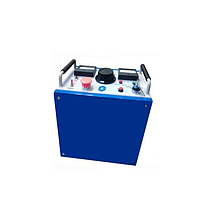
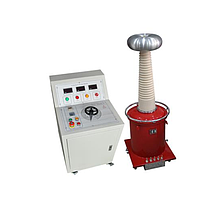
Examples from the current range include the MultiTech MT-505D AC Hipot Testing System for 5 kVA applications and the MultiTech MT-1010D AC Hipot Testing System for 10 kVA duties. For users who need both AC and DC output, models such as the MultiTech MTSB-505E, MTOB-505E, and MTDB-505E provide different construction types while keeping the same general role in insulation testing workflows.
How to choose the right system
The first selection factor is the required test voltage and capacity. Smaller setups may be suitable for routine checks on lower-voltage components, while larger systems are needed for heavier loads or higher-output applications. Capacity, current capability, and test duration all matter because they directly affect whether the unit can handle the intended specimen safely and consistently.
The second factor is output type. If your process only requires AC dielectric testing, a dedicated AC hipot unit may be the most straightforward option. If your team works with mixed test procedures, an AC/DC platform can add flexibility without requiring separate test systems.
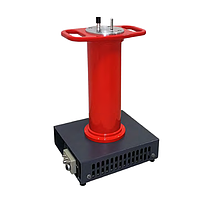
Control style is another practical consideration. Portable box-type controllers can be useful where mobility matters, while panel-type configurations may better suit fixed benches or workshop installations. If your work also involves separate voltage generation hardware, it may be useful to review high-voltage step-up transformers as part of the broader test setup.
Oil, dry, and SF6 type designs
Several featured products in this category are offered in oil type, dry type, or SF6 type versions. These terms generally refer to the insulation and construction approach used in the high-voltage section. The choice often depends on site conditions, maintenance preferences, transport requirements, and the type of test environment where the equipment will be installed.
For example, the MultiTech MT10010AD-ADO AC/DC High Voltage Test System is positioned for higher-capacity testing, while models such as MTSB-10010, MTOB-10010, and MTDB-10010 show how similar test objectives can be delivered through different structural formats. In the same way, MTSP-10010, MTOP-10010, and MTDP-10010 illustrate panel-type control options for users planning bench or fixed-location operation.
Representative brands and product coverage
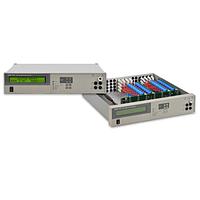
This category brings together equipment from established names used in electrical test applications, including MEGGER, BAUR, PHENIX TECHNOLOGIES, MOTWANE, Vitrek, and MultiTech. Brand selection often depends on the required test method, preferred workflow, and budget range, but the more important point is matching the instrument architecture to the actual duty cycle and test object.
Within the listed products, MultiTech is represented with examples across 5 kVA, 10 kVA, and 100 kVA classes, covering both manual AC hipot systems and broader AC/DC test systems. That spread is useful for buyers comparing compact maintenance units with larger workshop-oriented systems.
Related measurements in insulation assessment
High-voltage testing is only one part of a complete insulation evaluation process. In many projects, teams also look at dielectric losses, capacitance behavior, or frequency-based stress testing to detect aging that may not appear in a basic pass/fail test. For that reason, related categories such as capacitance and tan delta meters can be relevant when a deeper diagnostic approach is needed.
For cable testing and maintenance, some users also compare conventional high-voltage methods with very low frequency testers. The best choice depends on the asset type, applicable procedure, and whether the goal is acceptance testing, periodic maintenance, or more advanced condition assessment.
What to check before ordering
Before selecting a unit, confirm the test standard or procedure you need to follow, the voltage class of the asset under test, and whether AC only or both AC/DC outputs are required. It is also worth checking timing range, measurement visibility, available protection functions, and whether the controller style fits field or bench use.
For B2B buyers, practical details matter just as much as output range. Consider transport, installation space, power supply requirements, operator familiarity, and whether your team needs a simpler manually controlled setup or a more configurable system for repeated test routines. Matching the tester to the workflow will usually deliver better long-term value than selecting by voltage alone.
Finding the right fit for your application
A suitable high-voltage tester should align with the insulation test method, specimen type, and working environment rather than just headline kV figures. This category is designed to help engineers, maintenance teams, and procurement specialists compare AC and AC/DC systems, evaluate oil, dry, or SF6-based constructions, and narrow down equipment by capacity and use case.
If you are building a new test bench or replacing an older system, start with the required output type and duty level, then compare the available configurations across the listed products and manufacturers. That approach makes it easier to choose equipment that supports safe, repeatable, and relevant electrical testing in real operating conditions.
Get exclusive volume discounts, bulk pricing updates, and new product alerts delivered directly to your inbox.
By subscribing, you agree to our Terms of Service and Privacy Policy.
Direct access to our certified experts