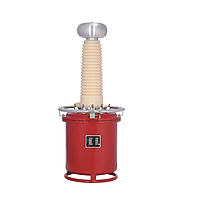
Withstand Voltage Test
Electrical insulation has to be verified before equipment is commissioned, repaired, or returned to service. In many maintenance and production environments, that means applying a controlled high voltage and observing whether the specimen can tolerate the stress without flashover, excessive leakage current, or dielectric failure. This is where the Withstand Voltage Test category becomes essential for quality control, electrical safety, and preventive diagnostics.
On this page, you can explore instruments used for AC, DC, and power-frequency dielectric testing across cables, components, transformers, insulating materials, and dielectric fluids. The product range is relevant for laboratories, service teams, OEM production lines, and utilities that need repeatable test conditions, operator protection, and clear measurement visibility.
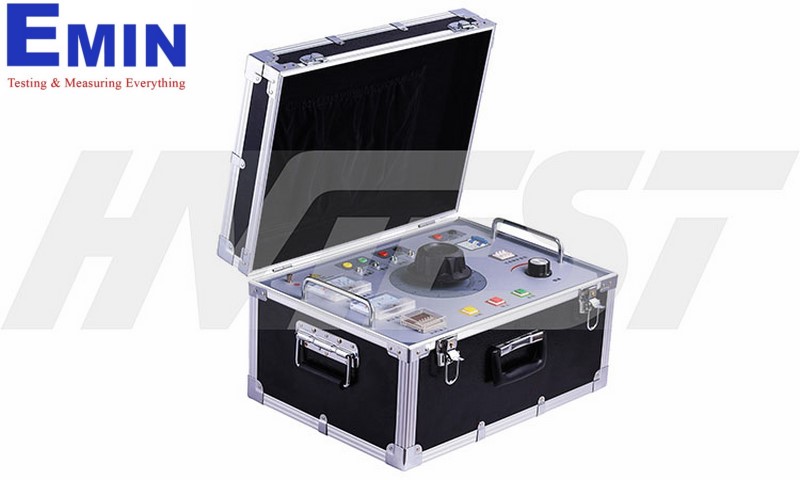
Where withstand voltage testing fits in electrical testing
A withstand voltage test evaluates whether insulation can endure a specified voltage level for a defined time under controlled conditions. In practice, it is often used to detect weak insulation, manufacturing defects, contamination, moisture-related degradation, or inadequate spacing in electrical assemblies.
Compared with routine continuity or low-voltage checks, dielectric withstand testing places the insulation system under much greater electrical stress. Depending on the application, this may involve AC, DC, or power-frequency testing. In broader test workflows, it is also commonly used alongside tools such as a VLF tester for cable diagnostics or a capacitance and tan δ meter for insulation condition assessment.
Typical applications across industry
Withstand voltage instruments are used in both manufacturing and field service. In production, they help verify insulation integrity on finished assemblies before shipment. In maintenance, they support acceptance testing after repair, refurbishment, or installation.
Common use cases include testing switchgear components, cable insulation, motors, transformers, bushings, dielectric materials, and oil-insulated equipment. For liquid insulation assessment, a unit such as the WGM ÖLPG Oil BDV Tester is relevant when breakdown voltage of insulating oil must be checked under controlled test conditions. For broader high-voltage insulation verification, benchtop and field-capable testers in this category provide adjustable voltage and leakage monitoring suited to different specimen types.
AC, DC, and power-frequency test approaches
The most suitable method depends on the asset under test, applicable standards, and the purpose of the procedure. AC withstand testing is widely used because it represents operating stress more directly for many power applications. DC testing is often selected where test setup, specimen behavior, or insulation structure makes DC more practical, especially for certain maintenance routines.
Power-frequency systems are designed to generate controlled test voltage at line frequency and are commonly used for transformer, cable, and apparatus testing. An example in this category is the EPHIPOT EPTC-M Power Frequency Withstand Voltage Tester, which illustrates the type of solution used when higher-voltage AC and DC test capability is required in one platform. In many setups, these instruments are paired with a high-voltage step-up transformer when the test configuration calls for external voltage generation or system expansion.
What to look for when choosing a withstand voltage tester
Selection should begin with the required test voltage, current range, and the nature of the item being tested. A compact tester for lower-voltage components will not address the same tasks as a power-frequency test set intended for larger electrical assets. Leakage current trip behavior, timer control, display readability, and adjustment method also affect daily usability.
For example, the ZEAL range in this category covers several configurations, from lower-range models such as the ZEAL ZMHV5A30 AC High Voltage Breakdown Tester to higher-range AC/DC versions like the ZEAL ZMHV50A50D-02. This gives users a practical spread of voltage and current combinations depending on whether the priority is component testing, material evaluation, or more demanding insulation stress testing.
It is also worth checking whether your procedure requires a digital display, programmable timing, selectable voltage rise behavior, or automatic trip indication. These functions are not just convenience features; they help improve repeatability, support safer operation, and reduce operator-dependent variation from one test cycle to another.
Examples of equipment in this category
This category includes several distinct equipment types rather than a single tester format. Some instruments are intended for high-voltage breakdown testing of electrical materials or finished products, while others are designed for dielectric oil evaluation or power-frequency withstand verification of larger insulation systems.
ZEAL models such as the ZMHV30A30D-30, ZMHV30A30D-50, and ZMHV20A20D-100 reflect the need to match output range and leakage current capability to the test object. The WGM ÖLPG Oil BDV Tester serves a more specialized role in assessing insulating oil performance, while the EPHIPOT EPTC-M represents the type of test set used for more substantial AC/DC withstand applications. For voltage indication and safe measurement support in certain test environments, the AMPTEC RESEARCH 620EXV portable digital voltmeter can also be relevant as part of the wider high-voltage measurement workflow. You can also browse the AMPTEC RESEARCH and ZEAL brand pages for related instruments.
Safety and test workflow considerations
High-voltage testing always requires a disciplined procedure. Even when a tester includes alarm indicators, trip functions, or timed output control, the overall safety of the process depends on proper grounding, clear test boundaries, discharge handling, and suitable fixtures for the specimen under test.
Before selecting equipment, it helps to define the full workflow: test preparation, voltage ramp-up, dwell time, pass/fail criteria, and post-test discharge. A good match is not only about maximum kV rating; it is also about whether the instrument supports the way your team works in the lab, on the production floor, or in field maintenance conditions.
How this category supports maintenance and quality programs
Withstand voltage testing is often one part of a larger insulation assessment strategy. For some assets, it is used as a final acceptance test. For others, it complements diagnostic methods that reveal trending insulation behavior before failure occurs. The right equipment can help maintenance teams standardize test routines and help manufacturers document repeatable electrical quality checks.
When evaluating options, focus on the actual test objective: routine production screening, post-repair verification, oil dielectric evaluation, or higher-voltage field testing. That will usually narrow the choice faster than comparing headline voltage values alone. A well-chosen tester improves consistency, supports operator safety, and provides more meaningful results for decisions on release, maintenance, or further investigation.
If you are comparing instruments in the Withstand Voltage Test range, start with the insulation system you need to evaluate and the test method you are required to perform. From compact breakdown testers to power-frequency systems and oil BDV equipment, this category brings together the tools needed for controlled, application-specific high-voltage testing.
Get exclusive volume discounts, bulk pricing updates, and new product alerts delivered directly to your inbox.
By subscribing, you agree to our Terms of Service and Privacy Policy.
Direct access to our certified experts