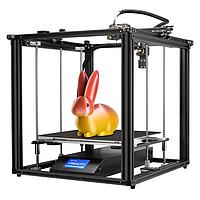
3D Printer Calibration Service
Consistent print quality depends on more than filament settings and slicing profiles. In production, prototyping, education, and engineering workflows, even small deviations in positioning, extrusion, or bed alignment can lead to dimensional errors, poor surface finish, and repeated rework. That is why a professional 3D Printer Calibration Service is important for keeping equipment stable, repeatable, and ready for daily use.
This service category is intended for users who need more reliable additive manufacturing performance rather than trial-and-error adjustments. Whether the printer is used for concept models, functional parts, fixtures, or training, proper calibration helps reduce waste, improve print consistency, and support more predictable output over time.
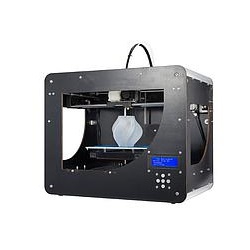
Why calibration matters in 3D printing
3D printers rely on coordinated mechanical movement, controlled material deposition, and stable operating conditions. When one part of that system drifts out of tolerance, the result can appear in many forms: inaccurate dimensions, weak layer bonding, shifting layers, poor first-layer adhesion, or inconsistent geometry from one print to the next.
A structured calibration process helps verify that the machine is operating as intended. For businesses and technical teams, this is not only about improving print appearance. It also supports process repeatability, better material usage, and more dependable results when prints are used for testing, assembly, demonstration, or internal manufacturing support.
What a 3D printer calibration service typically supports
The scope of service can vary depending on the printer type, condition, and application. In general, calibration work focuses on core performance factors that influence print accuracy and machine stability, such as motion behavior, alignment, build platform condition, and output consistency.
For users managing multiple machines or shared lab equipment, calibration also helps create a more controlled workflow. Instead of relying on operator-specific adjustments, the printer can be brought back to a known baseline, making it easier to compare jobs, reduce setup time, and maintain quality across repeated print cycles.
- Improved dimensional consistency for prototypes and practical parts
- More stable first-layer performance and build reliability
- Reduced print defects caused by misalignment or drift
- Better confidence in recurring print jobs and internal quality checks
Suitable use cases for technical teams and B2B environments
Calibration services are relevant in many professional settings, especially where printers are used regularly and output quality affects downstream work. Engineering departments may depend on accurate prototypes for design review, while factories may use printed jigs, fixtures, or supports that need a reasonable level of dimensional control.
Schools, training centers, R&D labs, and service providers also benefit from routine maintenance and calibration. In these environments, printers often operate under changing usage patterns and multiple operators, which can gradually affect performance. A scheduled 3D printer calibration service helps restore consistency and extend the useful working condition of the equipment.
Creality printer support within this category
Where relevant, this category includes support related to Creality equipment. A representative offering is the Creality 3D Printer Calibration Service, which is suitable for users seeking calibration assistance for this brand within a practical service framework.
When evaluating service suitability, it is helpful to consider the actual printing task, the frequency of use, and the type of issues observed in operation. For example, teams experiencing recurring print variation, bed-level instability, or inconsistent part dimensions may benefit from calibration before replacing components or changing materials unnecessarily.
How to decide when calibration is needed
Some signs are easy to recognize, while others develop gradually. Repeated failed first layers, visible dimensional drift, inconsistent print results between jobs, or a noticeable difference after transport or frequent use can all indicate that the printer should be checked. Calibration is also worth considering after long periods of operation, maintenance work, or when machine performance no longer matches previous output.
For business users, the decision often comes down to cost of inconsistency. If failed prints consume machine time, material, and operator attention, calibration can be a more efficient corrective step than repeated manual tuning. It is especially valuable where print quality affects internal deadlines, product development cycles, or customer-facing deliverables.
Calibration as part of a broader equipment quality workflow
In many organizations, 3D printing is part of a wider inspection, testing, and digital manufacturing process. Calibration should therefore be viewed as one element of a broader equipment control strategy rather than an isolated maintenance action. Keeping printers aligned with expected performance makes it easier to support documentation, process discipline, and repeatable output across teams.
If your workflow also involves scanning and digital capture, it may be useful to review related services such as optical 3D scanner calibration. This is especially relevant where scan-to-print or reverse engineering processes depend on accuracy at multiple stages.
Choosing the right service approach
The most suitable service option depends on how the printer is used, how critical the output is, and whether the issue is routine drift or a more persistent performance problem. For occasional users, calibration may be needed after clear signs of inaccuracy appear. For professional users, preventive scheduling is often more practical because it reduces interruptions and helps maintain a predictable printing environment.
It can also be useful to compare service categories if your organization manages different device types. For example, teams responsible for multiple additive systems may want to browse the broader range of 3D printer calibration options alongside related calibration needs in the same operational area.
Support more reliable printing over time
Reliable additive manufacturing depends on stable machine behavior, not only on software settings or operator experience. A well-targeted calibration service helps bring the printer back to a more controlled condition, supports repeatable output, and reduces uncertainty in daily use.
For organizations using 3D printing in engineering, production support, education, or product development, this category provides a practical starting point for improving equipment performance. Reviewing the available service options, including Creality-related support where applicable, can help you choose a calibration path that fits your actual workflow and quality requirements.
Get exclusive volume discounts, bulk pricing updates, and new product alerts delivered directly to your inbox.
By subscribing, you agree to our Terms of Service and Privacy Policy.
Direct access to our certified experts