
Force Gauges Calibration Service
When force measurements are used for product validation, incoming inspection, material testing, or line checks, calibration becomes a practical requirement rather than an administrative task. Even a small deviation in a force gauge can affect test repeatability, comparison between batches, and confidence in recorded results. This is why Force Gauges Calibration Service is an important part of maintaining reliable mechanical and physical testing workflows.
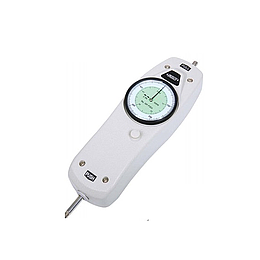
This service category supports organizations that use handheld force gauges, tensile force gauges, tension monitors, and related force-measurement instruments in manufacturing, laboratories, maintenance, and quality control. Whether the device is used for push-pull testing, tension verification, or routine inspection, proper calibration helps confirm that measurement performance remains aligned with the intended application.
Why force gauge calibration matters in daily operations
Force gauges are often used in processes where measurement consistency directly influences product quality. Examples include checking pull force, compression force, opening force, peel strength, or tension in production and testing environments. Over time, normal use, transportation, shock, or environmental conditions can affect instrument response, making periodic calibration a sensible step in preventive quality assurance.
A calibrated instrument helps users reduce uncertainty when comparing results across operators, shifts, or sites. It also supports internal quality systems and can be valuable when traceability is required for audits, technical documentation, or customer-facing test reports.
Typical instruments covered in this category
This category is centered on calibration for a broad range of force measurement devices. In practice, that may include digital or mechanical force gauges, tensile force gauges, and tension-related instruments used in inspection or testing setups. The exact device type may vary by industry, but the core objective remains the same: verify that the instrument indicates force accurately and consistently across its working range.
Representative services in this category include IMADA Force gauge Calibration Service, EXTECH Force gauge Calibration Service, DILLON Force gauge Calibration Service, KERN Tensile force gauge Calibration Service, and ELCOMETER Tension Monitor Calibration Service. For specific application contexts, the range also includes services such as TECLOCK Tension Gauge Calibration Service and Optibelt Tensile Tester Calibration Service.
Common application areas for calibrated force gauges
Calibrated force gauges are relevant in many industrial and laboratory tasks. They are commonly used in assembly verification, packaging checks, tensile and pull testing, wire and cable handling, adhesive-related tests, and general product durability evaluation. In these environments, measurement drift can lead to false acceptance or unnecessary rejection, especially when tolerances are tight.
Some organizations also use force-related instruments alongside other calibrated test systems as part of a broader quality program. For example, facilities working with wear evaluation may also review abrasion tester calibration services, while heat-processing environments may need furnace calibration support to keep testing conditions under control.
How to choose the right calibration service scope
Selecting a suitable service starts with understanding how the instrument is used. A handheld gauge for routine shop-floor checks may require a different service approach than a force gauge integrated into a test stand or a tension monitor used in process verification. Load range, usage frequency, measurement direction, and the importance of traceable results all influence how calibration should be planned.
It is also helpful to consider instrument brand and model when arranging service. This category includes support examples related to IMADA, EXTECH, KERN, DILLON, PCE, TECLOCK, ELCOMETER, Optibelt, Arcotest, and Cometech instruments. Referring to the actual device type helps ensure the calibration workflow matches the measuring principle and intended use case.
Brand and instrument examples within this category
Many users search by manufacturer because force gauges are often selected around an existing installed base. For that reason, this category is well suited for organizations using equipment from established names such as ELCOMETER, KERN, PCE, TECLOCK, and Cometech, in addition to IMADA and EXTECH. The goal is not simply to match a brand name, but to support the practical calibration needs of force-related instruments already in service.
Examples from the listed services show the variety within the category: a standard force gauge, a tensile force gauge, a tension monitor, or a tensile tester may all require calibration attention depending on how the force value is generated and interpreted in the process. Services such as Arcotest Dyne Test Pen Calibration Service may also appear in adjacent quality workflows where surface-related testing and force-related verification are both part of product validation.
Calibration as part of a broader testing and quality system
In many facilities, force gauge calibration is not handled in isolation. It sits within a larger equipment control strategy covering mechanical, physical, and material-related test instruments. When several devices contribute to a single product qualification process, maintaining calibration across the chain can improve result comparability and reduce troubleshooting time.
For companies working with packaging or barrier-property testing, it may be useful to review related services such as water vapor transmission rate system calibration or oxygen permeation system calibration. This kind of coordinated approach is especially relevant where multiple test methods contribute to compliance, development, or release decisions.
What users typically look for before arranging calibration
Before booking a service, most users want to confirm the instrument type, measurement range, current condition, and application context. They may also need to know whether the device is used for tension, compression, or general push-pull measurement, and whether it is a standalone gauge or part of a larger test setup. Having this information ready helps streamline the service discussion and avoids unnecessary delays.
It is equally important to think about calibration intervals in relation to actual operating conditions. Instruments used frequently, exposed to mechanical stress, or relied on for critical acceptance tests may need closer attention than units used occasionally for non-critical checks. A sensible interval is usually based on usage history, internal procedures, and the level of measurement confidence required.
Supporting more reliable force measurement decisions
Force gauge calibration helps keep force-based testing and inspection activities dependable over time. From routine shop-floor verification to more controlled laboratory applications, a calibrated instrument supports clearer decisions, better repeatability, and stronger confidence in recorded values.
If your team uses force gauges, tension gauges, tensile force gauges, or related monitoring instruments from brands such as DILLON, ELCOMETER, EXTECH, IMADA, KERN, Optibelt, PCE, TECLOCK, Arcotest, or Cometech, this category provides a focused starting point for selecting the right calibration service. Reviewing the instrument’s role, usage pattern, and quality requirements will help you choose a service scope that fits the way the device is actually used.
Get exclusive volume discounts, bulk pricing updates, and new product alerts delivered directly to your inbox.
By subscribing, you agree to our Terms of Service and Privacy Policy.
Direct access to our certified experts
