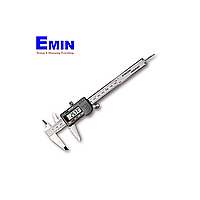
Callipers Calibration Service
Accurate dimensional checks depend not only on the quality of the instrument, but also on confidence that its readings remain reliable over time. In production, maintenance, inspection, and quality control environments, regular Callipers Calibration Service helps verify that a caliper continues to measure within acceptable limits and supports more consistent decision-making across the workflow.
Whether you use vernier, dial, or digital calipers, calibration is an important part of maintaining traceability and reducing measurement uncertainty. This category brings together calibration services for widely used caliper brands and gives buyers a practical starting point when selecting support for routine instrument maintenance.
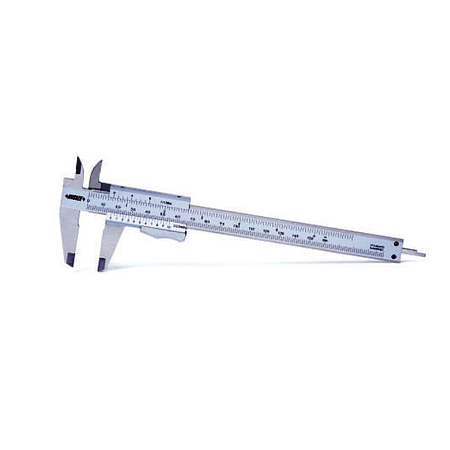
Why caliper calibration matters in daily operations
Calipers are used for a wide range of dimensional checks, from incoming material inspection to in-process verification and final quality control. Because they are handled frequently and often exposed to repeated opening, closing, transport, and storage, even a well-made instrument can drift or develop wear that affects measurement performance.
A proper calibration service helps confirm that the tool still performs as expected across its measuring range. This is especially important in environments where dimensional tolerances influence assembly fit, machining quality, documentation, or customer acceptance. Calibration also supports internal quality systems by creating a clearer record of instrument condition and service history.
What this service category is intended for
This category focuses on calibration support specifically for callipers used in mechanical measurement tasks. It is suitable for companies that need periodic checks for workshop tools, inspection room instruments, or field-use measuring equipment. Instead of treating all dimensional tools the same way, this page is dedicated to the requirements of calipers, which have their own usage patterns and wear points.
Buyers looking after a broader measurement program may also need services for related instruments. In those cases, it can be useful to review options such as micrometers calibration service or depth gauge calibration service as part of the same maintenance plan.
Typical points checked during calliper calibration
Although the exact procedure depends on the instrument type and condition, calibration commonly focuses on the measuring performance of the caliper across relevant points of its range. This may include checking external measurement, internal measurement, depth measurement, and the general repeatability of the instrument where applicable.
In practical terms, calibration also helps identify issues such as jaw wear, zero shift, scale reading deviation, slider movement problems, or damage from handling. For users working with dimensional inspection routines, this type of evaluation is valuable because it highlights whether the instrument is still suitable for service or may need adjustment, maintenance, or replacement planning.
Supported brands and service examples in this category
This category includes service options related to well-known caliper manufacturers used across industrial and technical environments. Examples include support associated with Mahr, MITUTOYO, MOORE & WRIGHT, Proskit, TOPTUL, YATO, HAGLOF, LUTRON, and METROLOGY.
Representative listings in this category include Mahr Calipers Calibration Service, Mitutoyo Calipers Calibration Service, MOORE & WRIGHT Calipers Calibration Service, Proskit Calipers Calibration Service, and Toptul Calipers Calibration Service. These examples help buyers quickly find service coverage aligned with instruments already in use, without needing to browse unrelated calibration categories.
How to choose the right service for your calipers
When selecting a service, the first step is to match it to the instrument brand and the way the caliper is used in your operation. A caliper used occasionally for general workshop checks may have different service priorities from one used in formal inspection processes or controlled quality environments. Usage frequency, handling conditions, required documentation, and internal audit expectations all influence the choice.
It is also useful to review your broader instrument population before ordering. If your site maintains multiple mechanical measuring tools, you may benefit from coordinating services across categories such as thickness gauge calibration service or hardness meter calibration service where relevant to your inspection process.
When to schedule calibration
Calibration intervals are usually determined by actual usage, required accuracy, internal quality procedures, and the consequences of measurement error. Instruments used frequently on the shop floor or shared across teams often need closer monitoring than calipers kept for occasional reference checks. A scheduled approach is generally more reliable than waiting until measurement problems become obvious.
Many organizations also trigger calibration after events that may affect performance, such as accidental drops, impact, unusual wear, inconsistent readings, or long-term storage. For operations that depend on measurement reliability, planned calibration helps reduce the risk of accepting nonconforming parts or rejecting acceptable ones due to tool-related error.
Benefits for maintenance, quality, and procurement teams
For maintenance teams, calibration supports better control of tool condition and helps identify instruments that need attention before they disrupt work. For quality personnel, it contributes to traceable measurement practices and more dependable inspection records. For procurement and operations teams, a clearly structured service category makes it easier to standardize support for commonly used brands and simplify repeat purchasing.
It also helps teams compare service options across a familiar set of manufacturers. If your organization already uses brands such as Mahr, MITUTOYO, Proskit, or TOPTUL, finding a matching service path in one place improves purchasing efficiency and keeps the calibration process closer to the actual equipment installed on site.
Finding the right calibration support
Choosing a caliper calibration service is ultimately about maintaining confidence in everyday measurement tasks. The right option should fit the instrument brand, align with how the tool is used, and support the level of control your process requires. This category is designed to help buyers navigate those needs more efficiently and find relevant service options for routine dimensional measurement equipment.
If your facility relies on calipers as part of production, inspection, or maintenance work, regular service is a practical step toward more stable measurement performance and better instrument management over time.
Get exclusive volume discounts, bulk pricing updates, and new product alerts delivered directly to your inbox.
By subscribing, you agree to our Terms of Service and Privacy Policy.
Direct access to our certified experts