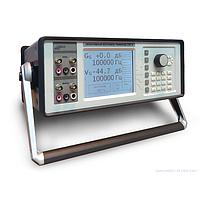
Low Frequency Meter Calibration Service
Accurate low-frequency signal measurement is essential wherever audio, telecom, broadcast, and electronic test systems need dependable verification. Even small deviations in meter response can affect troubleshooting, acceptance testing, and routine maintenance, which is why Low Frequency Meter Calibration Service plays an important role in keeping measurement results consistent and traceable.
This category focuses on calibration support for instruments used to measure low-frequency electrical signals. Whether the equipment is part of a lab, service center, production environment, or field support workflow, proper calibration helps reduce uncertainty, improve repeatability, and maintain confidence in every reading.
Why low-frequency meter calibration matters
Low-frequency meters are often used in applications where signal integrity, level verification, and stable measurement performance are critical. Over time, instrument drift, component aging, environmental conditions, and regular use can all influence accuracy. Calibration helps identify these changes and confirm that the instrument still performs within expected limits.
For technical teams, calibration is not only about compliance. It also supports measurement reliability during product testing, service diagnostics, and system validation. When a meter is used as a reference point in a workflow, confidence in that instrument directly affects confidence in the final result.
Typical use cases in telecom, audio, and electronic testing
Low-frequency measurement remains relevant across many practical environments. In telecom and broadcast support, these instruments may be used to verify signal levels, support test bench setups, or assist with maintenance tasks involving legacy and mixed-signal equipment. In audio-related applications, stable low-frequency measurement is important for evaluating performance, alignment, and signal behavior.
The same need appears in electronics manufacturing and repair, where technicians rely on dependable readings to compare expected and actual performance. In these settings, calibration contributes to more consistent diagnostics and reduces the risk of decisions being made from inaccurate data.
What to consider when selecting a calibration service
Not every calibration requirement is identical, so it helps to review the role of the instrument in your process. A meter used for routine checks may have different service expectations than one used in a verification chain or in a quality-controlled environment. The most important factors are usually the instrument’s application, required level of confidence, and how often the device is used.
It is also useful to consider the broader measurement ecosystem around the instrument. If your workflow includes related RF or waveform instruments, service planning may be more efficient when calibration schedules are aligned. For example, teams managing adjacent equipment types may also review wave test equipment calibration or audio analyzer calibration services as part of the same maintenance strategy.
Representative service option in this category
A featured example in this category is the Kontour Low-Frequency Signals Meter Calibration Service. This offering is relevant for organizations that need calibration support for low-frequency signal meters as part of a structured test and measurement program.
For buyers already standardizing around Kontour solutions, using a service aligned with the same manufacturer ecosystem can simplify equipment lifecycle management. It can also make category navigation easier when comparing services for similar instrument groups across a larger calibration portfolio.
How this service fits into a broader calibration workflow
Low-frequency meters are rarely used in complete isolation. In many labs and technical service environments, they are part of a wider group of instruments that may include signal sources, analyzers, power measurement tools, and network-focused test devices. Calibrating these assets in a planned cycle helps create a more stable and predictable measurement environment.
Where broader RF and signal-chain verification is involved, related services such as RF voltmeter calibration and vector network analyzer calibration may also be relevant. Looking at calibration needs as a connected workflow often helps procurement and engineering teams plan service intervals more effectively.
Benefits for maintenance, quality, and procurement teams
From an operational perspective, calibration supports more than technical accuracy alone. Maintenance teams benefit from having instruments checked on a known schedule, while quality teams gain better control over measurement consistency. Procurement and asset management teams also benefit when service categories are clearly organized and matched to the actual instrument type.
This is especially helpful in B2B environments where multiple sites, departments, or projects share equipment resources. A clearly defined calibration service category makes it easier to identify the right support path, compare related service options, and keep instrument records aligned with internal processes.
Choosing the right category for your instrument
If the device in question is specifically used to measure low-frequency signals, this category is the right place to begin. It is intended for buyers and technical users who already know the instrument type they need serviced and want a focused route instead of searching through broader calibration listings.
If your equipment belongs to a neighboring measurement class, it may be worth checking related service categories before placing a request. That extra step helps ensure the service scope matches the instrument’s actual function and avoids confusion between low-frequency, RF, waveform, and analyzer-based measurement tools.
Conclusion
Consistent measurement starts with instruments that can be trusted in day-to-day use. A well-matched Low Frequency Meter Calibration Service helps support dependable readings, smoother maintenance planning, and better control across testing and service activities.
If you are reviewing calibration options for low-frequency signal measurement equipment, this category provides a focused starting point. It is particularly useful for teams that need a clear, practical path to service selection within a wider telecom, audio, or electronic test environment.
Get exclusive volume discounts, bulk pricing updates, and new product alerts delivered directly to your inbox.
By subscribing, you agree to our Terms of Service and Privacy Policy.
Direct access to our certified experts