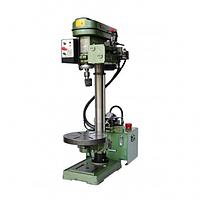
Bench Drilling Machine Repair Service
When a bench drilling machine starts losing accuracy, making unusual noise, or struggling to maintain stable spindle rotation, production quality can decline quickly. In workshops, maintenance departments, and fabrication environments, timely repair is often more practical than extended downtime or premature replacement. This page covers Bench Drilling Machine Repair Service options for restoring drilling performance, improving operational consistency, and helping equipment return to daily use with less disruption.
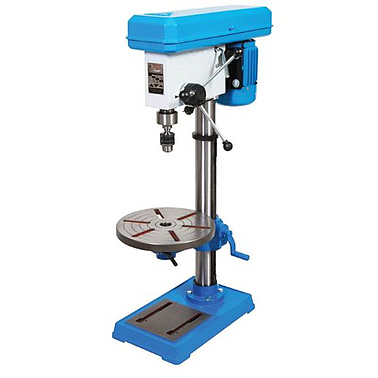
Why bench drilling machine repair matters in daily operations
A bench drilling machine is commonly used for repetitive drilling work where alignment, feed control, and rotational stability all affect the final result. Even relatively small issues such as spindle play, vibration, worn moving parts, or inconsistent motor behavior can lead to poor hole quality, reduced repeatability, and extra rework.
Repair service is especially relevant when the machine frame and core structure remain usable, but the working performance has deteriorated over time. In many cases, a targeted service approach helps extend equipment life while keeping the machine suitable for workshop tasks such as drilling metal, plastics, or other production materials within its original operating scope.
Common service needs for bench drilling machines
Bench-mounted drilling equipment is exposed to continuous mechanical load, dust, chips, and routine wear. Because of that, service demand often centers on components that directly affect precision, smooth operation, and operator confidence during use.
Typical repair work may involve inspection of spindle movement, chuck-related issues, drive transmission behavior, switching and electrical operation, or general mechanical condition of the drilling assembly. The exact service scope depends on the machine’s current symptoms, usage frequency, and whether performance issues appear gradually or after a specific fault event.
- Loss of drilling accuracy or unstable hole positioning
- Abnormal vibration, noise, or rough spindle movement
- Difficulty starting, stopping, or maintaining stable operation
- Mechanical wear affecting feed or vertical movement
- General restoration after long-term workshop use
Service examples across common workshop brands
This category includes repair support examples for several familiar workshop machine lines. Users looking for service related to Hồng Ký equipment may find relevant options such as the Hong Ky Drill press bench Repair Service, while TIEN DAT users may refer to the Tien Dat Drill press bench Repair Service for brand-specific context.
Other representative listings include the TKT Drill press bench Repair Service and the Proskit Knifes Grinder repair service. While a knife grinder is a different machine type, it reflects the broader repair ecosystem around compact workshop equipment, where mechanical reliability, safe operation, and routine restoration are all important for maintaining productivity.
How to choose the right repair service
The most suitable service path usually depends on the machine’s fault pattern rather than on age alone. A unit with stable structure but declining drilling quality may be a good candidate for repair, while a machine with extensive structural damage may require a deeper evaluation before service work begins.
It is helpful to prepare a basic fault description before requesting service. Information such as whether the machine has excessive runout, unusual sound during drilling, speed instability, or difficulty holding alignment can make diagnosis more efficient. If the equipment belongs to a known maker such as KTK, Proskit, or TIEN DAT, brand information may also help align service expectations with the machine’s design characteristics.
Related machinery service needs in the same workshop environment
Bench drilling machines rarely operate in isolation. Many facilities that require drill press repair also maintain other mechanical equipment used for cutting, pressing, or material handling. When multiple machines show signs of wear, it can be useful to review adjacent service categories as part of a broader maintenance plan.
For example, shops handling sheet or profile processing may also need cutting machine repair service, while metal forming operations may also evaluate mechanical power presser repair service. Looking at repair requirements across the workshop can help reduce unplanned downtime and support more consistent machine availability.
What to expect from a practical repair workflow
A structured repair process usually begins with condition assessment and symptom review. From there, the focus moves to identifying the source of mechanical or electrical issues, evaluating wear level, and determining whether restoration can return the machine to acceptable working condition for its intended application.
For bench drilling machines, the goal is not just to make the unit run again, but to restore operational stability where possible. In real workshop use, that means attention to drilling smoothness, repeatable movement, and dependable daily performance rather than a purely cosmetic fix. This practical approach is especially important for production support, maintenance rooms, schools, and general fabrication settings where equipment is expected to work consistently.
Suitable for maintenance, workshop, and fabrication users
This category is relevant to buyers and maintenance teams searching for support for compact drilling equipment used in industrial and semi-industrial environments. It can also be useful for organizations managing mixed machine fleets, where smaller bench machines still play an important role in rework, fixture preparation, prototype work, or general assembly support.
Whether the requirement involves a machine from Proskit, Hồng Ký, KTK, or TIEN DAT, the value of repair service lies in bringing equipment back to reliable use with a scope that matches the actual condition of the machine. That makes repair a practical option for extending asset usability without assuming that every case requires full replacement.
Final considerations before requesting service
Before selecting a repair option, it is worth reviewing the machine’s actual operating symptoms, maintenance history, and current role in production. A clear understanding of whether the issue affects accuracy, rotation, feed movement, or general usability will help narrow the right service direction.
For teams evaluating Bench Drilling Machine Repair Service, the main objective is straightforward: restore function, reduce downtime, and keep essential workshop equipment working as intended. If your operation depends on compact drilling machinery for daily tasks, a focused repair service can be an efficient step toward more stable and predictable performance.
Get exclusive volume discounts, bulk pricing updates, and new product alerts delivered directly to your inbox.
By subscribing, you agree to our Terms of Service and Privacy Policy.
Direct access to our certified experts