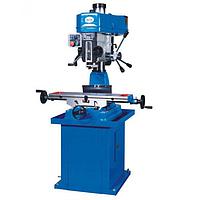
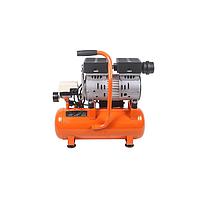
Industrial machinery Repair Service
When production equipment starts drifting from normal performance, the cost is rarely limited to one failed part. Unplanned downtime can affect output, repeatability, operator safety, and delivery schedules across the entire line. A reliable industrial machinery repair service helps restore equipment function in a practical, brand-aware, and application-focused way.
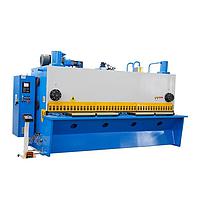
This category covers repair support for a broad range of workshop, fabrication, processing, and special-purpose machines. It is relevant for factories, maintenance teams, technical service departments, and B2B buyers looking for a structured way to handle machine faults, worn assemblies, unstable operation, or performance degradation before those issues escalate.
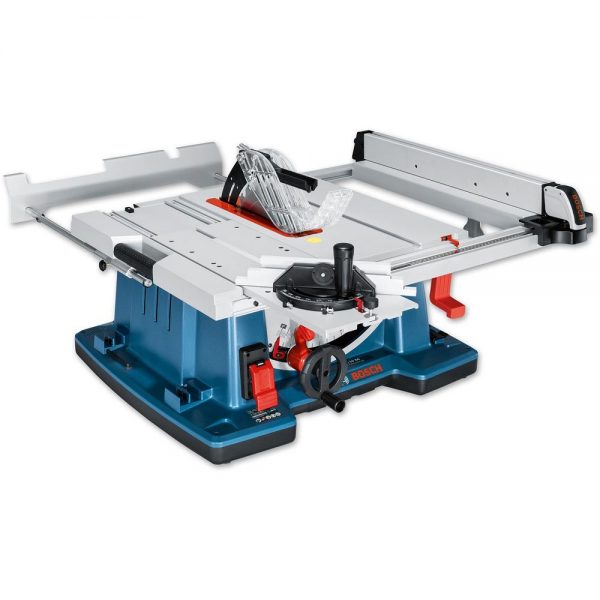
Repair support across diverse machine types
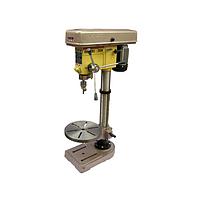
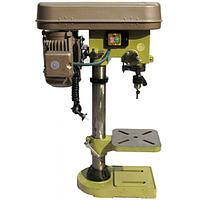
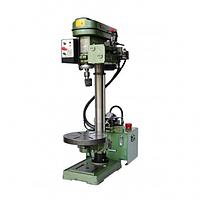
Industrial equipment rarely fails in exactly the same way, even when the symptom looks similar from the outside. A drilling machine may lose spindle stability, a welding system may develop inconsistent joining quality, and a film applicator may show uneven motion or feed behavior. In each case, the repair process needs to consider the machine’s operating principle, duty cycle, and working environment.
Within this category, repair needs may involve fabrication equipment, welding systems, drilling machines, vacuum forming units, coating-related equipment, and grinder-based machines. That makes the service scope especially useful for buyers managing mixed equipment fleets rather than a single machine family.
Typical equipment covered in this category
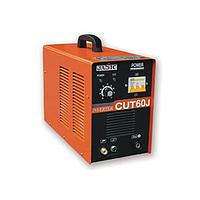
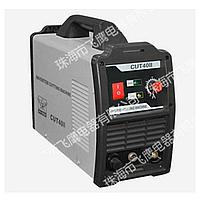
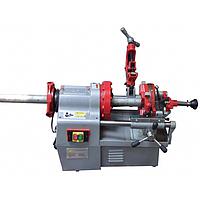
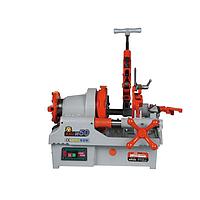
The category includes repair work related to a wide industrial ecosystem rather than one narrow device type. Examples from the available service portfolio include welding equipment, vacuum forming systems, drilling machines, film applicators, and knife grinder units used in workshop or production settings.
Representative listings include the DANREL Hot plate welding machine repair service, BOSCH Drilling Machine Repair Service, Danrel Vacuum Forming Machine Repair Service, Danrel Spin Welding Machine Repair Service, Danrel Ultrasonic Welding Machine Repair Service, ELCOMETER Motorised Film Applicator Repair Service, TQCSheen Film Applicator Repair Service, and Proskit Knifes Grinder repair service. These examples illustrate how repair requirements can vary from thermal joining and rotational welding to surface application and tool maintenance equipment.
Common repair needs in industrial machinery
Most service requests begin with a practical production problem: the machine does not start, operates intermittently, produces unstable results, overheats, loses motion accuracy, or no longer reaches normal output. In industrial environments, these symptoms can be linked to mechanical wear, electrical faults, control issues, power instability, heat-related degradation, or failures in motion and drive assemblies.
For welding-related machines, recurring issues may include inconsistent heating, poor weld quality, unstable cycle timing, or fault conditions during operation. On drilling and grinder equipment, users often face reduced cutting performance, abnormal vibration, alignment problems, or switch and motor-related failures. With applicators and forming systems, repair work may focus on movement consistency, control response, or overall process repeatability.
Brand-aware service for workshop and factory equipment
In B2B maintenance, brand familiarity matters because equipment architecture, spare part logic, and service procedures can differ significantly between manufacturers. This category includes repair examples associated with manufacturers such as BOSCH, Honda, ELCOMETER, Proskit, Telwin, TQCSheen, YATO, Danrel, and Hồng Ký.
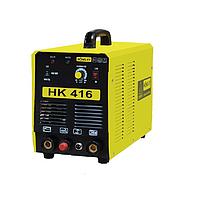
Examples such as YATO Welding machine repair service, TELWIN Welding machine repair service, HONG KY Welding machine repair service, and HONDA Knapsack sprayer repair service show that repair demand often extends across both industrial and professional-use equipment. For buyers maintaining multi-brand assets, this type of category structure makes it easier to find the right service path without treating every machine issue as a generic repair case.
How to choose the right repair path
A useful way to shortlist service options is to start with the machine function rather than the fault code alone. Ask whether the problem is related to welding, drilling, forming, coating, grinding, or another production task. Then narrow the request by machine type, manufacturer, and the operating symptom observed on site.
It also helps to document the failure pattern before sending a service inquiry. Useful details include whether the machine fails at startup or during load, whether the issue is constant or intermittent, and whether output quality changed before the fault became critical. This information supports faster triage and can reduce unnecessary back-and-forth during evaluation.
If the issue appears to involve instrumentation, test devices, or supporting electronics rather than the main machine itself, related service categories such as electrical and electronic meter repair or DC/AC power supply repair may also be relevant.
Why industrial machine repair requires application context
Repair quality is not only about getting a machine to power on again. In industrial use, equipment must return to a condition that supports the intended process with acceptable stability. A hot plate welding machine, for example, must operate consistently within its working cycle, while a drill or grinder must support predictable mechanical performance under actual shop conditions.
This is why application context is important during service evaluation. Machines used in plastics joining, metalworking, coating preparation, or maintenance workshops are exposed to different stress patterns and production expectations. A repair approach that ignores how the machine is actually used may restore basic function without solving the root operating issue.
Examples of service scenarios in this category
For plastics and joining applications, Danrel-related services such as hot plate, spin, ultrasonic, and vacuum forming machine repair can support specialized production workflows where thermal or mechanical process control directly affects finished-part quality. For welding environments, service listings connected to Telwin, YATO, and Hồng Ký reflect the ongoing maintenance demands of fabrication and assembly operations.
In workshop support environments, BOSCH drilling machine repair and Proskit knife grinder repair are relevant where daily-use equipment must remain dependable for routine work. In laboratory, coating, or material preparation settings, ELCOMETER and TQCSheen film applicator repair services are examples of support needs tied to controlled application processes rather than conventional heavy machinery alone.
Choosing a category with room to scale
One advantage of using a broad repair category like this is that it supports both immediate troubleshooting and longer-term maintenance planning. Teams responsible for multiple machine types can review related service options without switching between unrelated product groups, especially when different departments share overlapping equipment responsibilities.
As your repair needs grow, it also becomes easier to identify whether the issue belongs to the machine itself, its supporting power hardware, or adjacent measuring equipment. That distinction helps maintenance teams route work more efficiently and avoid delays caused by sending equipment into the wrong service stream.
Final considerations
Industrial machinery repair service is most valuable when it is approached as a technical support function for uptime, process consistency, and asset life rather than a one-time fix. Whether the equipment involves welding, drilling, grinding, vacuum forming, or film application, the right service path starts with a clear understanding of machine function, operating symptoms, and brand context.
For factories, workshops, and technical buyers managing varied equipment, this category offers a practical starting point to identify relevant repair solutions and compare service options across several machine families. A more accurate match at the category level often leads to faster diagnosis, more suitable handling, and fewer interruptions to production.
Get exclusive volume discounts, bulk pricing updates, and new product alerts delivered directly to your inbox.
By subscribing, you agree to our Terms of Service and Privacy Policy.
Direct access to our certified experts