Charge Controllers
As EV charging infrastructure becomes more integrated into industrial, commercial, and embedded systems, selecting the right control hardware matters just as much as choosing the charging outlet itself. A well-matched charge controller helps manage charging logic, safety monitoring, signal handling, and communication within an EVSE design or charging cabinet.
This category brings together controller and monitoring components used in AC charging systems, with options suited to PCB integration as well as DIN rail installation. It is especially relevant for engineers, panel builders, OEMs, and system integrators looking for reliable control building blocks for compliant and maintainable charging solutions.
Where charge controllers fit in an EV charging system
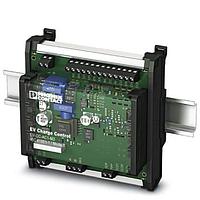
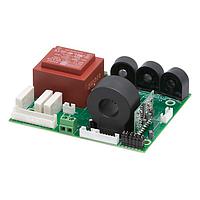
In practical terms, a charge controller acts as the control core of an AC charging station or embedded EV charging subsystem. It handles key functions such as charging authorization logic, input and output management, interface signaling, and coordination with supporting safety modules. Depending on the design, it may be mounted directly on a PCB or installed on a DIN rail inside a control enclosure.
Within this category, you will find both primary charging controllers and complementary residual current monitoring modules. That makes the range useful not only for new charger development, but also for upgrades, retrofits, and modular system designs where the control and protection functions are intentionally separated.
Typical product types in this category
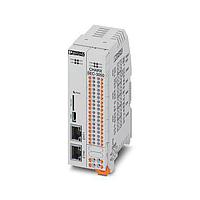
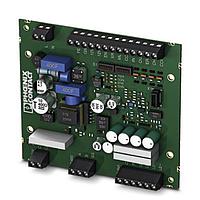
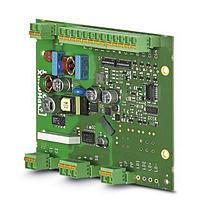
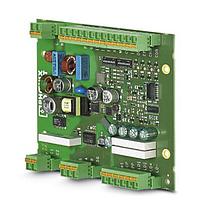
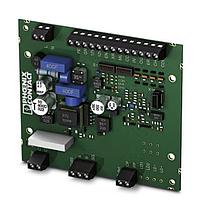
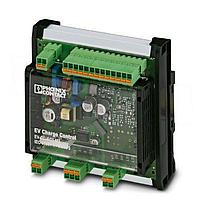
Most products here fall into two broad groups: AC charging controllers and residual current monitoring devices used alongside EV charging equipment. AC controller examples include PHOENIX CONTACT units such as 1622459, 1622460, and 1627742, as well as the Western Automation EVCC-01 for mode 3/level 2 EVSE applications. These products are generally chosen when the charging process itself needs to be managed at the hardware level.
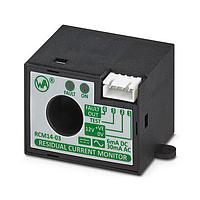
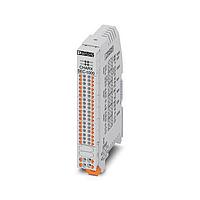
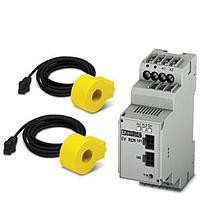
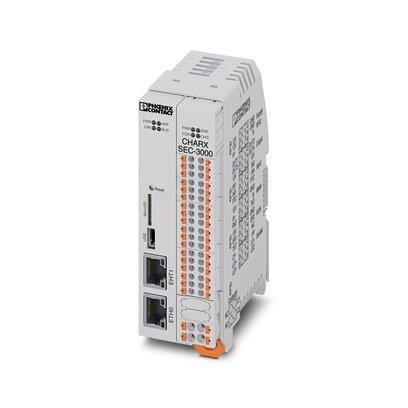
The second group supports the safety architecture of the charger. Products such as PHOENIX CONTACT 1622450 and 1622451 are residual current monitoring modules intended to help detect leakage-related conditions within the charging system. There are also controller families such as CHARX SEC-1000 and CHARX SEC-3000, which are relevant when a broader charging control concept is required.
Key selection factors for engineers and buyers
Choosing the right controller usually starts with the installation concept. PCB-mount designs are often preferred in compact OEM products where the controller is embedded into a custom charger board, while DIN rail units are better suited for cabinet-based systems, serviceable installations, and industrial environments. The products in this category include both approaches, allowing a better fit for different mechanical and maintenance strategies.
Another important point is the electrical and communication interface. Some models support interfaces such as RS-485 or UART, which may matter when integrating the controller with a higher-level system, HMI, or supervisory logic. Input/output count, supply voltage range, and environmental ratings such as IP20 or IP00 should also be reviewed in relation to the final enclosure design and operating conditions.
For projects that require coordinated control at the panel level, buyers may also compare these products with broader programmable controller options when evaluating the overall automation architecture.
Safety and standards considerations
EV charging applications place clear emphasis on safety monitoring, and that is reflected in several products listed in this category. Some controllers and modules reference standards such as IEC 61851-1, while certain solutions also reference IEC 62955. These references are useful when assessing suitability for EV charging system design, especially where charging behavior and fault monitoring must align with established requirements.
Residual current monitoring modules are particularly important in EVSE design because they help support detection of AC and DC leakage-related conditions, depending on the device role in the system. In practice, designers often pair a charging controller with dedicated current monitoring hardware rather than expecting one component to cover every function. This modular approach can simplify maintenance and system validation.
Representative manufacturers and product families
PHOENIX CONTACT is strongly represented in this category, with multiple controller and monitoring solutions for EV charging applications. Examples include the EV-CC-AC1 series for AC charging control, EV-RCM modules for residual current monitoring, and CHARX SEC products for charging control tasks in broader system designs. This variety is useful for teams that want consistency in sourcing across related control components.
Western Automation also appears with the EVCC-01, an AC charging controller intended for mode 3/level 2 EVSE. For buyers comparing alternatives, this adds another option within the same category context, especially where a specific interface, form factor, or design approach is preferred.
Integration in industrial and commercial projects
Charge controllers are commonly used in wallbox development, commercial charging stations, fleet charging points, and embedded charging functions within larger equipment. In these environments, the controller is only one part of a wider control scheme that may also include metering, protection, communications, and site-level automation. The right product choice depends on how much intelligence is built into the charger itself and how much is delegated to external control systems.
In some projects, adjacent control functions such as power control hardware or PID controllers may also be relevant elsewhere in the system, even if they serve a different purpose. This is especially true in engineered installations where charging equipment is part of a larger industrial process or building services platform.
How to narrow down the right product
A practical starting point is to define whether you need a main EV charging controller, a supporting monitoring module, or both. From there, review the intended charging mode, required interfaces, mounting style, available supply voltage, and enclosure concept. For example, a PCB-mount unit may suit compact charger electronics, while a DIN rail module may be easier to install and replace in field service conditions.
It is also worth checking whether your design calls for a single integrated control board or a more modular architecture with dedicated monitoring components. Products such as PHOENIX CONTACT 1622459 or 1622460 may suit core charging control functions, while devices like 1622450 or 1622451 support the protective side of the system. This category structure helps buyers compare both roles in one place without mixing them up.
Conclusion
This selection of charge controllers supports the needs of EV charging system designers who require dependable control, interface handling, and monitoring components in industrial formats. With solutions from PHOENIX CONTACT and Western Automation, the category covers both controller-centric and safety-supporting parts used in AC charging applications.
When comparing products, focus on the actual role each device plays in the charging architecture, not just the product title. A clear view of mounting method, interface needs, standards alignment, and monitoring requirements will help you choose components that fit the charger design more effectively and simplify integration over the long term.
Get exclusive volume discounts, bulk pricing updates, and new product alerts delivered directly to your inbox.
By subscribing, you agree to our Terms of Service and Privacy Policy.
Direct access to our certified experts