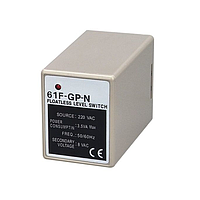
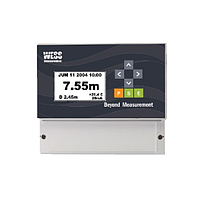
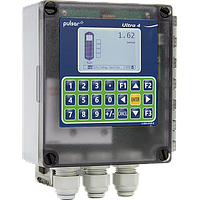
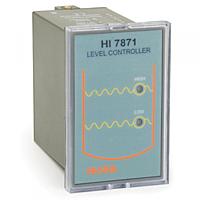
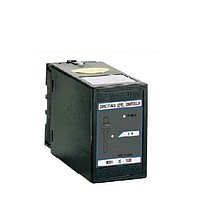
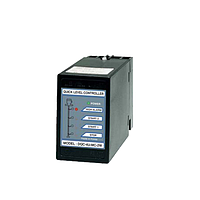
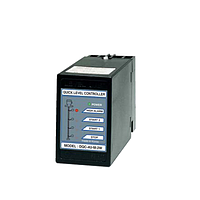
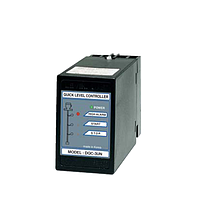
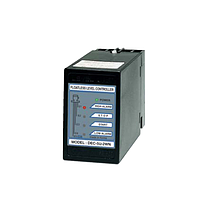
Level controller
Stable level management is critical anywhere liquids, slurries, or bulk media need to be monitored and controlled without constant operator intervention. In industrial processes, a well-matched level controller helps prevent overflow, dry running, pump damage, inconsistent batching, and unnecessary downtime while supporting safer and more predictable operation.
This category is designed for engineers, maintenance teams, panel builders, and purchasing departments looking for reliable control solutions for tanks, reservoirs, dosing systems, sump pits, and process vessels. Whether the goal is simple on/off pump control or integration into a broader automation architecture, the right device depends on the process medium, switching logic, installation environment, and required interface with other control equipment.
Where level controllers are used
Level control is a common requirement across water treatment, chemical handling, food and beverage utilities, OEM machinery, HVAC systems, and general industrial plants. These devices are typically used to maintain a defined fill level, start or stop transfer pumps, trigger alarms, or coordinate filling and emptying cycles as part of a wider control sequence.
In practical terms, a level controller may supervise a storage tank, protect a pump from running dry, or maintain operating range inside a process vessel. In many installations, it also works alongside other automation components such as programmable controllers when the application requires logic handling, signal processing, or communication with supervisory systems.
How a level controller fits into industrial control systems
A level controller is not just a standalone switching device. It often forms part of a broader control loop that includes level sensors, relays, contactors, pumps, valves, alarms, and HMI or PLC-based monitoring. The controller interprets level input conditions and generates an output action based on the configured operating logic.
Depending on the application, the control strategy may be straightforward high/low switching or more structured sequencing for fill, drain, transfer, and protection functions. In systems where temperature, humidity, or process stability also matter, users may review related solutions such as PID controllers for closed-loop process regulation beyond basic level-based switching.
Common selection criteria
Choosing the right controller starts with the process itself. The nature of the medium matters: clean water, wastewater, conductive liquid, aggressive chemical media, or process fluid with foam and contamination can each influence the preferred sensing and control approach. Installation constraints such as tank geometry, cable routing, panel space, and electrical environment are also important.
Buyers should also review the required control logic, input compatibility, output type, supply requirements, and expected switching behavior. Some applications need simple pump-up or pump-down control, while others require dual-point management, alarm thresholds, or integration with safety interlocks. For projects involving multiple process variables, it can also be useful to compare adjacent control categories such as power control devices or environmental controllers depending on the system design.
Typical application needs in the field
One common use case is pump control in tanks or pits, where the controller starts and stops equipment at predefined levels to maintain a safe operating window. This reduces manual checks and helps avoid overflow or dry-run conditions that can shorten pump life and interrupt production.
Another common scenario is process containment and refill management, especially where consistent liquid availability is needed for wash systems, cooling loops, utility skids, or dosing operations. In these environments, a reliable switching response can improve repeatability and reduce the risk of process upset. For applications where moisture conditions are also part of the process requirement, some users may also evaluate humidity control products as part of a wider equipment ecosystem.
Manufacturer options for industrial buyers
This category may be relevant for customers sourcing solutions from established industrial control brands such as OMRON, OMEGA, SIEMENS, SCHNEIDER, Carlo Gavazzi, Crouzet, HANNA, Littelfuse, and Pulsar measurement. Each manufacturer may support different positioning in the market, from compact control components for machine panels to process-oriented solutions for utilities and industrial infrastructure.
When comparing manufacturers, it is usually more useful to focus on application fit, input method, mounting style, electrical compatibility, and long-term maintenance considerations than on brand name alone. In B2B purchasing, factors such as documentation, part continuity, integration approach, and serviceability often carry as much weight as the controller itself.
What to consider before ordering
Before selecting a part, it is worth confirming the operating environment and the intended control behavior in detail. Questions such as whether the application is for filling or emptying, whether alarm outputs are needed, what sensing method is already in place, and how the controller will interface with pumps or valves can prevent mismatches later in the project.
It is also important to think about panel integration, maintenance access, and future expansion. A solution that works well in a standalone tank today may later need to communicate with a larger automation platform or be coordinated with other process controllers. Clarifying these requirements early helps narrow the range to devices that are practical both technically and operationally.
Finding the right level control solution
The right choice depends less on finding a generic device and more on matching the controller to the real process conditions. Medium characteristics, sensing method, switching strategy, electrical interface, and overall automation architecture all influence whether a controller will perform reliably over time.
For industrial procurement and engineering teams, this category provides a focused starting point for comparing level management solutions used in tanks, vessels, pumping systems, and utility processes. If you are refining a new design or replacing an existing control unit, reviewing the application requirements carefully will make it easier to identify a controller that fits the job without overcomplicating the system.
Get exclusive volume discounts, bulk pricing updates, and new product alerts delivered directly to your inbox.
By subscribing, you agree to our Terms of Service and Privacy Policy.
Direct access to our certified experts