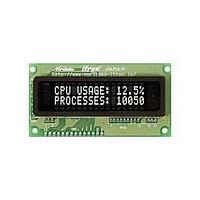
Vacuum Fluorescent Displays
In equipment interfaces, instrument panels, and embedded control systems, display readability often matters just as much as processing power. Vacuum Fluorescent Displays remain a practical choice where bright characters, clear contrast, and dependable viewing performance are important for operators, service technicians, and OEM designers.
Within industrial and electronic product design, this display technology is often selected for text or graphic presentation in devices that need a crisp visual output without unnecessary complexity. From control panels to embedded modules, VFD solutions continue to serve applications that value stable visibility and established integration options.

Where VFD modules fit in modern equipment
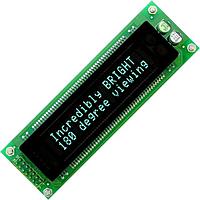
A vacuum fluorescent display uses an emissive principle, which means the display itself produces light rather than relying on an external backlight. In practice, this helps create bright, easy-to-read characters and symbols that can work well in low-light or mixed-light operating environments. For many industrial and embedded systems, that readability is one of the main reasons engineers continue to specify this type of module.
These displays are commonly used when a product needs a straightforward human-machine interface for status messages, numeric values, menu prompts, or simple graphics. They are especially relevant in instruments, control hardware, test equipment, and specialty electronic devices where a compact, dedicated display can be more appropriate than a full graphical panel.
Common formats and display options
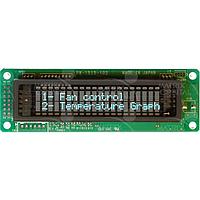
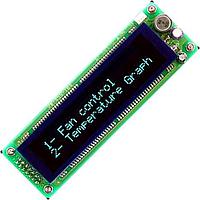
This category includes both character displays and graphic display modules, giving designers flexibility based on the amount of information that must be shown. Character-based units are often chosen for menus, alarms, parameter values, or operating prompts, while graphic modules support more customized layouts, icons, and display structures.
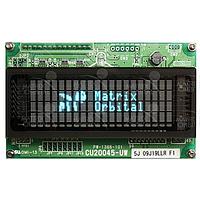
Examples in this range illustrate that flexibility. The Noritake AH1018BB and Noritake CU16024-UX3J are representative VFD modules for compact text display needs, while the Noritake GU112X16G-7000 and Noritake GU256X128D-3900B show how graphic formats can support more advanced user interfaces. For applications requiring standard line-and-character layouts, models such as the Matrix Orbital VK204-25-USB-E and VK162-12-USB-E provide familiar text-based configurations.
Key selection factors for engineers and buyers
When comparing VFD modules, the first step is usually to match the display format to the application. Character count, line layout, viewing area, module dimensions, and interface type all affect integration. A small service interface may only need a 2 x 16 or 2 x 20 format, while a more feature-rich controller could require a 20 x 4 layout or a graphic display area for custom information.
Electrical and mechanical compatibility also matter. Interface choices such as USB, serial, RS-232, or parallel can influence firmware design and installation effort. Environmental needs should also be considered, especially in industrial settings where operating temperature range and long-term durability are part of the specification review.
For teams still evaluating display technology, it can also be useful to compare VFD modules with alternatives such as OLED displays or TFT displays and accessories, depending on the desired balance of interface complexity, visual style, and system architecture.
Representative manufacturers in this category
Noritake is one of the best-known names in this area and is frequently associated with both text and graphic VFD solutions for embedded and industrial use. In this category, its product examples cover compact modules as well as higher-resolution graphic units, making the brand relevant for a wide range of interface requirements.
Matrix Orbital is another important manufacturer, with models that emphasize practical integration and common communication options such as USB. Products like the MOU-AV162A-NT3IJ, BVK204A-USB, and BVC2021-BK-USB reflect the type of VFD modules often used in equipment requiring readable text output and straightforward host connectivity.
Newhaven Display also appears in this broader display ecosystem with character display modules such as the M0220SD-202SDAR1, D0420SD-53-4001FN, and M0216SD-162SDAR2-1. While some applications may specifically require VFD technology, it is often useful to review adjacent module options from established display suppliers when comparing integration constraints and user-interface goals.
Applications that benefit from vacuum fluorescent technology
Industrial interfaces, bench instruments, embedded controllers, and operator-facing devices often benefit from VFD readability. In these environments, users may need to identify values or messages quickly without dealing with a visually crowded interface. A clear character layout can improve usability for setup, diagnostics, and routine operation.
VFD modules are also relevant in products where the display is only one part of a larger electronics assembly. Instead of using a full HMI panel, an OEM may prefer a dedicated module for status indication, menu navigation, or compact graphical feedback. This approach can simplify the interface while still delivering the information needed at the point of use.
Choosing between VFD and other display technologies
No single display type is right for every project. VFDs are often chosen when a design calls for bright, high-contrast presentation and a proven module format for embedded equipment. They can be a strong fit for text-heavy interfaces or compact graphic displays where clarity and direct readability are more important than advanced color graphics.
In other cases, alternative technologies may be more appropriate. For example, LED displays may be preferred for simple numeric or indicator-style outputs, while LCD numeric display modules can suit applications focused on low-information, structured readouts. The right choice depends on viewing conditions, integration requirements, interface design, and the role of the display within the finished device.
What to review before ordering
Before selecting a module, it helps to confirm the intended communication method, available installation space, viewing requirements, and the amount of information the user needs to see at once. Buyers should also check whether the project needs a text-only layout, a graphic display area, or a module with specific mounting or connectivity preferences.
If you are sourcing for production, maintenance, or design validation, reviewing representative models across Noritake, Matrix Orbital, and related display options can make the shortlist more relevant from the start. Looking at format, interface, and application fit usually leads to a better decision than choosing on dimensions alone.
Final thoughts
Vacuum fluorescent displays continue to offer real value in industrial and embedded electronics where visibility, simplicity, and dependable operator communication are priorities. Whether you are specifying a compact character module or evaluating a graphic VFD for a more advanced front panel, this category provides a focused starting point for comparing display formats, interface types, and manufacturer ecosystems.
A careful review of application needs, installation constraints, and user interaction goals will help narrow the options quickly and lead to a display choice that fits the equipment, not just the specification sheet.
Get exclusive volume discounts, bulk pricing updates, and new product alerts delivered directly to your inbox.
By subscribing, you agree to our Terms of Service and Privacy Policy.
Direct access to our certified experts