Inclinometers
Accurate tilt and angle measurement is essential in machines that need stable positioning, repeatable motion, and reliable safety monitoring. In industrial environments, these sensors help translate mechanical movement into usable data for control systems, condition monitoring, and alignment tasks where even small deviations can matter.
Inclinometers are widely used wherever angular position relative to gravity must be monitored. They support applications in mobile equipment, automation systems, platforms, structural monitoring, and machine setup, offering a practical way to detect tilt, inclination, leveling, or orientation changes under real operating conditions.
Where inclinometers are used in industrial systems
Inclinometers are common in equipment that must maintain a defined angle or detect a change in orientation during operation. Typical use cases include lift systems, construction and agricultural machinery, material handling equipment, industrial platforms, and machine tools where tilt feedback supports safer and more precise movement.
They are also relevant in fixed installations. Engineers may use them for alignment, leveling, deformation monitoring, or long-term position tracking in structures and mechanical assemblies. In broader sensing architectures, inclinometers are often selected alongside other devices such as flow sensors & pitot tubes or air quality sensors, depending on the operating environment and the type of process feedback required.
How inclinometer sensing supports control and monitoring
The core function of an inclinometer is to measure angle relative to the earth’s gravitational field. This makes it especially useful when rotational or positional information must remain stable even if the surrounding machine structure is subject to vibration, movement, or changing load conditions.
In practice, inclinometer data can be used in both closed-loop control and monitoring applications. In some systems, the signal is used directly by a controller to adjust movement or maintain a target position. In others, it acts as a supervisory input for alarms, diagnostics, or preventive maintenance when tilt exceeds acceptable limits.
Key selection factors for industrial inclinometers
Choosing the right device depends on the installation conditions and the role it plays in the system. Important considerations usually include the required measurement axis, expected angle range, mounting orientation, output type, environmental resistance, and the level of accuracy needed for the application.
Engineers should also consider system integration requirements. Some projects prioritize compact electronic integration, while others need ruggedized sensing for heavy-duty equipment. Long-term stability, response behavior, and resistance to shock or vibration can be just as important as nominal measurement performance, especially in demanding automation or mobile machinery environments.
Technology landscape and manufacturer options
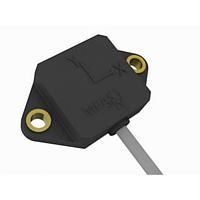
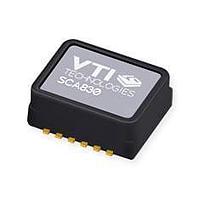
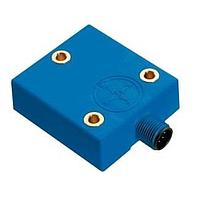
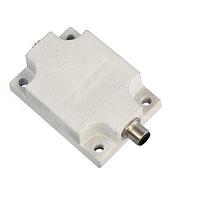
This category brings together solutions from recognized sensor and electronics manufacturers including Analog Devices, Murata Electronics, Pepperl+Fuchs, Sensata, SICK, STMicroelectronics, TE CONNECTIVITY SENSORS, Amphenol Piher, Kubler, and Sensata Technologies - BEI Sensors. These brands are relevant across different parts of the inclinometer market, from compact electronic sensing components to industrial-grade devices for machine integration.
The best fit often depends less on brand preference and more on application context. For embedded designs, design teams may focus on size, interface compatibility, and integration path. For industrial equipment, attention usually shifts toward housing robustness, installation constraints, and dependable operation in the field.
Inclinometers within a broader sensor ecosystem
Tilt measurement rarely operates in isolation. In many machines, inclinometer feedback is combined with other sensing inputs to build a fuller picture of operating status, machine motion, and environmental conditions. That can include position feedback, proximity sensing, vibration analysis, or optical sensing depending on the process.
For example, orientation monitoring may be paired with ambient light sensors in outdoor equipment or with color sensors in application-specific automation setups where multiple conditions must be verified at the same time. Looking at inclinometers as part of a larger sensing strategy often leads to more reliable system design and better diagnostic visibility.
What matters during installation and integration
Correct mounting is critical for meaningful tilt measurement. The sensor should be installed with careful attention to reference orientation, mechanical stability, and the expected direction of motion. Even a high-quality device can produce misleading data if the mounting surface shifts, flexes excessively, or introduces unwanted alignment error.
Signal interpretation also deserves attention. Integrators should define how raw inclination data will be filtered, scaled, and used by the control system. In dynamic applications, it is important to distinguish between true angular position and short-term disturbances caused by vibration or transient motion, so the selected device and the control logic work together effectively.
Choosing the right category for your application
If your project requires angle or tilt feedback referenced to gravity, this inclinometers category is the right place to compare suitable sensing options. It is especially relevant for OEM design, industrial retrofits, machine stability monitoring, and systems where position awareness supports both performance and safety.
When reviewing available parts, focus on the real operating conditions: installation method, expected movement, required output, and environmental stress. A well-matched inclinometer can improve control quality, simplify alignment tasks, and provide dependable orientation data as part of a broader industrial sensing solution.
Get exclusive volume discounts, bulk pricing updates, and new product alerts delivered directly to your inbox.
By subscribing, you agree to our Terms of Service and Privacy Policy.
Direct access to our certified experts