
Industrial Hall Effect / Magnetic Sensors
Reliable position and proximity feedback is essential in machines that operate in dusty, wet, vibrating, or high-cycle environments. In these conditions, Industrial Hall Effect / Magnetic Sensors are widely used because they detect magnetic fields without physical contact, helping reduce mechanical wear while supporting stable switching or sensing in compact installations.
This category brings together magnetic sensing devices used for presence detection, end-of-travel monitoring, door and guard position feedback, cylinder piston sensing, and general automation tasks. Depending on the application, you may need a simple 2-wire or 3-wire switch, an analog magnetic output, a TMR-based device, or a matching magnet accessory to complete the sensing setup.
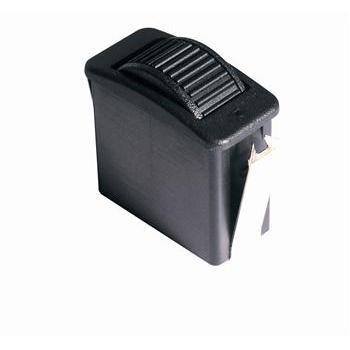
How magnetic sensing fits into industrial automation
Hall effect and related magnetic sensing technologies are designed to respond to the presence, absence, or strength of a magnetic field. In practical terms, this allows machine builders and maintenance teams to monitor moving parts without requiring direct contact between the sensor and the target. That makes them useful in applications where contamination, vibration, or repetitive motion would shorten the life of mechanical switches.
Compared with other sensing principles, magnetic sensors are often selected when the target can carry or interact with a magnet, or when the sensor needs to be sealed and mounted discreetly. If your application is based on other physical variables, related technologies such as flow sensors & pitot tubes or inclinometers may be more appropriate for process or motion measurement.
Common device types in this category
This range typically includes digital magnetic switches, analog-output sensors, and specialized magnetic sensing designs. Digital versions are commonly used for on/off position confirmation, while analog versions can be useful when the application needs a variable response related to magnetic field strength or position. TMR and magnetoresistive designs may also be considered where sensitivity, packaging, or application-specific response is important.
Examples in this category illustrate that variety. The Littelfuse 55140-2M-03-D and 55140-2H-04-D are 2-wire switch styles suited to straightforward switching tasks, while the Littelfuse 55140-3H-05-E and 55140-3M-02-A represent 3-wire approaches commonly used where output integration differs. For applications requiring a continuous signal rather than a discrete switch point, the Littelfuse 55140-AP-05-D provides an analog option, and the Littelfuse 54100-17X-05-A highlights a TMR sensor format with sealed industrial use in mind.
Typical applications for Hall effect and magnetic sensors
These sensors are commonly used to detect door position, actuator travel limits, cylinder piston location, conveyor gate status, panel closure, and machine component presence. Because the sensing element can be isolated from the moving target, they are often chosen for equipment where long service life and repeatable operation matter more than direct contact sensing.
They also appear in mobile equipment, packaging machinery, food and beverage systems, material handling, and general factory automation. In more rugged environments, enclosure quality and connector choice become important, especially when washdown, splashing fluids, or airborne debris are present. For applications focused on different environmental variables, categories such as air quality sensors can complement broader machine or facility monitoring strategies.
What to consider when selecting a sensor
The first step is defining the required sensing behavior: simple on/off switching, change-of-state detection, or proportional output. From there, review the available wiring style, supply voltage, mounting method, cable length, and environmental requirements. In this category, you can see examples of panel-mount, flange-mount, and screw-mount designs, along with connectorized and wire-lead terminations for different installation preferences.
Magnetic performance also matters. Some models operate at a defined gauss threshold, while others are designed for programmable or application-dependent response. A product such as the Honeywell 103SR13A-4 may be relevant when sealed construction and a defined unipolar response are needed, while the Banner Engineering Q7MB W/50 shows how magnetoresistive sensing can serve more specialized machine detection tasks. Matching the sensor to the available magnet, sensing distance, and mechanical layout is usually just as important as the electrical specification.
Mounting, wiring, and environmental considerations
Industrial magnetic sensors are often chosen because they can be packaged in compact, sealed housings that tolerate demanding conditions. When reviewing options, pay attention to mounting format, cable routing, connector style, and ingress protection where stated. For example, some devices in this category support flange or panel mounting, while others are intended for screw mounting directly onto machine frames or guarding structures.
Electrical integration should also be checked early in the design stage. Supply voltage ranges, current handling, and output type affect compatibility with PLC inputs, control relays, or embedded electronics. If the installation is exposed to washdown or harsh cleaning cycles, a model with a higher sealing level may be preferable. The Littelfuse 54100-17X-05-A, noted with IP67, and the Banner Engineering Q7MB W/50, noted with IP69K, show how environmental protection can vary depending on the intended duty.
Manufacturers and ecosystem context
This category includes products from established sensor and industrial component suppliers such as Littelfuse, Honeywell, and Banner Engineering. The available range covers compact switch sensors, analog magnetic sensors, ruggedized industrial formats, and complementary magnetic accessories.
Accessory selection can be important in real installations. The Sensata Technologies - BEI Sensors M9105/K08 Female Magnet Support is a good example of a supporting component rather than a standalone sensing device; parts like this help create the complete magnetic sensing arrangement, especially in encoder, position feedback, or custom mechanical assemblies. Reviewing the sensor and magnet as a combined system is often the best way to avoid installation issues later.
When this category is the right choice
If your application needs non-contact detection of position, movement, or presence using a magnetic target, this category is a strong place to start. It is especially relevant when conventional mechanical switches may wear out too quickly, or when the sensing point needs to remain sealed from dirt, moisture, or frequent motion.
Within the available range, the best choice depends on how the signal will be used, how the sensor will be mounted, and what environmental conditions it must survive. By comparing output style, mounting form, voltage compatibility, and the magnet arrangement, buyers can narrow down a sensor that fits both the electrical design and the mechanical realities of the machine.
For machine builders, maintenance teams, and industrial buyers, magnetic sensing offers a practical balance of durability, simplicity, and integration flexibility. A careful review of sensing method, magnet pairing, wiring, and installation environment will help you select an industrial Hall effect or magnetic sensor that performs reliably in day-to-day operation.
Get exclusive volume discounts, bulk pricing updates, and new product alerts delivered directly to your inbox.
By subscribing, you agree to our Terms of Service and Privacy Policy.
Direct access to our certified experts