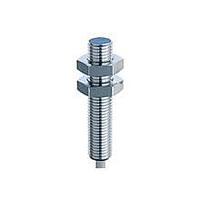
Proximity Sensors
Reliable object detection is a basic requirement in automated machinery, material handling, packaging, and assembly lines. When contact-based switches are not practical, proximity sensors help detect the presence, position, or movement of targets without mechanical wear, making them a widely used choice in industrial sensing systems.
This category brings together proximity sensing solutions for common factory and machine-building tasks, from short-range presence detection to repeatable position monitoring. It is especially relevant for engineers and buyers looking for compact sensors that can be integrated into control cabinets, machine frames, conveyors, and production equipment with stable long-term performance.
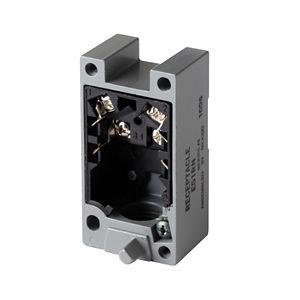
Where proximity sensors fit in industrial automation
In practical use, these sensors are often selected to confirm whether a part has arrived, whether a machine element is in the correct position, or whether a process step can continue safely. Because they operate without physical contact, they can reduce mechanical fatigue and support more consistent switching behavior in repetitive applications.
Proximity sensors are commonly used alongside PLCs, actuators, drives, and other sensing devices to build dependable automation logic. In broader sensing architectures, they may complement technologies such as color sensors for product verification or flow sensors & pitot tubes when both object presence and media monitoring are required in the same machine or process line.
Common sensing tasks and application environments
A typical use case is simple part detection: checking whether a workpiece is present on a fixture, whether a pallet has reached a stop point, or whether a moving component has passed a reference position. These functions are essential in packaging equipment, machine tools, intralogistics systems, robotics cells, and general factory automation.
Proximity sensors are also useful where contamination, vibration, or repeated cycling would make contact switches less desirable. Depending on the sensing principle and installation layout, they can support detection tasks in confined spaces, near moving assemblies, or at points where fast and repeatable status feedback is needed for interlocking and sequence control.
Selection factors that matter in real projects
Choosing the right device usually starts with the target object, sensing distance, mounting constraints, and electrical interface. Engineers typically evaluate whether the application needs compact installation, front-face detection, side access, or a sensor body suitable for tight machine geometry. Environmental conditions such as dust, washdown exposure, vibration, and cable routing also influence the final choice.
It is also important to consider switching behavior, response needs, housing style, and how the sensor will be connected to the control system. For projects that include multiple sensor technologies, related categories such as ambient light sensors or inclinometers can help extend measurement capability beyond simple presence detection.
Representative products in this category
The product range includes models from established industrial sensing brands such as Balluff, Banner Engineering, and BAUMER. Examples in this category include Balluff BHS0021, Balluff BES0495, and Balluff BES03PT, which illustrate the variety of form factors and application roles proximity sensors can cover in machine automation.
Other notable options include BAUMER IFRM 04P15A3/S35L, BAUMER U500.PA0-11110577, BAUMER U300.D50-DPMJ.72N, and BAUMER UNDK 10P 8914 S35A, as well as Banner Engineering models such as T30UINB, T30UHPB, T30UDPBQ, and OPBT2QD. These references are useful as examples of the breadth of the category, but the right selection should always be aligned with the sensing principle, installation space, and control requirements of the application.
Brand landscape and sourcing considerations
For many B2B buyers, brand selection is tied to existing machine standards, maintenance preferences, and integration familiarity. Balluff, Banner Engineering, and BAUMER are well-known names in this category and are often considered when users need industrial-grade sensing components for OEM design, retrofits, or MRO purchasing.
Depending on the wider project scope, some teams may also evaluate complementary automation brands listed across the platform, especially when standardizing connectors, control hardware, or adjacent sensor technologies. The key is not simply choosing a familiar name, but matching the device to the target material, installation method, expected duty cycle, and plant operating conditions.
How to narrow down the right proximity sensor
A practical selection process usually begins with a few questions: What object needs to be detected, how far away will it be, how much installation space is available, and what kind of signal does the controller expect? Once these basics are clear, it becomes easier to compare sensor body style, sensing method, and connection format without overcomplicating the decision.
It is equally helpful to think about maintenance and lifecycle requirements. A sensor that fits the mechanical envelope but complicates replacement, cable routing, or alignment may not be the most efficient choice over time. For industrial buyers managing multiple machines or plants, consistency in mounting approach and electrical integration can simplify spare parts planning and service work.
Supporting stable automation performance
In many systems, a proximity sensor is a small component with a very important role. Accurate non-contact detection helps maintain sequence reliability, reduce false triggers, and support smoother machine operation across repetitive cycles. That is why this category is relevant not only for new machine design, but also for upgrades and replacement planning.
Whether you are sourcing for a single machine station or a broader automation project, this selection of Proximity Sensors provides a focused starting point for evaluating industrial detection devices from recognized manufacturers. Reviewing application conditions, mounting limits, and control requirements early will make it easier to identify a solution that fits both technical and operational needs.
Get exclusive volume discounts, bulk pricing updates, and new product alerts delivered directly to your inbox.
By subscribing, you agree to our Terms of Service and Privacy Policy.
Direct access to our certified experts