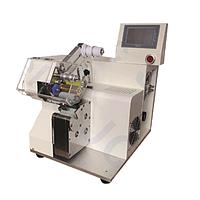
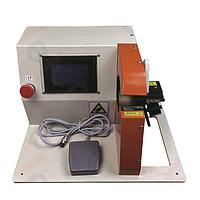
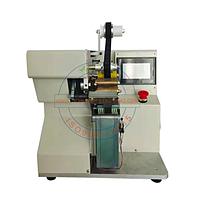
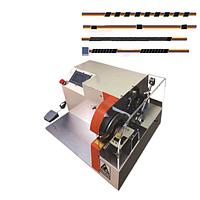
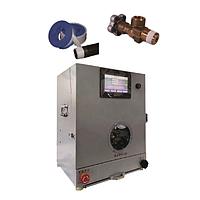
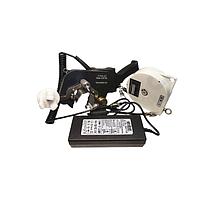
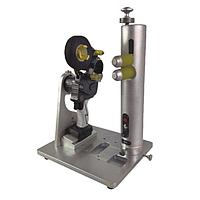
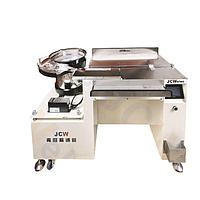
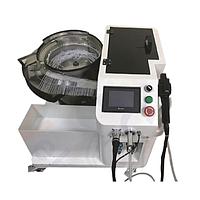
Tape wrapping machine
In wire harness production, consistent taping is not just a finishing step. It affects bundle protection, abrasion resistance, noise reduction, routing stability, and the overall appearance of the assembly. For manufacturers working with automotive harnesses, appliance wiring, control cabinets, or general cable assemblies, choosing the right Tape wrapping machine helps improve repeatability while reducing operator fatigue and process variation.
This category brings together equipment designed for wrapping, bundling, and tape handling across different production needs. From hand-held tools for flexible station work to desktop and automatic systems for higher throughput, these machines support common tape materials such as PVC, cloth, and felt, depending on the application and process setup.
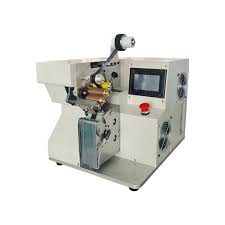
Where tape wrapping machines fit in cable assembly
Wire harness taping is typically used to hold conductors together, protect branches, and create a cleaner, more manageable assembly before final installation. In many production lines, taping sits alongside other cable preparation steps such as wire and cable cutting, stripping, and crimping. The right machine helps maintain more uniform overlap, tighter process control, and more stable cycle times.
Different harness designs call for different taping methods. Some applications require continuous spiral wrapping along a section of harness, while others focus on point bundling at specific positions. That is why this category includes both automatic wrapping equipment and compact bundling solutions, allowing users to match the machine type to the actual assembly workflow.
Main machine types in this category
A practical way to evaluate this category is by working style. Hand-held models are useful when operators need freedom of movement, variable bundle positions, or quick changeover between harness sizes. Desktop and automatic units are better suited to repetitive production, where stable feeding, controlled rotation, and more consistent taping quality are priorities.
For example, the Sedeke STP-F Hand-held Lithium Battery Tape Wrapping Machine and the Sedeke STP-BⅠ / STP-BⅡ hand-held taping machines are suitable when portability matters. For more structured production environments, models such as the Sedeke STP-C Automatic Wire Taping Machine, Sedeke STP-D Automatic Tape Wrapping Machine, and Sedeke STP-AS Automatic Tape bundling Machine provide a more automated approach for repeatable wrapping and bundling tasks.
Typical applications and tape materials
Most users searching for this type of equipment are handling wire harnesses with varying diameters, branch structures, and protection requirements. Tape wrapping machines are commonly used in cable assembly for automotive sub-harnesses, electronic equipment wiring, appliance manufacturing, and industrial control systems. In these environments, the machine needs to support the bundle size and tape format used in the production process.
Based on the products in this category, common supported materials include PVC, cloth, and felt tapes. This matters because different tapes behave differently during winding. Cloth and felt are often chosen where flexibility, abrasion control, or noise suppression is important, while PVC is often used where basic insulation support and bundling efficiency are required. Equipment that can accommodate a practical tape width range gives more flexibility across product variants.
How to choose the right tape wrapping machine
The first point to check is the wire harness diameter range. A machine should fit the actual bundle sizes in your production, not just a nominal average. Some compact hand-held units are suited to smaller or mid-range diameters, while larger-capacity machines can handle thicker harnesses or wider tape formats. Tape width, tape roll dimensions, and the required number of wrapping turns also affect machine selection.
The second point is process mode. If the operator manually positions and wraps different harnesses throughout the day, a hand-held machine may be more efficient than a fixed desktop unit. If your line needs stable cycle control and repeatable motion, automatic models with defined feeding and rotating parameters are often a better fit. For related automation in the same workflow, some users also review wire crimping equipment to improve consistency across the full harness assembly process.
Another practical factor is utilities. Some machines in this category work with standard AC power only, while others also require compressed air. In a factory environment, that may be easy to support, but for mobile stations or smaller work areas, a battery-powered or portable option can be more practical. Considering operator ergonomics, installation space, and expected daily output will usually lead to a better long-term choice than selecting by speed alone.
Representative models and selection logic
Sedeke is the main featured manufacturer in this category, with solutions ranging from portable taping tools to automatic bundling and tape cutting equipment. The STP-C and STP-D models are relevant for users looking for automatic wrapping with adjustable process capability, while the STP-AS addresses tape bundling tasks where controlled rotation and harness compatibility are important.
For operators who need flexibility at the workstation, the STP-F and STP-B series provide a more mobile approach to harness wrapping. If the process also includes tape preparation, the Sedeke STB-55C Automatic Tape Cutting Machine can support tape handling within the wider taping workflow. For bundling-focused tasks, models such as the STB-10, STB-50, STB-55, and STB-60 show how this category overlaps naturally with broader winding and bundling machines used in cable assembly lines.
When bundling, taping, and tying need to work together
Not every harness is secured with tape alone. In some production environments, tape wrapping is one step within a larger bundling process that may also include cable ties or staged fixation. That is where process planning becomes important. A tape wrapping machine may be ideal for surface coverage and localized fixing, while a tie-based solution may be used at different points in the assembly for structural retention.
This is also why the category can be useful for users comparing adjacent equipment types, not just one machine. For example, the JCW JCW-T07 Handheld Tying Gun Nylon Zip Tie Machine illustrates a different but related method of harness organization. It is not a tape wrapper, but it helps clarify how taping equipment fits into the wider ecosystem of wire bundle handling and finishing.
What to review before ordering
Before selecting a machine, it is helpful to confirm several process details: harness diameter range, tape width, tape material, roll size, required wrapping style, and whether compressed air is available at the workstation. These points directly affect machine compatibility and day-to-day usability. Small differences in tape core size or harness geometry can influence setup time and production stability.
It is also worth considering how the machine integrates with upstream and downstream steps. If the line includes stripping before taping, users may also want to compare compatible wire stripping machines to improve flow between operations. Looking at the full process rather than one station in isolation often leads to better throughput and fewer manual adjustments.
Final thoughts
A well-matched tape wrapping solution helps create cleaner harness assemblies, more stable production results, and a more efficient workstation layout. The machines in this category cover a useful range of needs, from portable wrapping tools to automatic bundling and tape handling systems, with examples from Sedeke and related cable processing applications.
If you are comparing options, the most effective approach is to start with your actual harness size, tape type, production volume, and workstation conditions. From there, it becomes much easier to identify whether a hand-held, desktop, or automatic tape wrapping machine is the right fit for your process.
Get exclusive volume discounts, bulk pricing updates, and new product alerts delivered directly to your inbox.
By subscribing, you agree to our Terms of Service and Privacy Policy.
Direct access to our certified experts