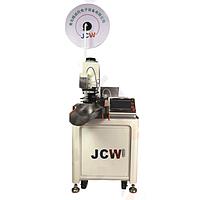
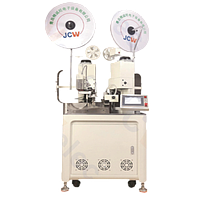
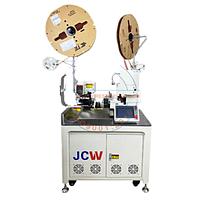
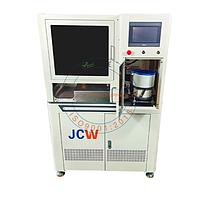
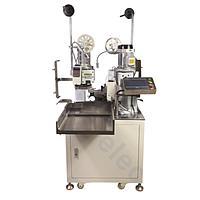
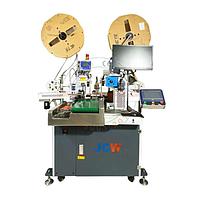
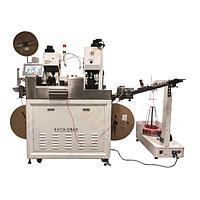
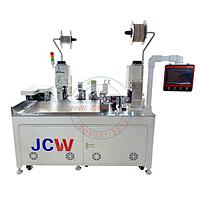
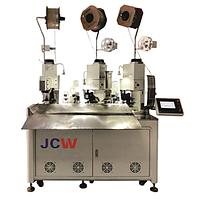
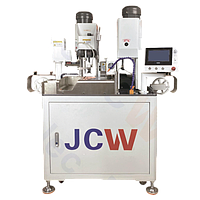
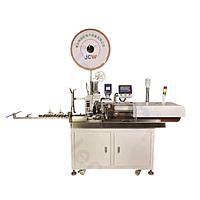
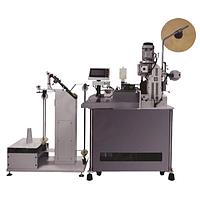
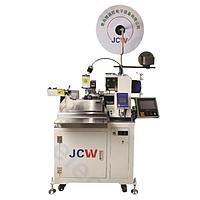
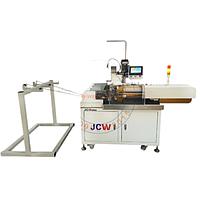
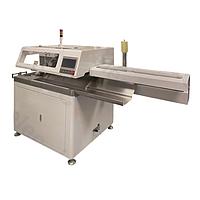
Wire & cable processing machine
Efficient cable preparation has a direct impact on assembly quality, throughput, and labor consistency. In production environments where repeated cutting, stripping, bending, twisting, or feeding tasks are part of daily operations, the right wire & cable processing machine can help reduce manual variation and support a more stable workflow.
This category brings together equipment used for handling wires and cables across different stages of processing. It is relevant for manufacturers, panel builders, wire harness workshops, and other industrial users who need practical solutions for repetitive cable preparation tasks with better control over dimensions, speed, and process repeatability.
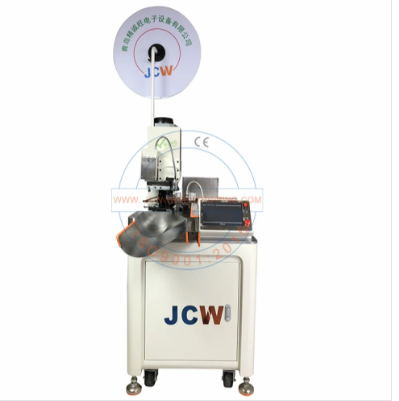
Where these machines fit in production
Wire and cable processing is rarely a single-step job. Depending on the application, operators may need to cut cable to length, strip insulation at one or both ends, bend formed wire, prepare multi-core cable, or organize output for the next assembly stage. Using dedicated equipment helps standardize these operations, especially in medium- to high-volume production.
Typical use cases include cable harness preparation, electrical cabinet assembly, electronics manufacturing, appliance production, and general industrial wiring. In these settings, machine-based processing supports cleaner handling of conductors and insulation while making it easier to maintain consistent output from batch to batch.
Key processing tasks covered in this category
This category covers a broader ecosystem of equipment rather than a single machine type. Some systems are designed primarily for cutting and stripping, while others add bending, prefeeding, bundling, or twisting functions depending on the process requirement. The practical advantage is that users can select equipment that matches the actual production step instead of overinvesting in unnecessary complexity.
For example, the Kingsing KS-W0110 is suited to applications that combine stripping and wire bending in one workflow. With support for multiple bending segments and program storage, it reflects the role of automated wire forming and preparation in repetitive jobs where shape consistency matters. For more general cut-and-strip work across a wider cable range, the HSNCO HS-BX06 illustrates the value of automatic processing for both single-core and multi-core cable preparation.
How to choose the right machine for your process
A good selection process starts with the cable itself. Cross-sectional range, insulation type, and cable construction all influence machine suitability. Soft materials such as silicone-insulated wire may behave differently from PVC, Teflon, or coaxial cable, so matching the machine to the actual material set is more important than focusing on one headline specification.
The next step is to define the required operation clearly: cut only, strip one or both ends, bend after stripping, or prepare cable for later taping or crimping. Users should also consider batch size, changeover frequency, and the need to save processing programs. In production lines where air supply quality affects machine performance, related support systems such as compressed air treatment equipment may also be relevant.
Important performance factors to compare
Several machine characteristics have a practical impact on day-to-day use. These include supported wire size range, stripping length, cutting length, tolerance, operation interface, and throughput. A touch screen interface and stored program groups can be useful in facilities that run multiple cable types or change jobs frequently during a shift.
It is also worth reviewing installation requirements such as power supply, compressed air needs, machine footprint, and maintenance accessibility. In some production environments, downstream insulation or finishing steps may be part of the same workflow, which is why adjacent equipment such as a heat shrinking machine can be a natural extension of the process rather than a separate purchasing decision.
Representative manufacturers and product examples
This category includes equipment and related industrial brands that support different parts of the cable preparation workflow. Among the more directly relevant names for machine-based processing are Kingsing and HSNCO, both represented here by automatic processing equipment intended for repeatable wire handling tasks.
The Kingsing KS-W0110 is an example of a compact machine designed for stripping and bending, which can be useful when shaped wire output is required. The HSNCO HS-BX06 focuses on automatic cutting and stripping across a broad wire size range, making it relevant for workshops handling varied cable types. Other listed brands such as KNIPEX, STANLEY, and Gedore are well known in industrial tooling, and while they are not the core focus of this machine category, they can still be relevant in surrounding manual assembly, finishing, and maintenance tasks.
Benefits of automation in wire and cable preparation
The main value of this equipment is not simply speed. In many facilities, the bigger advantage is process consistency. Repeated manual stripping or cutting can introduce variation in length, insulation removal, or handling quality, especially across different operators and shifts. Automated machines help reduce that variation and support more predictable downstream assembly.
Automation can also improve workflow organization by reducing rework, simplifying repeat jobs, and making it easier to document settings for recurring part numbers. For companies scaling production, this often creates a more stable transition from manual preparation toward semi-automatic or automatic cable processing.
When a broader processing setup makes sense
In practice, cable preparation is often part of a multi-step production cell. A manufacturer may start with prefeeding, move to cutting and stripping, then continue with twisting, wrapping, crimping, marking, bundling, or heat treatment depending on the finished product. Looking at the category as part of a production system helps buyers make better decisions about compatibility and future expansion.
This is especially important for operations planning to increase output or add more cable variants over time. Choosing equipment with suitable adjustment range, program memory, and integration potential can make future process upgrades easier without replacing the entire setup too soon.
Choosing with application needs in mind
There is no single machine that suits every cable job. Some users need a compact solution for short runs and frequent changeovers, while others need stable output for recurring high-volume parts. The best approach is to align the machine with the actual conductor range, insulation material, operation sequence, and expected daily workload.
If your process involves more than one preparation stage, it is worth evaluating this category as part of a complete cable handling workflow rather than a standalone purchase. A well-matched wire and cable processing setup can support cleaner output, smoother assembly, and better production control as requirements grow.
Get exclusive volume discounts, bulk pricing updates, and new product alerts delivered directly to your inbox.
By subscribing, you agree to our Terms of Service and Privacy Policy.
Direct access to our certified experts