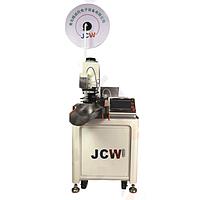
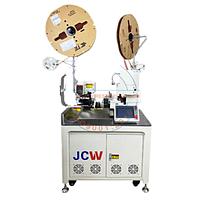
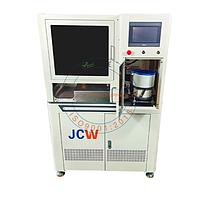
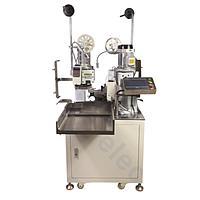
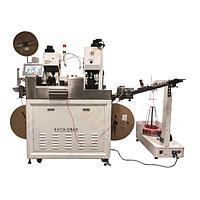
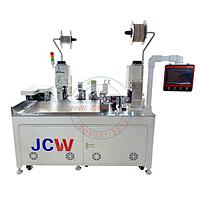
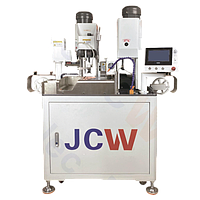
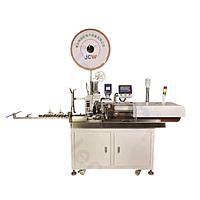
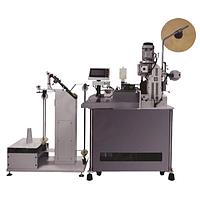
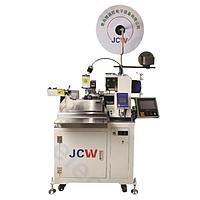
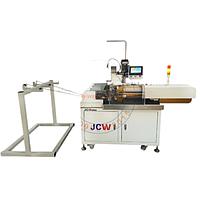
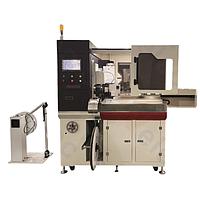
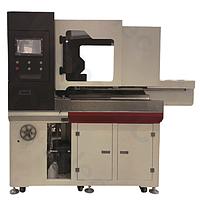
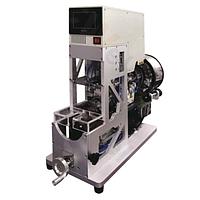
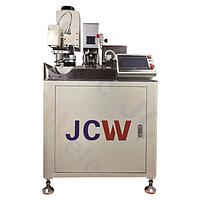
Wire Crimping Machine
Reliable wire termination starts long before final assembly. In cable harness production, panel building, and electrical manufacturing, the consistency of each crimp directly affects conductivity, mechanical retention, and long-term product performance. That is why selecting the right wire crimping machine is not simply a matter of automation level, but of matching the machine to conductor type, throughput, and process stability.
This category is intended for buyers who need a clearer view of where crimping equipment fits within the broader wire processing workflow. Whether you are building a new line or improving a semi-automatic workstation, understanding machine role, tooling compatibility, and supporting hand tools can make specification and purchasing much easier.
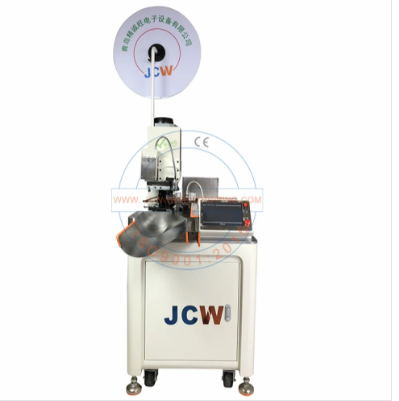
Where wire crimping machines fit in production
A crimping machine is used to attach terminals, connectors, or ferrules to prepared conductors with controlled force and repeatability. In practical manufacturing environments, this step usually comes after cutting and stripping, and before bundling, marking, or final assembly. For that reason, buyers often evaluate crimping equipment as part of a complete process rather than as a standalone machine.
If your workflow also includes conductor preparation, it may be useful to review related equipment such as wire and cable cutting machines or a wire stripping machine. Looking at the full sequence helps reduce bottlenecks between upstream material handling and downstream termination.
Common applications for wire crimping equipment
Wire crimping machines are widely used in harness manufacturing, appliance assembly, automotive subassembly, control cabinet wiring, and electronics-related production. In these settings, the main requirement is usually a repeatable crimp profile that supports both electrical continuity and mechanical durability. Even small deviations in conductor insertion or crimp height can lead to rework, inspection failures, or field issues.
Different applications also place different demands on the process. Short-run production may prioritize fast changeover and operator convenience, while high-volume lines may focus more on cycle consistency, feeder integration, and reduced manual handling. Understanding the target application is essential before comparing machine formats.
Key factors when choosing a wire crimping machine
The first selection point is the type of wire and terminal being processed. Conductor size range, insulation characteristics, terminal style, and production volume all influence whether a compact bench setup or a more integrated solution is appropriate. Buyers should also consider how often product changeovers occur, because frequent variation can affect tooling strategy and setup time.
A second factor is process repeatability. In industrial environments, stable crimp quality depends not only on pressing force, but also on wire positioning, terminal presentation, and operator workflow. For that reason, many procurement teams assess the machine together with fixtures, dies, and inspection requirements rather than evaluating the base unit alone.
Another practical point is line integration. If cable assemblies move onward to organization or finishing, related categories such as winding and bundling equipment may become relevant. This broader view is especially helpful when planning a scalable production cell instead of solving a single process step in isolation.
Manual tools and support equipment around the crimping process
Even in automated or semi-automated lines, hand tools remain important for setup, maintenance, adjustment, and secondary operations. Technicians often need screwdrivers, pliers, cutters, and service tools to change tooling, secure fixtures, handle retaining elements, or perform quick workstation corrections. That is why a crimping operation typically depends on an ecosystem of support tools rather than on one machine alone.
Examples in this catalog include T-handle hex screwdrivers from Gedore, such as the NO. 2142 T series in 2.5x152 mm, 3x152 mm, 4x152 mm, and 6x188 mm formats, which are useful where hex adjustments are part of machine setup. For gripping and fine handling, models from KNIPEX such as the Super Knips 7861140, locking pliers 4104180, and selected circlip pliers can support maintenance and fixture work around the crimping station.
General assembly tasks may also call for workshop staples such as the STANLEY 80-236 combination wrench with 22 mm opening size. These products are not substitutes for a crimping machine, but they play a practical role in installation, alignment, and routine servicing of cable-processing equipment.
Evaluating quality beyond basic output speed
It is tempting to compare machines mainly by throughput, but production efficiency depends just as much on uptime, setup stability, and the ease of maintaining crimp consistency across batches. A machine that runs quickly but requires frequent adjustment may not deliver the best real-world productivity. In many B2B environments, a balanced evaluation produces better long-term value than a speed-focused comparison.
Buyers should look closely at tooling compatibility, operator accessibility, and how the machine supports repeatable positioning. These factors influence training time, maintenance workload, and inspection results. When the process involves multiple cable types, changeover practicality can be just as important as nominal production rate.
Building a more complete wire processing line
Crimping is often one station within a larger cable preparation workflow. Depending on product design, the line may also include stripping, cutting, wrapping, bundling, or related finishing operations. Planning these steps together can improve material flow, reduce handling errors, and make future expansion easier.
For manufacturers working with protected harnesses or organized cable sets, a tape wrapping machine may complement the crimping stage after termination and routing. This kind of internal navigation is useful when you are comparing categories as part of a broader equipment sourcing project rather than evaluating one machine category in isolation.
What to consider before requesting a quotation
Before shortlisting equipment, it helps to define conductor range, terminal type, target output, and expected changeover frequency. You should also map the surrounding process: who prepares the wire, how terminals are fed, what quality checks are required, and whether the workstation must connect with upstream or downstream machines. This information makes supplier discussions more precise and reduces the risk of mismatched recommendations.
It is also worth identifying the maintenance environment in advance. Access to service tools, spare consumables, and operator training can influence actual productivity more than the base machine specification alone. For industrial buyers, clear process definition usually leads to a better purchasing decision than comparing product names without operational context.
Conclusion
A well-chosen wire crimping machine supports consistent terminations, smoother production flow, and better control over cable assembly quality. The right choice depends on application demands, tooling strategy, and how the crimping step connects with the rest of the wire processing line. If you are reviewing this category for a new project or a production upgrade, focus on process fit first, then compare supporting equipment and maintenance needs to build a more reliable solution.
Get exclusive volume discounts, bulk pricing updates, and new product alerts delivered directly to your inbox.
By subscribing, you agree to our Terms of Service and Privacy Policy.
Direct access to our certified experts