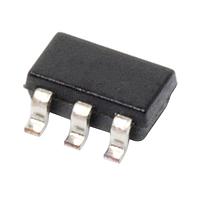
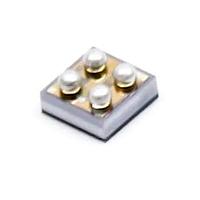
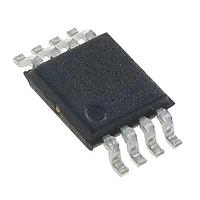
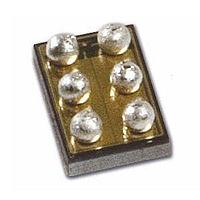
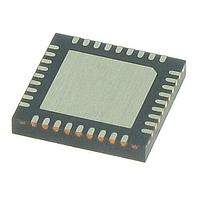
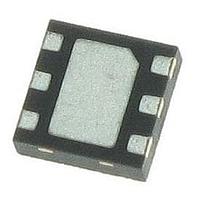
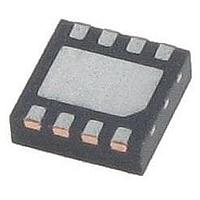
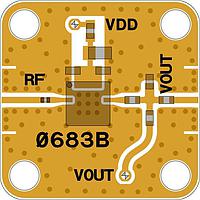
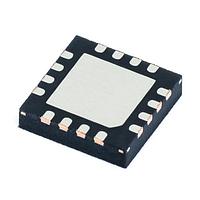
RF Detector
Accurate power and signal monitoring is critical in modern wireless design, especially when circuits must respond reliably across changing frequencies, modulation schemes, and operating conditions. In that context, RF Detector devices play an important role by converting radio frequency energy into a usable signal for measurement, control, protection, or feedback functions inside larger RF systems.
On this category page, buyers and design engineers can explore RF detector ICs used in communication hardware, signal chains, test setups, and embedded wireless electronics. These components are commonly selected when a design needs to sense RF level, support power monitoring, or provide signal information for downstream processing without adding unnecessary complexity to the front end.
Where RF detectors fit in wireless and RF signal chains
An RF detector is typically used to identify or measure the presence, level, or envelope of an RF signal. Depending on the application, it may support tasks such as received signal strength indication, transmit power control, threshold detection, or simplified signal monitoring in compact RF modules.
These devices are often part of a wider integrated circuit ecosystem that includes mixers, amplifiers, synthesizers, and timing or control functions. In more advanced architectures, detector circuits may work alongside PLL devices to help stabilize or supervise RF paths, or interact with control logic that depends on measured signal behavior.
Common applications for RF detector ICs
RF detectors are used in a broad range of equipment where signal awareness matters more than full demodulation. Typical examples include wireless modules, handheld communication devices, RF instrumentation, industrial transmitters, and embedded control platforms that need a simple way to observe RF energy.
They are also relevant in testing and monitoring environments, where engineers need repeatable visibility into signal level without building a more complex measurement stage. In some systems, detector outputs are used for alarms, gain control loops, antenna path supervision, or basic power feedback during development and validation.
How to choose the right RF detector
Selection usually starts with the signal environment. Engineers typically look at operating frequency range, expected input power level, detector response behavior, output format, and how the device will be integrated into the rest of the circuit. Even when detailed performance varies by part number, the practical goal remains the same: obtain stable and useful information from RF energy in a way that matches the system design.
It is also important to consider whether the circuit is intended for measurement, protection, or control. For example, a detector used for envelope sensing may be evaluated differently from one intended for power monitoring in a transmit path. If phase-related behavior is part of the wider design problem, related categories such as phase detectors and shifters may also be relevant during component selection.
Integration considerations in practical designs
In real hardware, RF detectors are rarely chosen in isolation. Input matching, board layout, shielding, power supply quality, and nearby active components can all affect how reliably the detector performs. For that reason, engineers often review the detector as part of the complete RF path rather than as a standalone IC.
This category is especially useful for projects where compact integration matters, including wireless terminals, industrial communication boards, and embedded RF subsystems. In those cases, detector ICs may complement blocks such as modulator / demodulator components when the design requires both signal handling and signal monitoring inside the same platform.
Manufacturers commonly considered in this category
Procurement teams and design engineers often compare parts from established RF and semiconductor suppliers based on availability, design familiarity, and platform compatibility. Within this category, manufacturers such as Analog Devices, Mini-Circuits, Texas Instruments, Microchip Technology, MACOM, Maxim Integrated, and KEYSIGHT may be relevant depending on the target application and sourcing strategy.
Different suppliers may be preferred for different reasons. Some are commonly associated with broad mixed-signal and RF portfolios, while others are often considered for specialist RF building blocks, lab-oriented development environments, or established design ecosystems used across telecom, industrial, and electronic test applications.
RF detectors in broader wireless product development
As wireless systems become more compact and multifunctional, designers increasingly need efficient ways to supervise RF behavior without adding large measurement subsystems. That makes RF detectors valuable in prototypes as well as production designs, particularly where feedback, power awareness, or signal presence detection improves reliability.
They may also be used in systems that interact with adjacent wireless technologies. For example, some applications may sit near identification or short-range communication functions, making related categories such as NFC/RFID tags and transponders relevant when mapping the full signal environment of a device or platform.
What buyers should review before ordering
For B2B purchasing, the most useful evaluation criteria usually include electrical fit, package suitability, lifecycle considerations, and expected use within the assembly or RF module. Engineering teams may also verify whether the detector is intended for low-level sensing, power indication, monitoring loops, or interface with analog and digital control sections.
On a category page like this, the goal is not only to compare available inventory but also to narrow the shortlist based on application logic. Reviewing detector function in the context of the overall wireless architecture helps reduce redesign risk and improves the chances of choosing a part that aligns with both performance needs and sourcing constraints.
Conclusion
Choosing the right RF detector starts with understanding what the circuit needs to observe and how that information will be used in the wider RF chain. Whether the requirement is power monitoring, envelope sensing, or straightforward signal detection, this category supports a more structured search for components that fit practical wireless design and industrial procurement needs.
For teams building or maintaining RF-enabled products, a focused review of detector function, integration requirements, and related signal-chain categories can make component selection faster and more reliable. That approach is often more useful than comparing parts by name alone, especially in complex wireless and RF development work.
Get exclusive volume discounts, bulk pricing updates, and new product alerts delivered directly to your inbox.
By subscribing, you agree to our Terms of Service and Privacy Policy.
Direct access to our certified experts
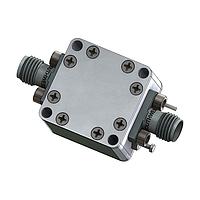
![Quantic X-Microwave XR-A5W5-0404D RF Detector Detector, AD8318ACPZ [PCB: 0625]Recommended Bias Controller: XR-B1E9-0404D-SP](/s-cdn/d9/d93108dd6a5eb0c68266aa048bdfad99ef2a52dc.jpg)