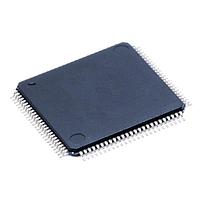
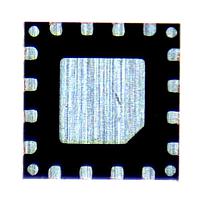
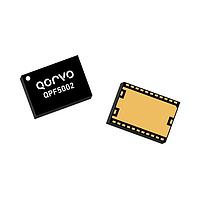
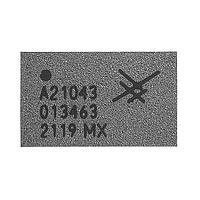
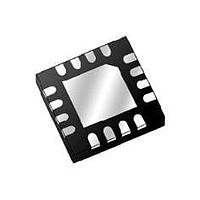
RF Front End
Stable wireless performance depends on more than a baseband or protocol stack alone. In many designs, the real challenge is managing how signals are amplified, filtered, switched, and routed between the antenna and the rest of the radio path. That is where RF Front End devices play a central role, helping engineers balance range, sensitivity, power consumption, and coexistence in compact electronic systems.
For B2B buyers, designers, and sourcing teams, this category is relevant when building or maintaining products that rely on reliable RF transmission and reception. It is especially useful in projects where signal integrity, frequency management, and integration level directly affect system performance, certification effort, and overall design complexity.
What RF front end devices do in a wireless design
An RF front end typically sits between the antenna and the radio transceiver, handling critical signal-conditioning tasks on both transmit and receive paths. Depending on the architecture, it may support amplification, switching, filtering, impedance handling, and channel isolation so the radio can operate more effectively in real-world conditions.
In practical terms, these components help improve link budget, reduce unwanted interference, and support more efficient use of the antenna path. They are commonly considered in designs where engineers need stronger transmit performance, better receive sensitivity, or tighter control over how multiple RF functions share limited board space.
Common use cases across connected products
RF front end components are used across a broad range of wireless electronics, from industrial communication nodes and smart devices to embedded systems with short-range or cellular connectivity. The exact implementation depends on the communication standard, operating frequency, power target, antenna design, and environmental noise conditions.
They are often selected when a standard radio solution needs additional performance tuning at the hardware level. This can be relevant in applications that must maintain stable communication in crowded RF environments, operate with small antennas, or meet stricter requirements for coverage and power efficiency.
How this category fits into the broader RF signal chain
RF front end devices are part of a larger wireless IC ecosystem rather than isolated components. In a complete design, they may work alongside modulator and demodulator ICs, timing and frequency-control devices, and signal-processing blocks that shape how data moves through the radio chain.
Designs that require precise frequency generation or synchronization may also involve PLL devices as part of the local oscillator or synthesizer architecture. In that context, the RF front end contributes to overall signal quality at the antenna interface, while the rest of the chain manages modulation, frequency control, and protocol-level communication.
Key factors when selecting an RF front end solution
Selection usually starts with the wireless standard and frequency band, but several other design factors matter just as much. Engineers typically review integration level, transmit and receive path requirements, matching considerations, board-space constraints, and how the front end must interact with the transceiver and antenna network.
It is also important to evaluate the trade-off between discrete flexibility and integrated simplicity. A highly integrated device can reduce layout effort and simplify sourcing, while a more segmented architecture may offer tighter control over performance tuning. For sourcing teams, the right choice often depends on how the design prioritizes signal integrity, manufacturability, and lifecycle consistency.
Manufacturers commonly considered for RF front end applications
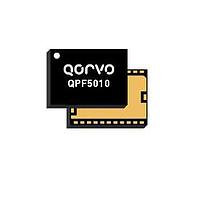
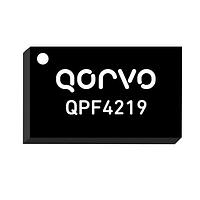
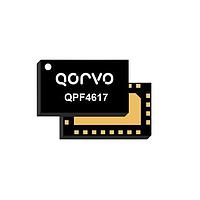
This category may include solutions from established semiconductor suppliers such as Analog Devices, Infineon, NXP, Qorvo, and Renesas Electronics. These manufacturers are often evaluated in projects that require dependable RF building blocks for industrial, embedded, and communication-oriented designs.
Depending on the system architecture, buyers may also compare product ecosystems from Microchip, Nordic Semiconductor, Maxim Integrated, or ams OSRAM where relevant to the wider wireless platform. The best fit is usually determined by the required frequency coverage, integration strategy, radio topology, and compatibility with the rest of the signal chain rather than brand alone.
Integration, coexistence, and design efficiency
As connected products become smaller and more multifunctional, RF coexistence becomes harder to manage. Front end devices can support more efficient antenna-path control in designs where multiple radios, shared antennas, or crowded spectrum conditions increase the risk of desensitization and unwanted coupling.
For engineering teams, that makes this category relevant not only for raw RF performance but also for system-level integration. A suitable front end approach can help reduce redesign cycles, improve repeatability between prototypes and production units, and support cleaner PCB implementation in compact layouts.
Related categories that may help refine your design search
If your application involves frequency division or high-frequency scaling in the RF chain, browsing prescaler devices may provide additional context. Projects focused on phase alignment, tuning, or signal timing may also benefit from reviewing phase detectors and shifters as part of a broader RF architecture.
Looking at related categories can be useful when a design problem is not limited to the antenna path alone. In many wireless systems, overall performance depends on choosing components that work well together across amplification, frequency control, modulation, and interface management.
Finding the right RF front end category for your project
Choosing from the RF front end category is typically a matter of matching wireless requirements with practical design constraints. Rather than focusing only on part names, it is more effective to assess how each device supports the intended frequency plan, radio architecture, PCB layout strategy, and expected operating environment.
For teams developing or sourcing wireless hardware at scale, this category provides a practical starting point for comparing components that influence antenna-side performance and integration. A clear view of the full RF chain will make it easier to shortlist suitable parts, reduce design risk, and build a more robust wireless platform.
Get exclusive volume discounts, bulk pricing updates, and new product alerts delivered directly to your inbox.
By subscribing, you agree to our Terms of Service and Privacy Policy.
Direct access to our certified experts