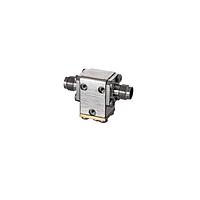
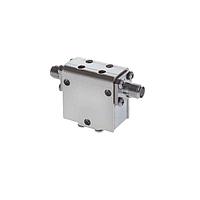
RF Isolators
In high-frequency signal chains, controlling unwanted reflections is just as important as amplifying or routing the signal itself. When reverse power travels back toward a sensitive source, it can reduce stability, affect measurement accuracy, and in some cases shorten the life of upstream components. That is where RF isolators become especially useful in wireless, RF, and microwave designs.
On this page, you can explore RF isolators used to help protect signal sources and improve overall system behavior in demanding electronic applications. Whether the requirement involves laboratory development, communications hardware, or broader RF subsystem integration, selecting the right isolator depends on frequency range, insertion loss, isolation performance, and how the part fits into the rest of the circuit.
Why RF isolators matter in RF signal paths
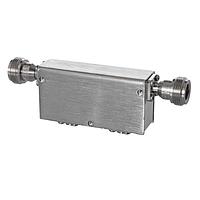
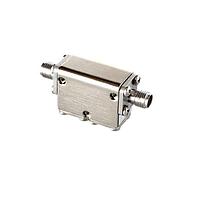
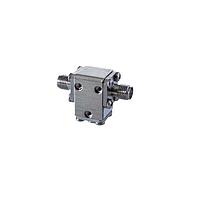
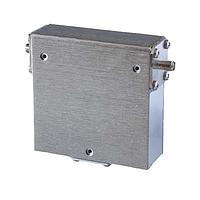
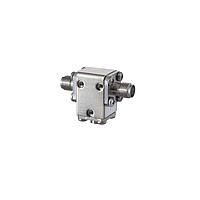
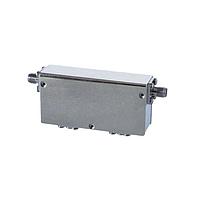
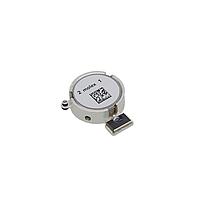
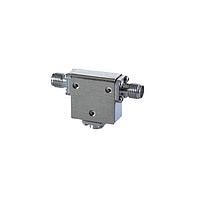
An RF isolator is a passive device that allows energy to pass primarily in one direction while attenuating energy traveling in the opposite direction. In practice, this helps reduce the impact of load mismatch and reflected power on oscillators, amplifiers, signal generators, and other sensitive stages. The result is often a more stable and predictable RF signal chain.
These components are commonly considered in designs where impedance changes, antenna mismatch, or downstream variation can create reverse energy that should not be allowed to return freely to the source. By limiting this reverse interaction, RF isolators support cleaner system behavior and help engineers manage performance in applications where repeatability is important.
Typical applications and design context
RF isolators are relevant across many wireless and electronic environments, especially where high-frequency signals must be transferred reliably between active and passive stages. They are often used near amplifiers, oscillators, mixers, and test setups where reflected power can disturb operation. Even when the isolator is a small part of the bill of materials, it can play an outsized role in protecting upstream circuitry.
In broader system design, engineers may evaluate RF isolators alongside devices such as phase locked loops or modulator / demodulator ICs, depending on where signal integrity and frequency control are most critical. This kind of component-level coordination helps ensure the entire RF path performs as intended rather than optimizing one block in isolation.
Key parameters to review when selecting RF isolators
The first consideration is usually the intended frequency range. An isolator must be matched to the operating band of the application, because performance characteristics can vary significantly across frequency. Engineers also review insertion loss, since every passive component introduces some attenuation, and excessive loss can degrade link budget or measurement margin.
Another important metric is isolation, which indicates how effectively reverse-traveling energy is suppressed. Power handling, impedance compatibility, package style, and environmental requirements may also influence selection. In practical sourcing and design work, the most suitable part is not simply the one with the highest headline value, but the one that balances protection, efficiency, and integration constraints.
How RF isolators fit with related RF components
RF isolators are often evaluated as part of a wider ecosystem of frequency-control and signal-conditioning components. In some architectures, they complement functions handled by phase detectors and shifters or support frequency-generation stages that may also involve prescaler devices. Looking at these parts together can help clarify where protection, control, and signal routing should be applied.
This is particularly important in compact or performance-sensitive systems, where even small interactions between blocks can affect phase noise, output consistency, or downstream sensitivity. Choosing an isolator with the right electrical fit helps reduce those interactions and gives engineers more confidence in real-world operation.
Manufacturer context and sourcing considerations
This category may be relevant to buyers and engineers working across product portfolios from manufacturers such as TDK, Molex, Weidmuller, and DiTom. In technical B2B purchasing, brand familiarity can be useful, but it should support rather than replace a specification-based selection process. The right choice still depends on the application environment, expected operating band, and integration needs.
For procurement teams, it is also helpful to compare availability, documentation quality, and compatibility with adjacent RF components already used in the project. A well-matched RF isolator can contribute to smoother system validation and fewer surprises during prototyping, test, or deployment.
When to use an RF isolator in a design
Not every RF path requires an isolator, but they become especially valuable when there is a realistic risk of reflected power reaching a source that is sensitive to mismatch. This can happen in systems with variable loads, antenna uncertainty, switching paths, or experimental setups where operating conditions may change from one test condition to the next. In those cases, adding isolation can improve robustness without redesigning the entire chain.
They are also useful when engineers need a cleaner interface between functional blocks. If an upstream source performs well on paper but becomes unstable when connected to a real load, an isolator may be one of the components considered to decouple those interactions and support more repeatable performance.
Choosing the right option for your application
Finding suitable RF isolators starts with a clear view of the operating frequency, acceptable loss, reverse-power conditions, and packaging constraints. It is often helpful to assess the device not as a standalone item, but as part of the complete path from source to load, including how other RF integrated circuits and supporting components behave under mismatch conditions.
By comparing the electrical role of the isolator with the broader needs of the design, engineers and sourcing teams can narrow down options more effectively. A well-selected part helps protect sensitive stages, supports signal integrity, and contributes to a more reliable RF system overall.
Get exclusive volume discounts, bulk pricing updates, and new product alerts delivered directly to your inbox.
By subscribing, you agree to our Terms of Service and Privacy Policy.
Direct access to our certified experts