RF Mixer
Frequency conversion sits at the heart of many RF signal chains. When a design needs to translate a signal from one band to another for transmission, reception, filtering, or analysis, the component doing that work is usually an RF mixer. This category is relevant for engineers building wireless infrastructure, test systems, embedded radio platforms, and a wide range of communication electronics where stable and predictable signal conversion matters.
On practical design projects, mixer selection is rarely isolated. It affects gain planning, noise performance, linearity, local oscillator drive requirements, and how the rest of the RF front end behaves under real operating conditions. That is why this category is best approached not just as a list of parts, but as a functional building block within a broader RF IC ecosystem.
Where RF mixers fit in an RF signal chain
An RF mixer combines two signals, typically an RF input and a local oscillator, to create new frequency components at the sum and difference of those frequencies. In receiver architectures, this enables downconversion to an intermediate frequency or baseband. In transmitter paths, mixers are often used for upconversion before amplification and antenna stages.
Because of this role, mixer devices are often evaluated alongside related timing and frequency control elements such as PLL devices, which help generate or stabilize the local oscillator source. In more complex architectures, they may also work with modulator and demodulator ICs depending on whether the design uses direct conversion, superheterodyne, or mixed-signal approaches.
Common applications for RF mixer ICs
RF mixers are used across a broad range of commercial and industrial applications. Typical examples include wireless communication modules, instrumentation, radar-related subsystems, signal generators, spectrum monitoring equipment, and embedded IoT radio platforms. In each of these use cases, the mixer helps move signals into a frequency range that is easier to process, filter, digitize, or transmit.
In test and measurement environments, the mixer stage can strongly influence spur performance, dynamic range, and signal purity. In compact wireless devices, board space, supply constraints, and integration level may become more important. For this reason, engineers usually compare trade-offs between conversion loss or gain, isolation, and linearity rather than focusing on one headline parameter alone.
How to evaluate an RF mixer for your design
The right device depends on the architecture and the expected operating conditions. A useful starting point is the frequency range of the RF, LO, and IF ports. From there, designers normally consider whether the application prioritizes low noise, high linearity, broad bandwidth, lower LO drive, or compact integration.
Another key factor is the intended signal environment. Systems handling weak signals near the noise floor often need careful attention to noise figure and conversion behavior, while high-power or multi-signal environments tend to place more emphasis on intermodulation performance and port isolation. Package style, biasing needs, and thermal considerations can also matter, especially in dense RF boards or production equipment.
Where frequency division is part of the LO chain, some designs may also be reviewed together with a prescaler solution to support synthesizer implementation. This kind of system-level view usually leads to more reliable part selection than looking at the mixer in isolation.
Active and passive mixer considerations
One of the most important distinctions in this category is between active mixers and passive mixers. Active mixers can provide conversion gain and may simplify gain budgeting in certain receiver designs, but they can introduce their own trade-offs in noise, power consumption, and linearity. Passive mixers are often chosen where higher linearity, wider bandwidth, or stronger large-signal handling is required, though they may need more LO drive and additional gain elsewhere in the chain.
The best fit depends on the system objective rather than a universal rule. A compact radio module may favor integration and lower power consumption, while lab equipment or infrastructure hardware may prioritize signal handling and spectral performance. Understanding the surrounding RF stages is essential before narrowing the choice.
Manufacturers commonly used in RF mixer sourcing
This category includes solutions from established RF and semiconductor suppliers such as Analog Devices, Maxim Integrated, Mini-Circuits, Qorvo, Renesas Electronics, ROHM Semiconductor, STMicroelectronics, Texas Instruments, Hittite (Analog Devices), and MACOM. Each of these names is widely associated with wireless and RF design, and selection often comes down to the required frequency coverage, integration style, and the broader component strategy used in a project.
For buyers and design teams, manufacturer choice may also reflect preferred qualification flow, documentation familiarity, second-source planning, or consistency with an existing platform. In B2B procurement, that practical fit can be just as important as the electrical characteristics themselves.
Related RF building blocks worth comparing
Mixer performance is closely tied to the surrounding signal-conditioning chain. For phase-sensitive architectures, engineers may also compare options in phase detectors and shifters when evaluating synchronization or phase control requirements. Looking at these categories together can help clarify whether the design challenge is primarily frequency translation, LO generation, or phase management.
Some wireless designs may also incorporate RFID or near-field communication functions elsewhere in the product, even if the mixer itself sits in a different signal path. In those cases, broader platform planning matters more than treating every RF IC as a standalone purchase. The most efficient sourcing decisions usually come from understanding how each block contributes to the complete radio architecture.
Choosing with application context in mind
For engineers, the selection process typically starts with the intended RF architecture and then narrows according to measurable constraints: bandwidth, linearity, spur control, power budget, and board-level integration. For procurement teams, availability, manufacturer alignment, and long-term program continuity often shape the shortlist as well. A useful category page should support both views.
This RF mixer category is intended to help teams identify suitable frequency-conversion components within a wider wireless and RF IC workflow. If your project also depends on oscillator synthesis, modulation stages, or phase-related control, reviewing adjacent categories can make the final selection more accurate and more efficient.
Get exclusive volume discounts, bulk pricing updates, and new product alerts delivered directly to your inbox.
By subscribing, you agree to our Terms of Service and Privacy Policy.
Direct access to our certified experts


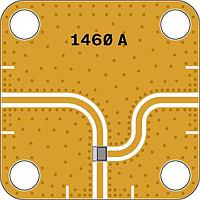
![Quantic X-Microwave XM-A156-0604D RF Mixer Mixer, ADE-1LH+ [PCB: 0866]](/s-cdn/af/af88642971edf3296ea32a6139fbe5808b526627.jpg)

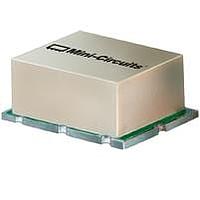
![Quantic X-Microwave XM-A1R8-0404D RF Mixer Mixer, SIM-14LH+ [PCB: 0037]](/s-cdn/cf/cfe94425ec94f1aa8728b333ce4535cf028ff1a3.jpg)