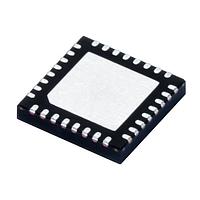
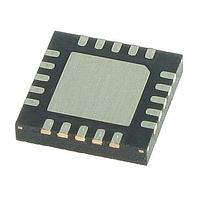
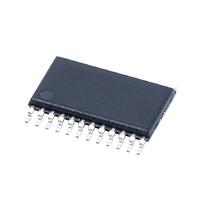
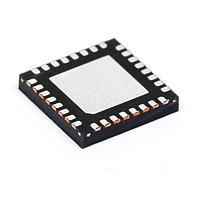
RF Transmitter
Reliable wireless links start at the point where information is converted into a radio signal and delivered to the air interface with the right frequency, modulation method, and power level. For designers working on remote controls, telemetry, sensor nodes, access systems, and short-range industrial communications, selecting the right RF transmitter affects range, battery life, EMC behavior, and overall system complexity.
This category brings together transmitter ICs used in embedded and wireless electronic designs where stable signal generation and efficient RF output are essential. Whether the priority is compact integration, low-power operation, or compatibility with a broader RF signal chain, the available options support a wide range of development needs across industrial and commercial applications.
Where RF transmitter ICs fit in a wireless design
An RF transmitter is responsible for generating or conditioning a radio-frequency signal so data can be sent wirelessly from one device to another. In practical terms, it sits within a larger signal chain that may also include timing circuitry, modulation stages, matching networks, filters, antennas, and sometimes receive-side components in transceiver-based systems.
Depending on the architecture, the transmitter may work with external control logic from a microcontroller and a dedicated frequency source, or it may be part of a more integrated wireless platform. In many designs, engineers also evaluate related building blocks such as PLL devices when precise frequency synthesis and channel stability are part of the requirement.
Typical applications for RF transmitters
RF transmitter ICs are used anywhere a system needs to send data, commands, or identification wirelessly over a defined range. Common examples include industrial sensing, wireless alarms, handheld controllers, smart metering, basic telemetry links, and embedded communication modules integrated into larger equipment.
Application needs can vary significantly. Some projects focus on low data throughput with strong emphasis on energy efficiency, while others prioritize signal integrity, timing accuracy, or the ability to support a specific air-interface scheme. That is why transmitter selection should be tied to the full operating environment rather than frequency alone.
Key selection factors to review
When comparing devices in this category, engineers typically start with the intended operating band, output power expectations, supply constraints, and the required modulation approach. Board size, external component count, regulatory design targets, and antenna strategy are also important because they influence both development effort and final system performance.
It is also useful to consider how the transmitter interacts with adjacent RF functions. For example, designs that rely on dedicated signal formatting may need close alignment with modulator and demodulator components, especially when signal processing is distributed across multiple ICs rather than handled in one integrated device.
Power consumption, startup behavior, spectral cleanliness, and control interface simplicity often become decisive factors during real product development. In battery-powered equipment, these details can matter just as much as nominal transmission capability.
How transmitter architecture influences system performance
Not all RF transmitters are implemented in the same way, and architecture decisions can shape the entire design flow. Some solutions are aimed at straightforward short-range communication, while others are chosen for tighter frequency control, easier channel selection, or better integration into complex mixed-signal platforms.
Frequency generation is one of the most important aspects. In many systems, stable operation depends on how the transmitter works with oscillators and synthesis circuits, and this is where related categories such as prescaler components or phase-management devices may enter the design discussion. Looking at the transmitter in isolation can lead to avoidable redesign work later in the project.
Leading manufacturers in this category
This selection includes products from established semiconductor suppliers known for wireless, mixed-signal, and embedded communication solutions. Brands such as Analog Devices, Asahi Kasei Microdevices (AKM), Infineon, Maxim Integrated, Microchip Technology, Mini-Circuits, NXP, Renesas Electronics, ROHM Semiconductor, and Semtech are widely referenced in RF and embedded hardware development.
Each manufacturer typically brings a different strength to the design process, whether that is integration style, support for compact low-power systems, compatibility with broader analog signal chains, or fit within industrial and consumer wireless applications. For buyers and engineers, that variety makes it easier to compare devices based on practical design priorities instead of choosing only by brand familiarity.
Related RF building blocks worth considering
Choosing a transmitter often leads naturally to decisions about the rest of the RF path. In some systems, signal timing and phase alignment are critical, making phase detectors and shifters relevant during architecture planning. In others, the transmitter is only one part of a broader identification or communication platform.
For example, projects involving contactless identification may also require compatible NFC/RFID tags and transponders on the endpoint side. Reviewing these related categories early can help teams avoid mismatches between the transmission stage, protocol expectations, and final device behavior.
What matters in B2B sourcing and evaluation
For OEMs, integrators, and engineering procurement teams, the selection process is not only technical. Availability, lifecycle fit, package suitability for assembly, and long-term design support all matter when moving from prototype to production. A part that works in the lab still needs to align with manufacturing, compliance, and future maintenance plans.
System compatibility should therefore be checked at both schematic and sourcing level. Reviewing the transmitter together with supporting RF ICs, control electronics, and expected deployment conditions helps reduce redesign risk and improves confidence before volume rollout.
Choosing the right RF transmitter for your project
The most effective way to narrow this category is to begin with the wireless task the product must perform: what data is being sent, over what range, under what power constraints, and within which regulatory framework. From there, engineers can compare device families by integration level, supporting circuitry needs, and fit with the wider RF architecture.
RF transmitter ICs are a foundational part of many wireless electronic systems, and the right choice depends on more than a headline specification. By evaluating application goals, signal-chain requirements, and manufacturer ecosystem support together, buyers can identify parts that are better aligned with both development efficiency and real-world deployment.
Get exclusive volume discounts, bulk pricing updates, and new product alerts delivered directly to your inbox.
By subscribing, you agree to our Terms of Service and Privacy Policy.
Direct access to our certified experts