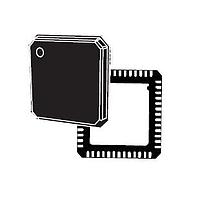
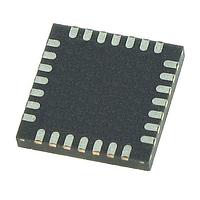
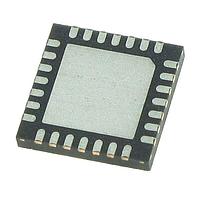
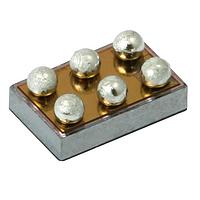
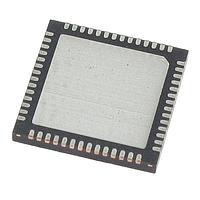
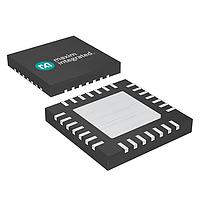
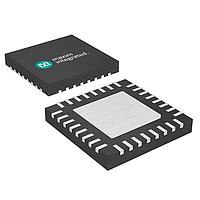
Tuners
Signal selection is a critical step in many RF and wireless designs, especially where a system needs to isolate, receive, or process a desired frequency range with stability and low interference. In that context, Tuners play an important role inside communication, broadcast, consumer electronics, and embedded RF subsystems where frequency agility and channel selection matter.
On this category page, buyers and engineers can explore tuner ICs and related solutions used in frequency-selective front ends. These components are typically considered when a design must capture a target signal, work across defined bands, and support downstream processing stages with cleaner, more usable RF or IF signals.
Where tuner ICs fit in RF signal chains
A tuner is generally used to select a specific frequency or channel from a broader spectrum of available signals. In practical system design, that makes it relevant for applications that need controlled reception, channel filtering, or frequency conversion before demodulation and baseband processing take place.
Depending on the architecture, tuner devices may be used alongside mixers, local oscillators, filters, and control circuitry. They are often evaluated as part of a wider RF path rather than as a stand-alone component, particularly in designs that also involve modulator and demodulator ICs for signal transmission or recovery.
Common application scenarios for tuners
Tuners are typically relevant in systems that operate across multiple channels or frequency bands. Examples can include broadcast reception equipment, wireless consumer devices, RF-enabled industrial platforms, and embedded electronics that need repeatable frequency selection under changing operating conditions.
In many designs, the key requirement is not simply receiving a signal, but receiving the intended signal with enough selectivity to reduce adjacent-channel effects and unwanted noise. That is why tuner choice is closely tied to front-end sensitivity, band coverage, tuning method, and the behavior of the rest of the RF chain.
What to consider when selecting a tuner
Selection usually starts with the target frequency range and the system architecture. Engineers often compare devices based on supported bands, integration level, control interface, power requirements, and how easily the tuner can be combined with other RF and digital stages in the design.
Another important factor is how the tuner behaves in relation to frequency generation and timing stability. In many RF systems, this means looking at compatibility with supporting building blocks such as PLL devices, which are commonly used for frequency synthesis and stable tuning control.
Design teams may also review package constraints, thermal considerations, and long-term supply planning, especially for production programs where RF consistency and lifecycle availability are important purchasing criteria.
Integration with broader wireless and RF designs
Modern tuner implementations are often part of a more integrated RF strategy. Rather than evaluating them in isolation, engineers usually consider how they interact with filtering, phase control, and signal conditioning functions throughout the receive path.
For example, some designs also depend on phase detectors and shifters where timing alignment or phase-sensitive signal handling is relevant. This broader view helps ensure that tuning performance supports actual system-level goals such as reception quality, frequency stability, and efficient signal recovery.
Manufacturers commonly associated with tuner solutions
This category may include offerings from established semiconductor suppliers such as Analog Devices, NXP, STMicroelectronics, onsemi, MaxLinear, Maxim Integrated, Alps Alpine, Skyworks Solutions Inc., and Knowles Johanson Manufacturing. Each manufacturer may approach RF integration differently, so product comparison should focus on the needs of the target application rather than brand name alone.
For B2B sourcing, manufacturer alignment can also affect documentation access, platform familiarity, qualification processes, and compatibility with existing design ecosystems. That is often useful when engineering teams are standardizing around preferred vendors or trying to reduce development risk across multiple wireless products.
How buyers and engineers typically evaluate this category
Procurement teams often begin with availability, lifecycle status, and fit for the intended production volume, while engineers focus more on RF performance, control options, and integration complexity. A good category review balances both perspectives, especially for projects moving from prototype to repeatable manufacturing.
It is also helpful to compare tuner devices with adjacent RF component categories when defining the complete design path. In some applications, related technologies such as prescalers may become relevant for frequency handling and supporting circuit design, depending on how the local oscillator and signal conditioning stages are implemented.
Why this category matters for practical sourcing
Choosing the right RF tuner is rarely just a matter of matching frequency coverage on paper. Real-world performance depends on how the device fits the full system, including noise behavior, tuning accuracy, interface requirements, and interaction with surrounding RF circuitry.
This category is intended to support that evaluation process by bringing together tuner components within the broader wireless IC landscape. Whether the goal is a new design, a replacement part search, or a production-ready sourcing shortlist, a structured view of available tuner ICs helps teams move from specification review to component selection with better context.
Get exclusive volume discounts, bulk pricing updates, and new product alerts delivered directly to your inbox.
By subscribing, you agree to our Terms of Service and Privacy Policy.
Direct access to our certified experts