Soil, Concrete, Cement, Rock, Asphalt, Rebar tester
Material verification in civil engineering and construction often depends on fast, reliable field measurements as much as on laboratory testing. When teams need to assess concrete quality, locate reinforcement, check corrosion risk, or investigate internal defects without damaging the structure, the right Soil, Concrete, Cement, Rock, Asphalt, Rebar tester helps shorten inspection time and improve confidence in maintenance, acceptance, and rehabilitation decisions.
This category brings together instruments used across site inspection, quality control, and non-destructive testing workflows. It is relevant for contractors, testing laboratories, consultants, bridge and building inspectors, precast manufacturers, and infrastructure maintenance teams working with concrete, cement-based materials, reinforced structures, rock, and asphalt-related applications.
Built for field testing and structural assessment
Construction materials are rarely evaluated with a single method. Surface hardness, internal homogeneity, reinforcement location, concrete cover, corrosion potential, and flaw detection each require a different measurement approach. That is why this category includes a practical mix of rebound hammers, ultrasonic instruments, rebar cover meters, and corrosion assessment devices.
These tools are commonly used during new construction, condition surveys, repair planning, and asset management programs. In many cases, they support non-destructive testing so engineers can collect meaningful data while keeping the structure intact and reducing unnecessary core drilling or destructive sampling.
Common tester types in this category
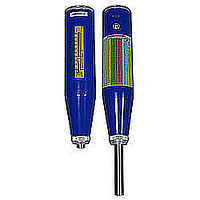
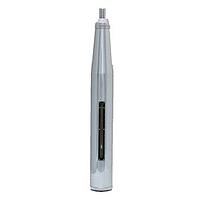
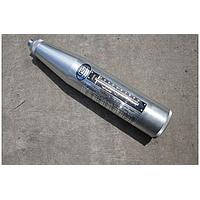
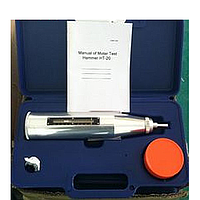
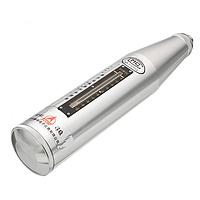
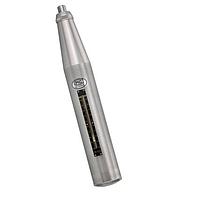
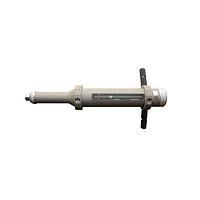
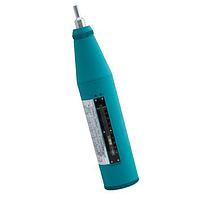
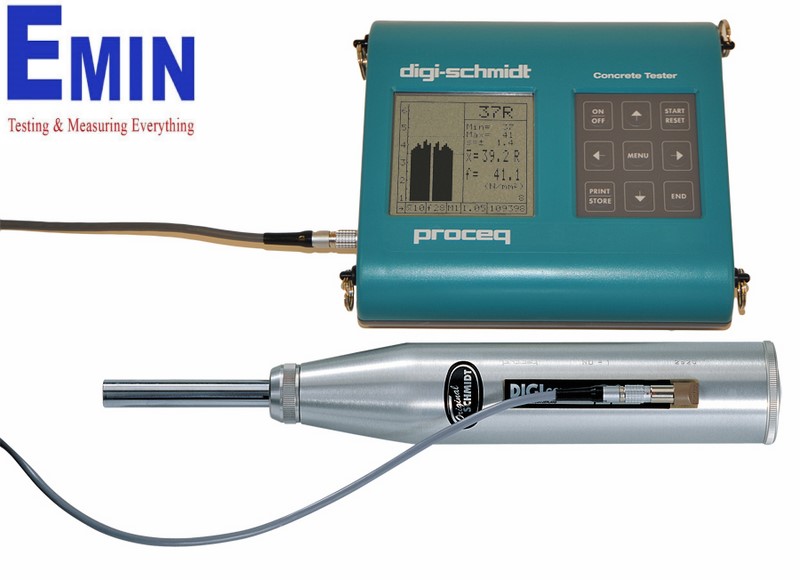
One of the most widely used groups is the concrete rebound hammer. Instruments such as the PCE HT-450 Concrete Hardness Tester, PCE HT 225E Surface Testing - Concrete Hammer, PCE-HT-75 Concrete Rebound Test Hammer, and Matest C380 Concrete Test Hammer are used for rapid surface hardness checks and comparative strength assessment on concrete elements. Depending on the inspection objective, they can be useful for routine quality control, preliminary surveys, or trend comparison across multiple areas.
For internal investigation, ultrasonic instruments provide a different level of insight. The PCE PCE-UCD 100 Ultrasonic Tester and PROCEQ PD8050 Pundit Ultrasonic illustrate how ultrasonic pulse and echo-based testing can be used to evaluate voids, cracks, pile conditions, thickness, delamination, or concrete uniformity. These methods are especially valuable when visible surface appearance does not reveal the full condition of the structure.
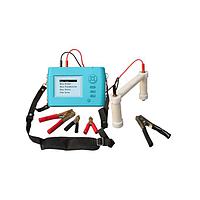
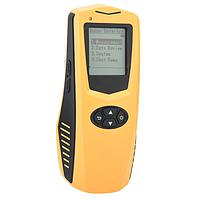
Reinforcement-focused inspection is another major part of this category. The PROCEQ PM8000 Lite Rebar Diameter and Cover Meter is an example of an eddy-current based instrument used to locate rebars, estimate cover depth, and support reinforcement mapping before drilling, coring, or structural verification. For electrochemical assessment, the ELCOMETER range represented here by the W331HM--4 is relevant when checking the condition and corrosion potential of rebars embedded in concrete.
How these instruments are used in practice
On site, testing typically starts with a clear question: is the goal to estimate surface strength, locate steel, confirm cover thickness, detect internal discontinuities, or evaluate corrosion risk? A rebound hammer is suitable when quick surface comparison is needed. A rebar detector or cover meter is more appropriate before cutting, scanning, or anchor installation. Ultrasonic methods are preferred when the concern is internal defects or member integrity.
In repair and rehabilitation projects, multiple methods are often combined. For example, an inspector may use a rebound hammer for surface screening, a cover meter to identify reinforcement layout, and an ultrasonic instrument to investigate voids or cracking patterns. This layered approach improves interpretation because each device contributes different information about the same structure.
Key selection criteria before you buy
The first consideration is the testing method required by your application. Rebound hammers are practical for quick mechanical response checks on concrete surfaces, while ultrasonic systems are better suited to internal examination. Rebar and cover meters are necessary when reinforcement position and concrete cover need to be measured without opening the structure.
The second factor is operating environment. Portable testers used in bridges, tunnels, facades, industrial floors, and precast yards should match the workflow of the inspection team. Features such as battery operation, onboard memory, graphical displays, wireless connectivity, or rugged enclosures can matter as much as the raw measurement range, especially for repeated field use.
It is also important to think about the output you need. Some users require quick pass/fail screening, while others need traceable digital records for reporting and trend analysis. In those cases, instruments with data storage or software connectivity, such as selected models from PCE or PROCEQ, may better fit structured inspection programs.
Representative instruments and where they fit
The PROCEQ PM8000 Lite Rebar Diameter and Cover Meter is well suited to reinforcement detection tasks where users need to estimate concrete cover and identify bar-related information before drilling or structural intervention. Its eddy-current operating principle reflects the typical approach used for scanning reinforced concrete members in a non-destructive way.
For concrete hardness and rebound-based assessment, the category includes both analog-style and digital options. The PCE HT 224E Digital Concrete tester adds digital handling and storage functionality, while the PROCEQ OS8000 Concrete Hardness tester represents another portable approach for rebound measurements in field inspection. The PROCEQ 31009040 Test Anvil is a supporting accessory used in the broader testing ecosystem for hammer verification and control procedures.
Where deeper internal evaluation is needed, the PCE PCE-UCD 100 Ultrasonic Tester and PROCEQ PD8050 Pundit Ultrasonic provide examples of instruments used to detect flaws, assess structural quality, and investigate hidden conditions inside concrete elements. For corrosion-related surveys, the ELCOMETER W331HM--4 supports assessment of rebar condition and potential corrosion activity within concrete structures.
Applications across construction materials and assets
Although concrete inspection is a major focus, the broader category is also relevant to work involving cement-based materials, rock assessment, and asphalt-related quality control contexts. Typical users include civil engineering contractors, public works departments, geotechnical and materials labs, precast plants, and maintenance teams responsible for parking structures, bridges, retaining walls, industrial slabs, tunnels, and marine infrastructure.
These testers are used during incoming material checks, in-process construction verification, acceptance testing, post-repair validation, and long-term condition monitoring. They are equally useful for diagnosing visible distress and for preventive surveys where hidden defects need to be found before they become more costly structural problems.
Why method matching matters more than model count
Choosing the right device is not just about selecting a well-known manufacturer or a popular model. The better approach is to match the instrument to the material, the inspection depth, the required reporting level, and the limitations of the test method itself. A surface rebound result should not be interpreted the same way as an ultrasonic scan or a half-cell corrosion measurement.
This is also why professional buyers often compare equipment families from brands such as Matest, PCE, PROCEQ, and ELCOMETER based on application fit rather than headline specifications alone. The right tester is the one that supports your inspection procedure, operator skill level, and documentation requirements with consistent, repeatable results.
Choosing with confidence for site or laboratory use
Whether the job involves routine concrete quality checks, reinforcement scanning, ultrasonic investigation, or corrosion evaluation, this category covers a wide range of tools used in modern construction testing. The selection includes practical handheld devices for field work as well as instruments suited to more detailed diagnostic tasks.
If you are comparing options for civil engineering inspection, maintenance, or materials testing, start by defining the measurement objective and the reporting level you need. From there, it becomes much easier to shortlist the right tester and build a more effective workflow for evaluating concrete, rebar, cement-based structures, rock, or asphalt-related materials.
Get exclusive volume discounts, bulk pricing updates, and new product alerts delivered directly to your inbox.
By subscribing, you agree to our Terms of Service and Privacy Policy.
Direct access to our certified experts