Basic practice equipment (mechanics, chemistry, physics, biology)
Hands-on learning depends on equipment that turns theory into measurable results. In laboratories, classrooms, and training centers, well-chosen teaching instruments help learners observe physical principles, perform repeatable experiments, and build confidence with real measurement workflows. This is especially important in multidisciplinary environments where mechanics, chemistry, physics, and biology are taught side by side.
Basic practice equipment (mechanics, chemistry, physics, biology) covers a broad range of training and educational tools for foundational experiments, demonstrations, and practical exercises. Rather than focusing on a single discipline, this category supports core teaching activities across multiple scientific subjects, from introductory circuit experiments and induction studies to physiological measurement and water testing.
Built for practical science education
This category is suited to schools, universities, technical institutes, research training environments, and demonstration labs that need reliable equipment for structured learning. The goal is not only to show concepts visually, but also to let users measure, compare, and interpret results through direct interaction with instruments, sensors, boards, and experiment accessories.
In many setups, the value of basic practice equipment lies in its flexibility. A teaching lab may need one group of products for electrical fundamentals, another for optical or electromagnetic demonstrations, and another for biology or chemistry exercises. That breadth makes this category a practical starting point for institutions building or expanding a multi-subject training environment.
Typical equipment found in this category
The range includes both complete teaching devices and supporting components used within a broader experiment system. For example, the PHYWE P2410200 Wheatstone bridge is relevant for resistance measurement exercises and introductory electrical network analysis, while the PHYWE 11007-88 induction coils support experiments related to electromagnetic principles.
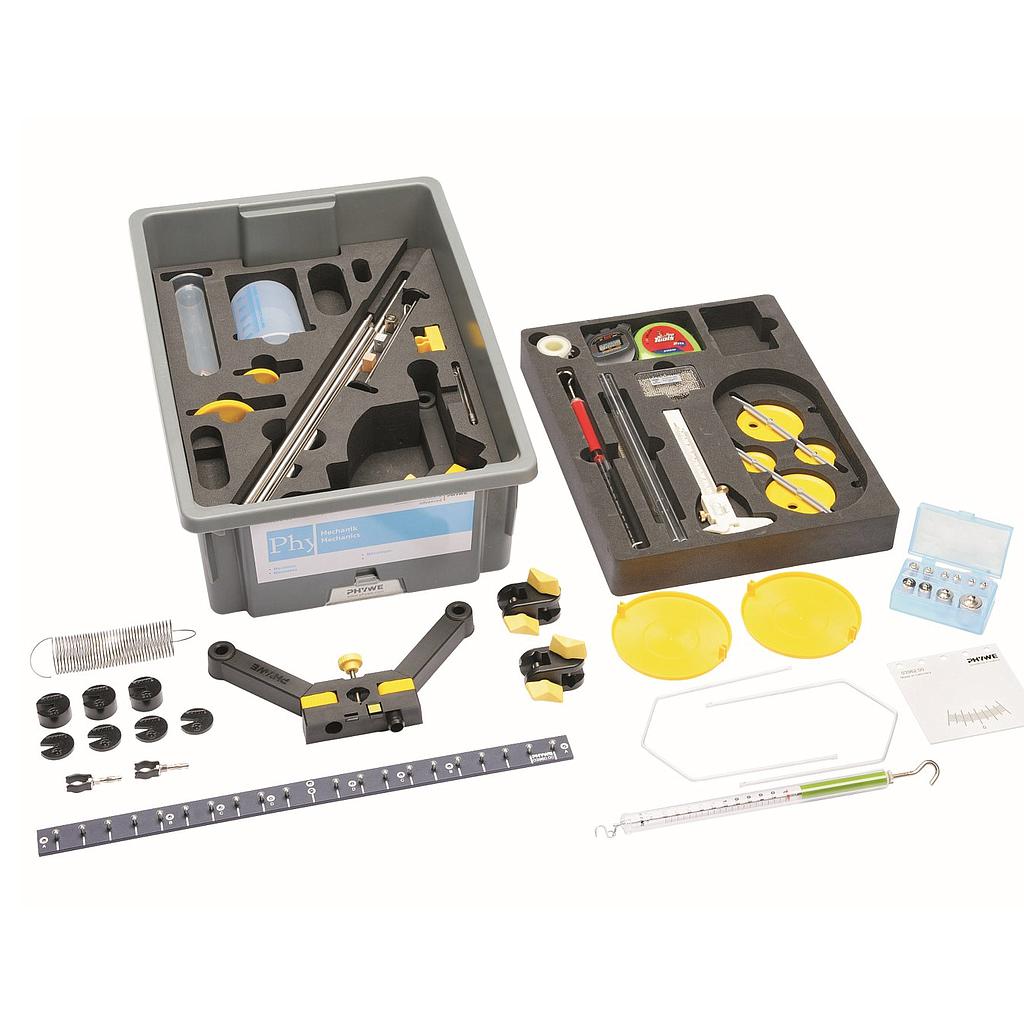
Some items are designed for demonstration setups rather than standalone measurement tasks. Products such as the PHYWE 02150-00 Demo Physics Board with Stand and the PHYWE 15510-01 Demo Advanced Mechanics 1 Necessary Acessories help create structured experiment stations for instructors and students. In addition, specialized instruments like the PHYWE 06779-00 Photocell for h-determination, with housing, support more advanced instructional work in optics and modern physics.
From classical experiments to digital sensing
Modern science education often combines traditional apparatus with connected measurement tools. That is why this category can include both foundational laboratory components and digital sensors that simplify data capture, visualization, and comparison across repeated trials.
A good example is the PHYWE Cobra SMARTsense ecosystem, which supports direct measurement of physiological and human science variables. Products such as the Cobra SMARTsense - EKG, Pulse, Skin Resistance, and Spirometer show how training equipment can move beyond static demonstrations and into real-time data collection. This approach is useful for teaching signal interpretation, experimental design, and the relationship between sensor output and observed biological processes.
How to choose the right practice equipment
Selecting the right products starts with the learning objective. If the aim is to teach core electrical laws and measurement principles, apparatus for resistance networks, amplifiers, and circuit demonstrations may be more relevant. If the application is human physiology or biomedical teaching, sensor-based tools with clear signal output and easy data logging will usually be a better fit.
It is also helpful to think in terms of teaching workflow. Some environments need robust demonstration devices for front-of-class instruction, while others need student-friendly tools for individual or group experiments. Compatibility with existing lab setups, ease of handling, and the level of experiment complexity all matter when building a practical training bench.
For organizations focused more specifically on structured learning systems, related solutions in application training may also be worth reviewing alongside general laboratory teaching equipment.
Examples across chemistry, physics, and life science
The diversity of this category is one of its strengths. In chemistry and environmental practice, the L-Tek LS-H2S Water Test Kit (100test/box) is an example of a test-oriented product used to assess the presence or absence of bacteria in water. This kind of item is relevant for basic water quality exercises, introductory microbiological screening discussions, and practical training related to sanitation or field sampling workflows.
In physics and electronics, the PHYWE 13627-99 Ultra-Low-Noise Current Ampflifier and the PHYWE 13621-00 Electrometer Amplifier support experiments where low-current or high-input-resistance measurement concepts need to be demonstrated clearly. These are not simply components on a list; they help learners understand how signal conditioning and sensitive electrical measurement are handled in real laboratory contexts.
In life science and biomedical instruction, sensor-based tools can support classroom experiments around pulse, respiration, and electrocardiography. If your application is centered more specifically on this area, you may also want to explore biomedical trainer solutions for a more focused training setup.
Why manufacturer quality matters in training environments
Educational and research labs often use equipment repeatedly across many student groups, so consistency and ease of use are important. Established manufacturers such as PHYWE and L-Tek are relevant in this category because they represent different but complementary needs: structured science teaching apparatus on one side, and practical test kit solutions on the other.
For institutions, manufacturer selection is often about more than product branding. It can influence continuity between experiments, compatibility across accessories, and the ability to standardize lab exercises over time. In a mixed-discipline laboratory, having dependable equipment families can make lesson planning and maintenance more manageable.
Supporting broader lab and classroom ecosystems
Basic practice equipment rarely operates in isolation. It usually forms part of a wider educational ecosystem that includes boards, accessories, sensors, software-supported measurements, and discipline-specific experiment modules. That is why buyers often evaluate not only a single product, but also how it fits into a future-ready teaching environment.
For broader foundational setups across multiple scientific subjects, it may be useful to compare this category with other basic practice equipment solutions when planning lab expansion, replacement cycles, or curriculum updates. The right mix depends on whether the priority is demonstration, student practice, experimental accuracy, or digital data acquisition.
Choosing with confidence
When building a practical learning environment, the most effective equipment is the one that matches the level of instruction, the subject focus, and the way experiments are actually delivered. This category brings together tools that support fundamental scientific understanding through observation, measurement, and repeatable hands-on work.
Whether the requirement is a classic Wheatstone bridge setup, induction experiment components, physiology sensors, or a simple water test kit for training use, this range helps connect scientific concepts with real practice. A careful selection of equipment can make laboratory teaching clearer, more engaging, and easier to scale across different courses and learner levels.
Get exclusive volume discounts, bulk pricing updates, and new product alerts delivered directly to your inbox.
By subscribing, you agree to our Terms of Service and Privacy Policy.
Direct access to our certified experts