Electrical Maintenance Skill Training
Hands-on training is essential when technicians need to understand real electrical circuits, protection logic, motor control, wiring practice, and troubleshooting procedures in a safe and structured environment. This category brings together Electrical Maintenance Skill Training systems designed for technical schools, vocational centers, industrial training departments, and research-oriented education labs that need practical electrical teaching equipment rather than theory alone.
The product range focuses on bench-based and workstation-style training platforms that support learning across electrical technology, installation practice, maintenance assessment, safety experiments, and motor or transformer fundamentals. For buyers evaluating lab equipment for education or workforce development, the key advantage of this category is the ability to build progressive training from basic circuit practice to more advanced measurement, control, and fault-oriented exercises.
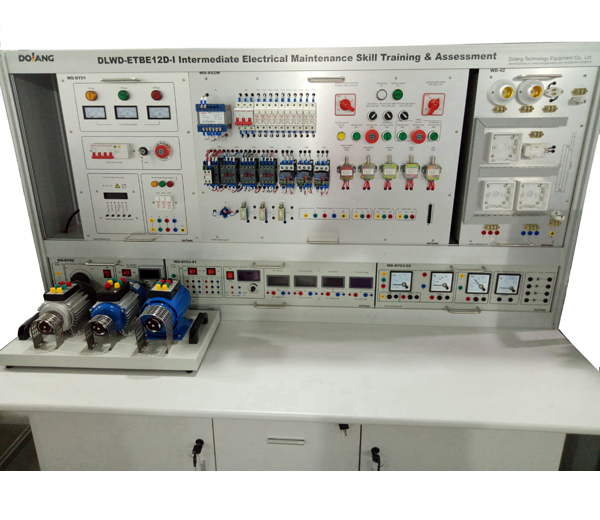
What this category is designed to support
Electrical maintenance training equipment is typically selected for environments where learners must move beyond diagrams and simulations to actual connections, measurements, and operational checks. In practice, that includes vocational classrooms, technical colleges, apprenticeship programs, factory training rooms, and engineering education labs.
Many systems in this category are built around modular panels, protected power outputs, and accessible terminals so instructors can demonstrate electrical control circuits, power distribution basics, instrument use, and common maintenance tasks in a repeatable way. Depending on the setup, training may cover lighting circuits, motor control, relay logic, PLC-related exercises, transformer experiments, and electrical safety awareness.
Typical equipment included in the range
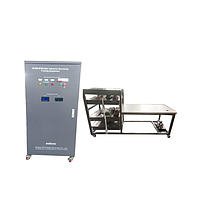
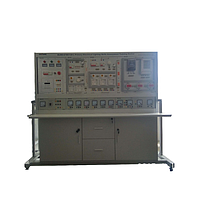
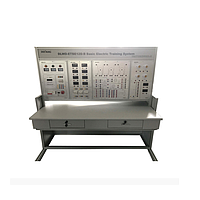
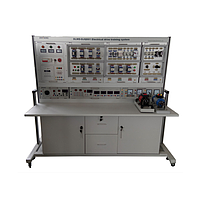
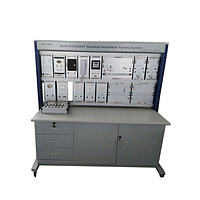
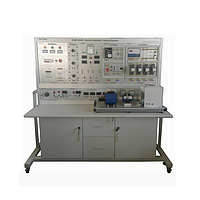
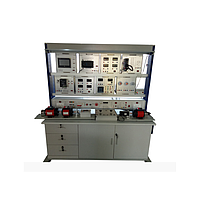
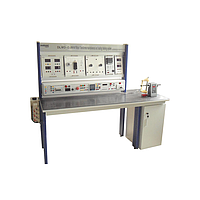
The catalog includes several workstation formats to match different teaching goals. Examples include the DOLANG DLWD-ETBE12DSTA and DLWD-ETBE12D730, both intended for electrical technology practice with standard training-panel layouts and protected AC power outputs for circuit assembly and learning exercises.
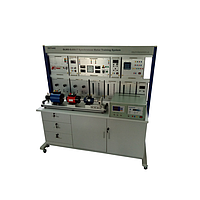
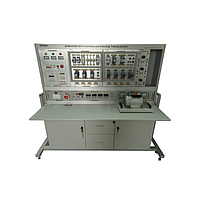
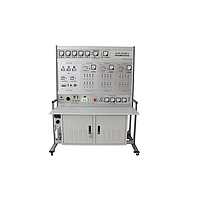
For users who need broader functionality, models such as the DLWD-ETBE12D730M and DLWD-ETBE24D730M add more emphasis on instrument measurement, including electrical quantities commonly used in teaching and diagnostics. Multi-student configurations are also represented, such as the DLDW-ETBE24D730, which supports shared training in classroom environments where several learners work at the same station.
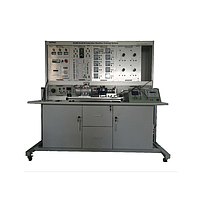
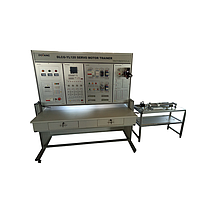
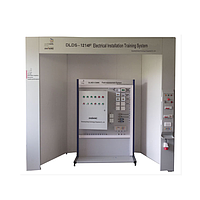
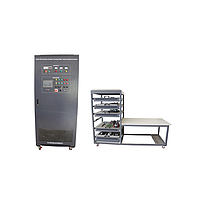
This category also extends beyond general electrical technology benches. The DLWD-ETBE12D-I is structured for maintenance skill assessment and covers a wide range of circuit exercises, while the DLWD-SA2668B focuses on electricity protection and safety experiments. For machine and power fundamentals, the DLWD-DJ21 supports work with motors and transformers, and the DLDS-1214A is intended for electrical installation training.
How electrical maintenance training systems are used in practice
In a real teaching workflow, these platforms are used to guide learners through wiring, energizing, measuring, and verifying circuit behavior under supervised conditions. A training bench may be used first for basic switch and lighting control, then for contactor-based motor circuits, and later for sequence logic, interlocking, or maintenance-oriented fault analysis.
Some systems in this category are especially suitable for training that combines circuit assembly with practical measurement. Learners can observe voltage and current behavior, compare single-phase and three-phase concepts, and build familiarity with safe terminal use. This is useful for maintenance staff who will later work on industrial panels, utility circuits, machines, or facility electrical systems.
Where an organization needs broader technical education coverage, it can also be useful to compare this category with related areas such as application training equipment or information technology training, depending on whether the program includes automation, digital systems, or interdisciplinary lab development.
Key selection criteria for buyers and lab planners
Choosing the right training equipment depends less on product count and more on the intended learning outcomes. One of the first questions is whether the requirement is for introductory electrical technology, maintenance skill assessment, safety training, installation practice, or machine-focused experimentation. A general-purpose bench may suit foundational classes, while a specialized system is often better for advanced modules or certification-oriented instruction.
Another important point is the power configuration. Several products here use three-phase, five-wire AC 380V input, which is relevant for institutions planning training around industrial electrical systems. Buyers should also consider whether they need AC and DC outputs, measurement capability, multi-student operation, modular patch-board construction, or optional software and teaching resources.
Physical layout matters as well. Single-user or two-student stations can work well in focused lab environments, while larger benches support group instruction. If your facility is developing a broader practical lab ecosystem, adjacent categories such as basic practice equipment may be relevant for foundational science education alongside electrical training.
DOLANG platforms in this category
DOLANG is the featured manufacturer in this category, with a range centered on structured technical education and practical skills development. The available systems show a clear emphasis on modular training, protected outputs, workstation-based learning, and coverage from basic electrical circuits to more advanced maintenance and measurement tasks.
That consistency is important for institutions standardizing a lab or expanding a curriculum over time. Instead of mixing unrelated teaching devices, buyers can align classroom stations, safety training units, maintenance assessment systems, and machine experiment benches within a more coherent training environment. This is especially helpful for vocational schools and industrial academies building staged programs from beginner to advanced levels.
Training scope: from basic wiring to safety and diagnostics
A strong maintenance curriculum usually needs more than one type of exercise. Basic electrical technology benches help students understand components, terminals, and circuit construction. Maintenance-focused systems then add practical tasks such as sequence control, reversing circuits, overload protection logic, relay behavior, and operational testing.
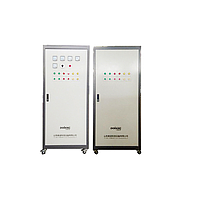
Safety is another essential part of the training path. Equipment such as the DLWD-SA2668B is relevant where programs need learners to understand grounding systems, electric shock principles, and electrical protection concepts in a controlled setup. This is valuable not only for academic instruction but also for onboarding and upskilling technicians who will work around energized systems.
For institutions with broader engineering education needs, related areas such as civil engineering training may complement electrical labs in multidisciplinary technical centers, although the instructional goals are naturally different.
Who should consider this category
This category is well suited to vocational education providers, polytechnics, industrial training centers, maintenance academies, and organizations delivering technician development programs. It is also relevant for laboratories that need demonstrable, repeatable practical exercises for electrical fundamentals, machine control, and safe operating procedures.
Buyers should consider the learner level, available utility power, number of students per station, and whether the training must prioritize technology demonstration, guided experiments, maintenance assessment, or installation practice. A compact bench may be enough for circuit fundamentals, while larger or more measurement-oriented systems are better suited to advanced electrical maintenance instruction.
Final considerations before selecting a system
The most effective purchase is usually the one that matches curriculum depth, class size, and the kind of electrical work learners are expected to perform after training. In this category, the available systems span introductory electrical technology, protected hands-on experiments, safety education, machine-related testing, and maintenance skill development.
If you are comparing options for an education lab or technical training program, focus on the balance between workstation format, measurement functions, safety features, and the practical exercises your learners need to complete. A well-matched electrical maintenance training setup can support more consistent instruction, better hands-on confidence, and a clearer path from classroom learning to real industrial practice.
Get exclusive volume discounts, bulk pricing updates, and new product alerts delivered directly to your inbox.
By subscribing, you agree to our Terms of Service and Privacy Policy.
Direct access to our certified experts