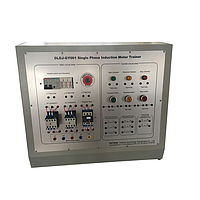
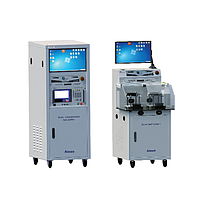
Motor Training
Hands-on motor education is most effective when learners can connect theory with visible machine behavior, measurable performance, and safe experimentation. In laboratory, vocational, and technical training environments, Motor Training equipment supports that goal by helping students explore how rotating machines start, run, respond to load, and interact with control systems.
This category is relevant for schools, training centers, engineering departments, and industrial learning labs that need practical platforms for teaching motor principles, drive behavior, airflow or load effects, and basic performance analysis. Rather than focusing only on abstract formulas, these systems make it easier to demonstrate operating characteristics in a repeatable and structured way.
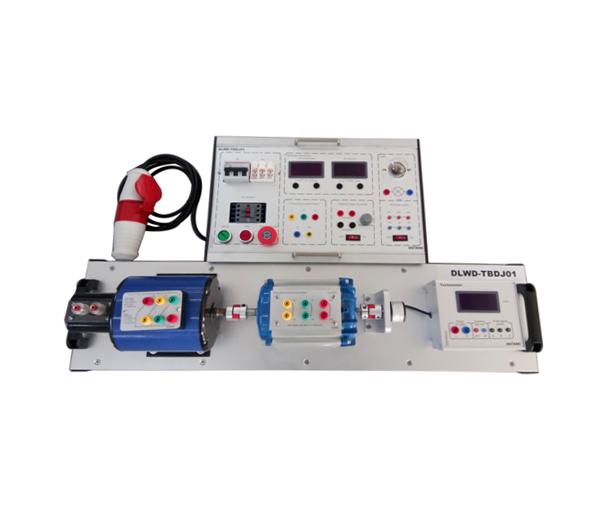
Why motor training equipment matters in technical education
Electric motors are a core topic across mechanical, electrical, and mechatronics programs because they appear in manufacturing, HVAC, pumping, ventilation, automation, and many other industrial applications. A dedicated training setup allows instructors to explain concepts such as speed, torque, load response, efficiency trends, and operating stability in a way that students can observe directly.
For B2B buyers, the value of this category lies in its role as a bridge between classroom instruction and industrial practice. Well-chosen platforms help standardize lab exercises, improve learner engagement, and support repeatable demonstrations for both introductory and more advanced training modules.
Typical learning objectives supported by motor training systems
Depending on the program structure, motor training equipment may be used to teach machine fundamentals, performance testing, basic instrumentation, and interaction between motors and driven loads. This makes the category useful not only for pure electrical training, but also for interdisciplinary courses where motion, energy transfer, and process behavior need to be demonstrated together.
Common learning outcomes include understanding startup behavior, observing changes under varying operating conditions, comparing theoretical and measured results, and interpreting data from practical experiments. In many labs, these systems also support discussion of system integration, where the motor is only one part of a broader electromechanical setup.
Where this category fits in a broader training lab
Motor education often works best when it is part of a wider technical teaching environment. For example, programs that already use application training equipment can use motor-focused rigs to connect abstract engineering principles with real operating systems and industrial-style exercises.
It can also complement foundational lab work provided by basic practice equipment, especially where students first learn measurement, force, motion, energy, and experimental method before moving into more specialized machine studies. This broader context is important for institutions building a step-by-step learning path.
Example equipment used for demonstration and experimentation
A representative product in this category is the Armfield FM41 Axial fan demonstration unit. While it is not simply a standalone motor specimen, it is valuable in training because it shows how a motor-driven system behaves in a realistic application, allowing learners to study rotational performance together with airflow-related effects and operating response.
This type of setup is useful when training needs to go beyond the motor as an isolated component. By observing a driven fan system, students can better understand how motor behavior influences the overall machine, how operating speed affects output, and how measurements can be used to interpret practical performance in an engineering context.
For institutions that prefer established educational equipment suppliers, Armfield is one of the relevant manufacturers in this area, particularly for laboratory and demonstration-oriented platforms used in teaching and applied research environments.
How to evaluate motor training equipment for your facility
Selection should begin with the intended teaching level. Introductory programs may need clear visual demonstrations and straightforward measurement tasks, while higher-level courses may require more detailed experimental work, stronger links to instrumentation, or the ability to support guided analysis and reporting.
It is also important to consider how the equipment will be used in practice: individual bench work, instructor-led demonstration, or structured group exercises. Buyers should review space constraints, compatibility with existing lab infrastructure, safety requirements, and whether the platform fits the curriculum focus on machines, controls, fluid movement, or general electromechanical systems.
Another practical factor is how easily the training rig can be integrated into neighboring disciplines. In many institutions, motor-related experiments overlap with mechanical design, process analysis, and digital control topics, so flexibility can be just as important as the core demonstration itself.
Applications in education, research, and industrial skills development
Motor training equipment serves multiple audiences beyond full-time academic programs. It can support technician upskilling, internal industrial training, workforce development initiatives, and laboratory demonstrations for applied engineering projects. This is especially useful where organizations need practical teaching tools that connect machine behavior with measurable operational results.
In research-oriented settings, training platforms can also act as accessible demonstration systems for introducing experimental methods, data collection, and system interpretation. Where curricula expand into related technical fields, categories such as information technology training may become relevant as labs increasingly combine physical equipment with software-based monitoring, analysis, and interface tools.
Choosing with long-term usability in mind
For procurement teams, the strongest choice is usually equipment that remains useful across several course levels and learner profiles. A system that supports both demonstration and guided experimentation can deliver better long-term value than a setup designed for only one narrow exercise. This is particularly important in technical education environments where budgets, lab space, and staffing all influence how often equipment is used.
It is also worth thinking about the broader learning ecosystem rather than viewing motor training as an isolated purchase. Equipment that fits naturally into mechanics, airflow, instrumentation, or controls teaching can help instructors build richer lessons and make better use of laboratory time over multiple semesters.
Conclusion
When practical understanding matters, motor-focused training equipment gives learners a clearer view of how machine behavior translates into real engineering performance. This category is well suited to vocational schools, universities, technical institutes, and industrial training centers that want to strengthen hands-on learning with structured, observable experiments.
Whether the requirement is a compact teaching platform or an application-oriented demonstration unit such as the Armfield FM41, the right solution should match the curriculum, the lab environment, and the level of analysis expected from learners. A careful selection process will help ensure the equipment supports both immediate teaching needs and future expansion of the training program.
Get exclusive volume discounts, bulk pricing updates, and new product alerts delivered directly to your inbox.
By subscribing, you agree to our Terms of Service and Privacy Policy.
Direct access to our certified experts