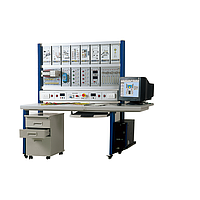
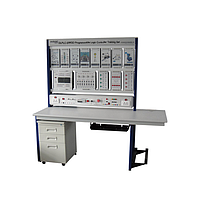
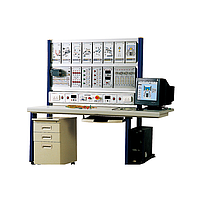
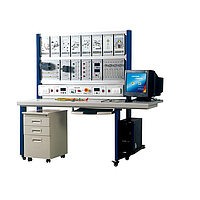
PLC Training
Hands-on automation skills are much easier to build when learners can work with real control hardware, communication modules, and practical I/O scenarios. In technical education, maintenance training, and industrial upskilling, PLC Training equipment helps bridge the gap between classroom theory and the logic used on actual production systems.
This category is intended for organizations that need a structured way to teach programmable control, signal handling, network communication, and troubleshooting. Whether the goal is foundational instruction or more advanced automation practice, the right training setup should support clear learning outcomes, safe operation, and realistic industrial workflows.
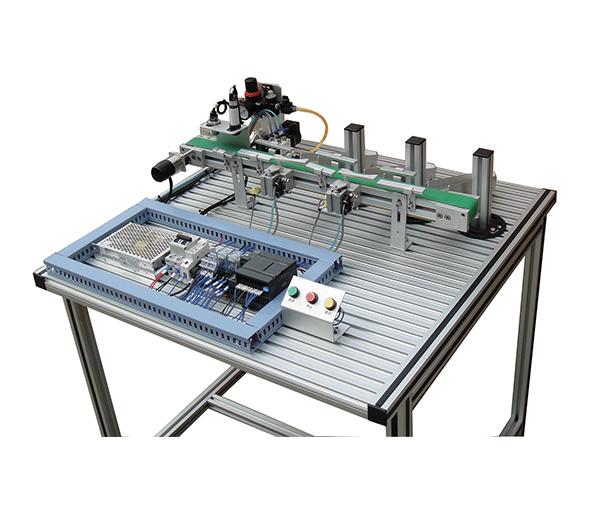
Why PLC training equipment matters in technical education
Modern manufacturing and process systems rely on controllers that interact with sensors, actuators, remote I/O, and industrial networks. A proper PLC training environment allows students, technicians, and engineering trainees to understand how these building blocks work together instead of learning only from software simulation.
For schools, vocational centers, and industrial training departments, this kind of equipment supports lessons in logic programming, input and output mapping, fault diagnosis, and communication architecture. It also helps learners become familiar with common industry practices such as wiring discipline, module-based expansion, and networked control.
What users typically expect from a PLC training setup
A useful training platform usually needs more than a single controller. In many cases, learners benefit from seeing how a PLC interacts with digital inputs, relay outputs, communication modules, and distributed stations in one integrated exercise. This makes it easier to teach both basic ladder logic and broader automation system design.
Training requirements can vary by program level. Entry-level courses may focus on simple start/stop control, timer and counter logic, and sensor simulation, while advanced courses may introduce fieldbus communication, remote station configuration, and module-level diagnostics. Institutions that also cover broader automation topics may find it helpful to explore related areas such as application training or information technology training where control systems interact with software and data handling concepts.
Representative hardware in this category
This category includes examples from MITSUBISHI, a widely recognized name in industrial automation training and practical control applications. Rather than treating each module as an isolated item, it is more useful to view them as parts of a teaching ecosystem for controller networking and I/O expansion.
The MITSUBISHI QJ61BT11N CC-Link V2 Master Module is relevant when training needs to include network master configuration and communication between the controller and remote devices. For remote-side practice, the MITSUBISHI AJ65SBTB2N-16R CC-Link Output Remote Station can help demonstrate how output signals are distributed to field devices over a communication network.
Another practical example is the MITSUBISHI AJ65SBTB1-32D CC Link Module (32 Input, 24VDC), which is suitable for illustrating how digital input signals are collected and transmitted in a control system. In a teaching environment, this type of module supports exercises involving signal status, wiring logic, input response behavior, and communication between field-level devices and the main controller.
Core topics that PLC training can cover
The scope of PLC instruction often extends beyond simple programming. A well-planned training program can help learners understand the relationship between controller logic, wiring methods, communication modules, and machine behavior under normal and fault conditions.
- Basic PLC programming concepts such as sequence control, timers, counters, and interlocks
- Input and output handling with sensors, switches, indicators, and relays
- Industrial communication using networked modules and remote stations
- Troubleshooting methods for signal loss, wiring errors, and communication faults
- System expansion strategies using modular architecture
For institutions building broader technical labs, PLC training may also connect naturally with multidisciplinary educational platforms such as basic practice equipment, especially when students need a stronger foundation in electrical and physical principles before moving into automation control.
How to choose the right PLC training equipment
Selection should start with the intended learning outcome, not just the hardware list. If the priority is introductory teaching, a simpler setup with basic I/O and clear visual feedback may be more effective than a complex rack full of modules. If the program is designed for technicians or engineering students, network communication, remote I/O, and modular architecture become more important.
It is also worth considering the teaching format. Classroom demonstrations, bench-top lab exercises, and maintenance-oriented training each require different levels of accessibility and complexity. A good solution should make it easy to explain signal flow, allow repeated exercises, and support safe troubleshooting without unnecessary setup time.
Where the curriculum includes control applications tied to sector-specific projects, training managers may also compare this category with areas such as civil engineering training to understand how automation can be integrated into broader technical education environments.
Benefits for schools, training centers, and industrial teams
For educational institutions, PLC training equipment supports practical teaching that aligns better with real industrial expectations. Students gain familiarity with actual module types, network concepts, and system behavior, which can improve readiness for internships, plant work, and technical support roles.
For manufacturers and maintenance departments, these platforms can be used for internal workforce development. New technicians can practice programming, commissioning logic, and diagnosing control issues in a controlled setting before working on production-critical equipment. This is especially valuable when teams need to learn industrial communication and distributed I/O concepts in addition to basic PLC logic.
Building a more effective training environment
The most effective PLC labs are usually designed around realistic exercises rather than isolated theory modules. A training setup becomes more valuable when it allows learners to move from wiring and signal observation to programming, communication setup, and troubleshooting in one continuous workflow.
When comparing equipment in this category, it helps to look for solutions that match your curriculum depth, trainee skill level, and maintenance or production context. With the right combination of controller-related modules, remote I/O elements, and communication hardware, PLC training can provide a practical foundation for long-term automation capability.
Get exclusive volume discounts, bulk pricing updates, and new product alerts delivered directly to your inbox.
By subscribing, you agree to our Terms of Service and Privacy Policy.
Direct access to our certified experts