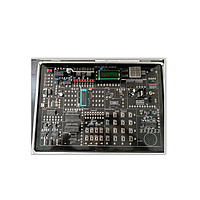
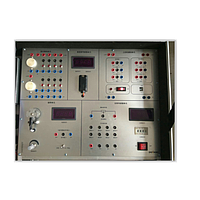
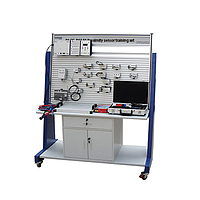
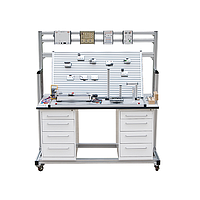
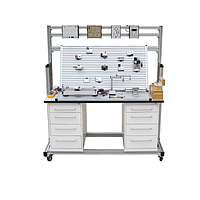
Training analog/digital device
Hands-on electronics education works best when learners can move quickly from theory to real circuit behavior. For lab classes, technical training centers, and research environments, Training analog/digital device platforms help bridge that gap by combining power supplies, signal generation, logic interfaces, and breadboarding into a practical workstation.
These systems are commonly used to teach circuit fundamentals, digital logic, waveform analysis, mixed-signal design, and introductory power electronics. Instead of assembling a lab from separate instruments, users can work from a compact trainer that supports repeatable experiments, guided exercises, and prototype development.

Where analog and digital training devices fit in the lab
In an educational or industrial training setting, these devices are designed to support both circuit learning and structured experimentation. A typical platform may provide fixed and variable DC outputs, AC supply rails, logic switches, pulsers, waveform generation, indicators, and a solderless breadboard area so learners can build and test circuits directly on the unit.
This makes the category especially relevant for vocational schools, universities, electronics classrooms, maintenance training programs, and R&D teams that need a convenient bench solution for demonstrations or introductory design work. For organizations building broader teaching environments, related areas such as application training equipment can complement electronics-focused trainers with more task-specific learning systems.
Typical functions found in this category
Many products in this category are built around the needs of analog and digital electronics instruction. Common capabilities include regulated power rails for low-voltage experiments, onboard function generation for sine, square, or triangle wave testing, and logic-level support for TTL or CMOS exercises. Integrated switches, LED indicators, and breadboards help students verify circuit states and troubleshoot wiring errors faster.
More advanced trainers may also include logic probes, 7-segment display circuits, USB connectivity, pulse generation, or dedicated sections for semiconductor and switching-device experiments. In practice, this allows one trainer to support topics ranging from resistor-capacitor timing and amplifier basics to counters, multiplexers, flip-flops, and waveform shaping.
Representative training platforms and kits
Global Specialties is one of the key names represented in this category, with several trainer formats suited to different learning levels. For example, the GLOBAL PB-503A Desktop Circuit Design Trainer and the Global Specialties PB-505A Deluxe Circuit Design Trainer are aligned with general analog/digital lab work, offering built-in resources for breadboarding, logic observation, and signal generation.
For more advanced mixed-signal teaching, the GLOBAL PB-507 Advanced Analog & Digital Electronic Design Trainer is positioned as a broader learning platform with integrated power supplies, waveform generation, and computer interface support. Where the curriculum extends into switching devices and controlled power circuits, the GLOBAL PB-600 Power Electronics Trainer is a useful example of how this category can also support semiconductor power conversion topics rather than only basic logic experiments.
Accessory and courseware-oriented items also play an important role. Products such as the GLOBAL GSC-2311KIT ELECTRONICS FUNDAMENTALS 2ND ED. LAB KIT and GLOBAL PB-507ALAB Educational Kits help turn a trainer into a more complete teaching package by adding components, guided exercises, and structured lab activities.
How to choose the right trainer
The best selection depends less on brand name alone and more on the type of learning activity you need to support. For entry-level logic instruction, portable or bench-top systems with logic switches, LEDs, push buttons, and basic breadboarding can be sufficient. The Global PB-501 Portable Logic Design Trainer Specification and Global DL-020 Portable Advanced Logic Design Trainer illustrate the type of compact equipment often used for digital logic practice and portable classroom setups.
If the goal is broader electronics education, it is worth prioritizing units with integrated power supplies, onboard waveform generation, and larger tie-point capacity. This gives students room to move beyond fixed exercises into custom circuit building, measurement, and troubleshooting. For institutions planning a multi-discipline lab, electronics trainers may also sit alongside information technology training resources where embedded systems, digital concepts, and hardware fundamentals overlap.
Analog, digital, and power electronics learning paths
Although grouped in one category, these devices can support very different teaching objectives. An analog-focused setup may be used for signal conditioning, basic filtering, transistor circuits, and waveform experiments. A digital-focused setup supports logic gates, combinational logic, clocking, counters, data display, and state-based design using LEDs, switches, and pulse sources.
There is also a valuable middle ground in mixed-signal training, where learners move between analog waveforms and digital control concepts on the same platform. Trainers with TTL/CMOS output modes, function generators, and broad power options make this transition easier. For more specialized practical environments, institutions may connect these learning paths with adjacent educational areas such as biomedical trainer systems when teaching instrumentation concepts or signal-processing fundamentals.
Why integrated trainers are useful for education and technical teams
An integrated trainer reduces setup time and improves consistency from one lab session to the next. Instructors can standardize experiments across multiple student stations, while technicians or trainees spend less time wiring separate power supplies and generators before meaningful work begins. This is especially useful in classrooms where repeatability, safety, and visibility of circuit states matter as much as technical depth.
For industrial training departments, these devices can also serve as a practical introduction to electronics troubleshooting and circuit behavior before moving to production equipment or field systems. A trainer with visible logic indicators, accessible test points, and configurable outputs supports the kind of step-by-step learning that is difficult to achieve with closed equipment alone.
What to look for before ordering
When comparing products, start with the curriculum or use case: introductory electronics, digital logic, analog design, or power electronics. Then review the available outputs, waveform options, tie-point capacity, and included accessories. A larger breadboarding area is often valuable for open-ended lab work, while bundled kits and courseware can simplify deployment for schools and training centers.
It is also worth checking whether the trainer will be used as a standalone educational unit or as part of a broader teaching environment. In some organizations, electronics workstations are combined with general basic practice equipment for foundational STEM education, while in others they support more targeted electronics and automation training.
Conclusion
This category brings together practical platforms for learning, demonstrating, and testing analog and digital electronics in a controlled lab environment. From compact logic trainers to broader circuit design systems and power electronics trainers, the range supports different levels of complexity without forcing users to assemble every lab function separately.
If you are selecting equipment for teaching, technical upskilling, or guided prototyping, focus on the balance between learning scope, built-in lab functions, and expansion through kits or accessories. A well-matched training analog/digital device can make electronics instruction more efficient, more hands-on, and easier to scale across classrooms or industrial training programs.
Get exclusive volume discounts, bulk pricing updates, and new product alerts delivered directly to your inbox.
By subscribing, you agree to our Terms of Service and Privacy Policy.
Direct access to our certified experts