After receiving details from the heat treatment unit, the first number we usually look at is the HRC result. However, even with the same hardness value, each type of steel has a completely different meaning.
An SCM440 shaft achieving 32 HRC can be considered a very good result. Meanwhile, an SKD11 mold set only achieving 32 HRC is almost certainly problematic. Therefore, the question "what is the HRC of heat-treated steel?" cannot be answered with a single number but must be considered in the context of the material, application, and intended use of each part.
What does HRC hardness after heat treatment reflect?
Heat treatment alters the internal metal structure of steel to improve wear resistance, increase strength, or extend service life. The final result is usually assessed using Rockwell hardness C (HRC), as this is an easily measurable indicator, readily comparable to technical requirements, and quite clearly reflects the effectiveness of the quenching and tempering process.
However, many newcomers tend to judge quality based solely on high or low HRC. This perspective is incomplete. A gear, an industrial cutting tool, and a cold stamping die all require hardness, but the ideal hardness level varies greatly among different material groups.
What are the typical HRC values of S45C, SCM440, and SKD11 after heat treatment?
These are the most common materials used in mechanical factories today.
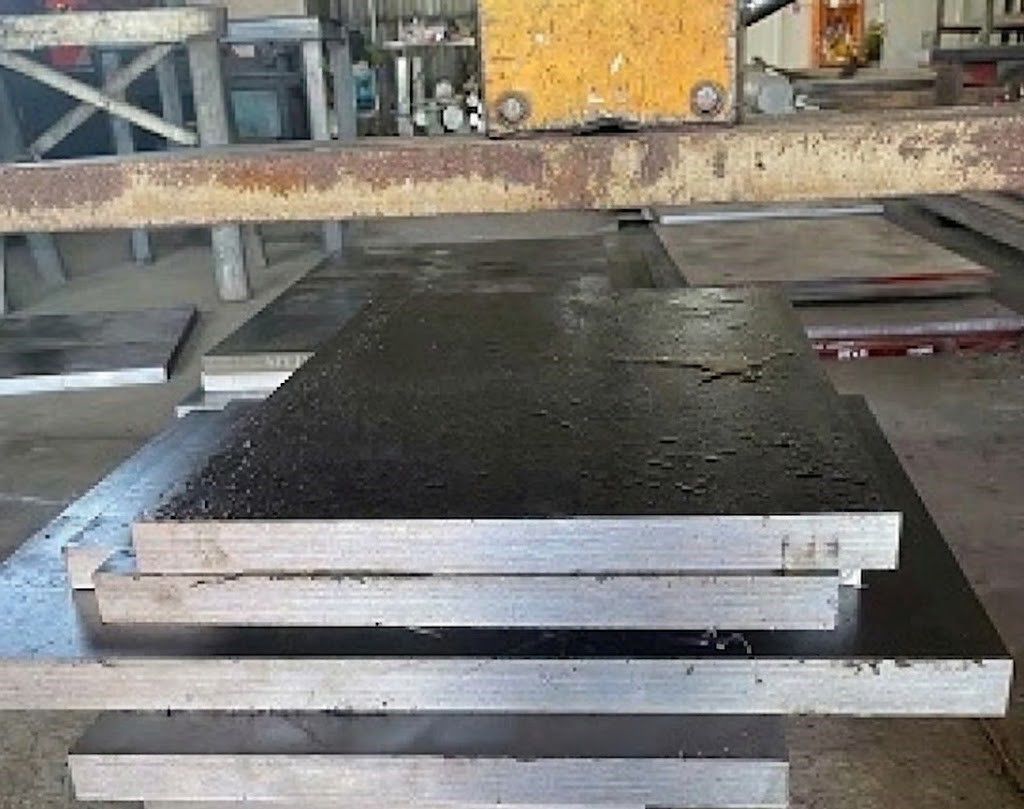
S45C is often used to manufacture shafts, gears, pins, or machine parts subjected to medium loads. After quenching and tempering, the common hardness ranges from 35 HRC to 45 HRC. Measurements around 40 HRC are quite common in actual machined products and are entirely consistent with the material's characteristics.
SCM440 belongs to the Cr-Mo alloy steel group and has better load-bearing and impact resistance. Many are surprised to find a hardness of around 30 HRC and believe that heat treatment has not met the requirements. In reality, a hardness range of 28 HRC - 35 HRC is a common choice for drive shafts or large mechanical parts requiring high toughness. Some special wear-resistant applications may require hardness levels of around 50 HRC - 55 HRC.
SKD11, however, belongs to a completely different world. After heat treatment, SKD11 typically achieves a hardness of around 58-62 HRC. This is the Rockwell C (HRC) scale commonly used for high-hardness steels. Many people new to hardness testing often wonder why sometimes the documentation states HRA or HRB instead of HRC.This content has been explained in detail in the article How Do HRC, HRB, and HRA Scales Differ in Hardness Measurement?.
Looking at the three examples above, it's clear that even though they are all heat-treated steel, the required HRC levels vary significantly.
Does higher hardness mean better steel?
This is a common misconception in mechanical workshops.
If you put two SKD11 molds side-by-side, one with 58 HRC and the other with 62 HRC, many people would lean towards the latter. However, production is not that simple.
Increased hardness means improved wear resistance, but the material's toughness can also decrease. Some parts subjected to continuous impact or working under varying loads need to retain a certain degree of ductility to prevent fracture.
Therefore, heat treatment engineers are often more concerned with whether the hardness falls within the design range. A product that meets the required HRC range is usually more valuable than a product that exceeds the technical limits but suffers from unbalanced mechanical properties.
Why are HRC measurements inaccurate despite proper heat treatment?
Many disputes between QC departments and heat treatment suppliers stem from the hardness measurement process itself.
Residual oxide layers on the surface, decarburization zones after heat treatment, probe placement, or equipment calibration status can all alter results. Differences of a few HRC units are not uncommon if the measurement process is not tightly controlled.
This is also why factories often use specialized hardness testers to ensure the repeatability of results. Rockwell models like the HR-150A are widely used for testing heat-treated steel due to their fast operation and suitability for most mechanical applications. If you are unsure whether to use Rockwell, Brinell, or Vickers for each material, you can refer to the article How Rockwell, Brinell, and Vickers Different? How to Choose the Right Hardness Measurement Method to understand the advantages and disadvantages of each method before selecting equipment.
For in-depth studies or thin surface layers, the Vickers HVS-30 hardness tester allows for more detailed observation and evaluation. Cast iron samples or materials with coarse grain structures are often tested using the HBE-3000 to obtain representative values over a larger area.
Is evaluating heat treatment quality solely based on HRC sufficient?
Many businesses use hardness as the primary acceptance criterion because this method is quick and easy to implement. However, the quality of heat treatment is not solely determined by the hardness tester's display.
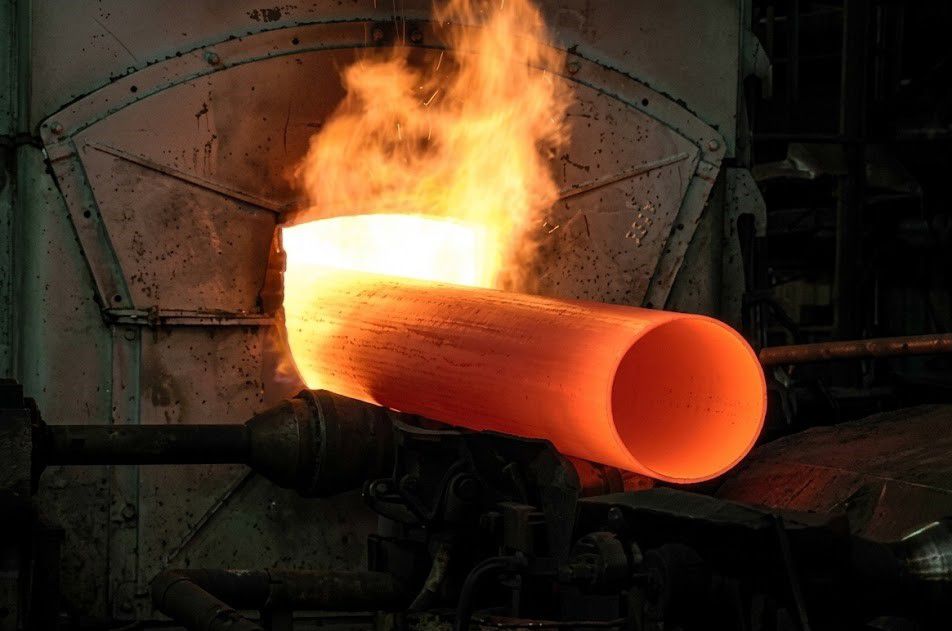
A part that achieves exactly 60 HRC may still exhibit warping, microcracks, or excessive residual stress. Conversely, a product with a few HRC units lower may still meet service life requirements if toughness is prioritized over wear resistance.
Therefore, professional manufacturers often combine hardness testing with metallographic evaluation, post-heat treatment dimensions, and part requirements. The HRC value is most significant when applied correctly to the material being used.
Overall, heat-treated steel can achieve approximately 28 HRC to 65 HRC depending on the steel grade and intended use. S45C typically ranges from 35 to 45 HRC, SCM440 fluctuates from 28 to 55 HRC depending on technical requirements, while SKD11 is common in the 58-62 HRC range. Understanding the characteristics of each material will help make the hardness measurement results much more accurate than just looking at a single number.