Motors & Drives
Motion is at the heart of countless machines, from compact lab equipment and automated fixtures to conveyor systems and embedded prototypes. When a design needs controlled rotation, repeatable positioning, or dependable mechanical output, choosing the right Motors & Drives category becomes an important step in building a stable and efficient system.
This product group brings together core motion components used across industrial automation, equipment manufacturing, maintenance, and engineering development. Whether the priority is continuous rotation, precise step control, or compact vibration output, the selection process usually starts with the application, load profile, control method, and installation constraints rather than with a single part number alone.
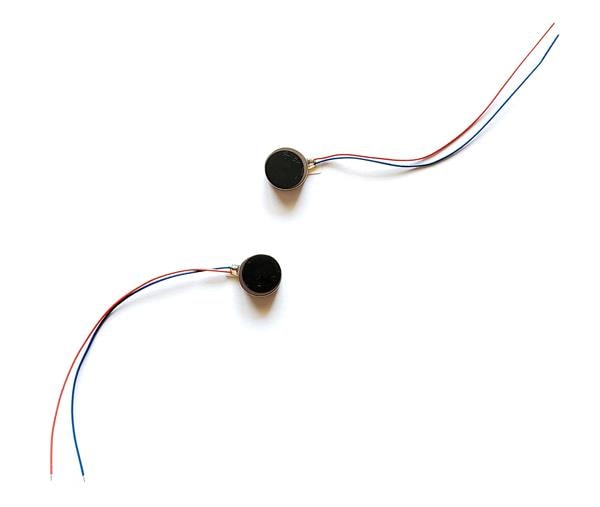
Where motors and drives fit in electromechanical systems
Motors convert electrical energy into motion, while the drive or control stage helps regulate how that motion is delivered. In practical systems, this may involve speed control, direction changes, start-stop behavior, positioning sequences, torque management, or synchronization with sensors and PLC logic.
Because of that, motors are rarely selected in isolation. They often work alongside power switching devices, wiring interfaces, mounting components, and machine safety elements. In more complex panels or control cabinets, related products such as relays, contactors, and solenoids can support switching and control tasks around the motion system.
Main product types in this category
This category typically covers several common motion approaches. AC and DC motors are widely used where continuous rotary motion is needed, with the final choice depending on available supply, control strategy, duty cycle, and mechanical load. They are common in fans, pumps, feeders, conveyors, compact machinery, and general-purpose drive applications.
Stepper motors are more suitable when repeatable incremental movement is required. They are often chosen for indexing, light positioning, and systems where step-based control provides a practical balance between cost and accuracy. Vibration motors, by contrast, serve a different role by generating controlled vibration for signaling, haptic response, or small mechanical agitation functions.
Understanding these distinctions helps narrow the selection quickly. It also reduces the risk of overspecifying a motor for a simple task or choosing a low-cost option that cannot meet the mechanical or control demands of the application.
How to choose the right motor for your application
A useful starting point is the load itself: how much torque is needed, how fast the shaft must rotate, and whether the motor runs continuously or only in short cycles. Engineers also need to consider starting conditions, acceleration requirements, and whether the load changes significantly during operation.
The electrical side is just as important. Supply voltage, current limits, control signals, and compatibility with the wider system architecture can all affect selection. In many builds, the choice between a simple motor and a more controlled motion setup depends on whether the application needs only rotation or also requires reliable speed regulation or precise step execution.
Physical constraints matter as well. Mounting footprint, shaft style, ambient conditions, noise expectations, and thermal behavior can influence long-term reliability. If the motor is going into a custom enclosure or machine frame, related installation parts from the hardware section may also become part of the overall design decision.
Drives, control, and system integration considerations
The term drive can refer broadly to the electronics and control method used to operate a motor correctly. In some systems, this is a dedicated motor driver or controller. In others, it may be integrated into a board-level design, a control panel, or a machine subsystem that combines power conversion, switching, and logic.
For stepper-based applications, the control stage is especially important because motion quality depends on how the motor is energized and sequenced. For AC and DC motor systems, the focus may be on smooth startup, directional control, speed adjustment, or stable operation under varying load conditions. Matching the motor to the appropriate control method is often what determines whether the final machine feels refined or difficult to tune.
Where power distribution and protection are part of the design, components in circuit breakers and accessories may also be relevant, particularly in larger electromechanical assemblies where safeguarding the motor branch circuit is part of the overall panel design.
Typical industries and use cases
Motors and drives appear across a wide range of B2B environments. Machine builders use them for feeders, rollers, actuators, pumps, and positioning axes. OEMs integrate them into laboratory instruments, compact appliances, vending systems, and access mechanisms. Maintenance teams also source replacement motors to restore uptime in existing equipment.
In prototype and embedded development, compact motor solutions are often used to validate movement concepts before a design moves to production. In industrial settings, the emphasis usually shifts toward durability, repeatability, available documentation, and compatibility with the rest of the automation architecture.
Some applications also combine motion with pneumatic or mechanical subsystems. In those cases, it may be helpful to review related categories such as pneumatic equipment when designing hybrid systems that blend electric motion and air-powered actuation.
Manufacturers commonly considered in this range
This category may include solutions from recognized suppliers used in electronics, automation, and motion control projects. Brands such as ADI Trinamic are often associated with motion control and drive-related design ecosystems, while manufacturers like Autonics, Delta Electronics, Inc., ebm-papst, Johnson Electric, and Maxon are also well known in broader electromechanical and automation contexts.
Selection should still be driven by application fit rather than by brand alone. For B2B procurement, factors such as lifecycle stability, integration requirements, service environment, and documentation quality are usually more meaningful than simply choosing the most familiar manufacturer name.
What to review before ordering
Before finalizing a motor or drive choice, it helps to confirm the basics: required motion type, available power, control interface, mechanical fit, and expected duty cycle. If the system needs precise indexing, a stepper-based approach may be appropriate. If the goal is continuous rotation with simpler control, an AC or DC motor may be the better match. If the function is vibration rather than shaft output, the product role is different and should be treated accordingly.
It is also worth checking how the component will interact with the rest of the assembly, including switching devices, protection elements, wiring, and mounting hardware. A good selection process reduces integration time and helps avoid issues that only appear after installation, such as insufficient starting torque, overheating, unstable control, or poor mechanical alignment.
Final thoughts
A well-chosen motor and drive setup supports smoother machine operation, better control behavior, and more predictable maintenance planning. This category is best approached as part of a complete motion system, where electrical, mechanical, and control considerations are evaluated together.
By comparing motor types based on real operating needs rather than broad assumptions, buyers and engineers can narrow the shortlist more effectively and identify components that fit both the application and the wider electromechanical design.
Get exclusive volume discounts, bulk pricing updates, and new product alerts delivered directly to your inbox.
By subscribing, you agree to our Terms of Service and Privacy Policy.
Direct access to our certified experts