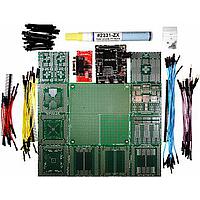
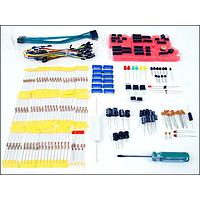
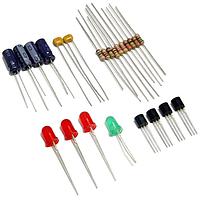
Assortment Kits
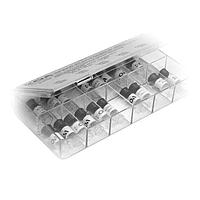
When engineers need to evaluate multiple component values, compare protection options, or build prototypes without waiting on repeated small orders, a well-chosen kit can save meaningful time. Assortment Kits are especially useful in lab work, early-stage design, maintenance, and validation, where flexibility matters as much as the parts themselves.
In development environments, these kits help teams move from concept to testing more efficiently. Instead of sourcing every item one by one, buyers can select grouped solutions tailored to practical tasks such as power design, surge protection, connector preparation, or general hardware support.
Why assortment kits are useful in engineering workflows
For design engineers, technicians, and purchasing teams, the value of an assortment kit is not only convenience. It is also about reducing setup time, improving bench readiness, and making it easier to test several options before locking in a final bill of materials. This is particularly relevant in prototyping, troubleshooting, educational labs, and low-volume development work.
A kit can also support faster iteration when the exact component value or protection strategy is still under review. In these cases, having a curated range of parts on hand helps teams validate performance sooner and avoid delays caused by fragmented sourcing.
Common kit types found in this category
This category covers more than one kind of engineering support product. Some kits are organized around specific component families, while others are intended for a broader assembly or maintenance task. That makes assortment kits relevant to both electronics design and supporting hardware preparation.
Examples from this category include component kits, inductor kits, surge protection kits, varistor kits, connector-related kits, and hardware kits for use with compatible power supply platforms. If your application is focused on grouped parts for design exploration, you may also want to review related memory IC development tools or communication development tools where evaluation and prototyping needs overlap.
Representative products and what they support
Several products in this range illustrate how assortment kits fit into real engineering tasks. The Amphenol A-2130 Inrush Current Limiter Kit is aimed at engineers working on power entry and current management considerations. The Bourns PN-DESIGNKIT-26 supports surge protection evaluation, while the Bourns DK-ISOMOV-03 IsoMOV™ Varistors Kit is relevant when comparing protection approaches in designs exposed to transient conditions.
For magnetic component selection, the Bourns SRP03-LAB and SRP05-LAB kits group power inductors in a way that helps teams assess alternatives during converter or power-stage development. On the hardware and system integration side, the Advanced Energy NFS110CJ General Hardware Kit is intended to support NFS110 series power supplies, showing that assortment kits are not limited to passive components alone.
There are also broader packaged solutions such as Advanced Energy 70-841-023, 70-841-016, 73-788-001, and 70-841-024 component kits, along with the Delta Group BOXED CONN-KIT A-D-DP. These examples show how kits can serve different needs, from evaluation and assembly support to more focused platform compatibility.
Key factors to consider when selecting an assortment kit
The first consideration is the intended use case. A design engineer building a prototype power stage may need an inductor or protection-oriented kit, while a service team may prioritize hardware or connector support. Matching the kit to the stage of work helps avoid unnecessary stock and keeps lab resources practical.
Next, look at how tightly the kit aligns with your existing platform or circuit objective. Some kits are broad enough for general experimentation, while others are more suitable for a defined product family or application area. For example, a hardware kit tied to a specific power supply series serves a different purpose than a lab assortment meant for comparison testing.
It is also worth checking whether your team is selecting by function, manufacturer preference, or engineering discipline. Buyers sourcing across protection, magnetics, and interconnect needs may benefit from browsing both this category and the wider assortment kit selection alongside adjacent engineering categories to support a more complete bench setup.
Manufacturers commonly associated with assortment and development support
This category includes products from recognized suppliers used in design and industrial electronics workflows. Bourns is represented here with kits related to surge protection, varistors, magnetics, and telecom-oriented applications, making it especially relevant where circuit protection and power design are part of the requirement.
Advanced Energy appears with component and hardware kits connected to power-related applications, while Amphenol and Delta Group products illustrate the role of kits in connector and support hardware contexts. Depending on your broader sourcing strategy, other engineering brands in this ecosystem may also be relevant for development benches, prototyping stations, or subsystem validation.
Where assortment kits fit in the broader development ecosystem
Assortment kits are often used alongside evaluation tools and subsystem accessories rather than as standalone purchases. In practice, teams may combine them with circuit development platforms, test setups, interconnect accessories, or visual inspection equipment depending on the project stage. For imaging-based development or embedded prototyping workflows, related categories such as cameras and camera modules can be relevant in the same lab environment.
Because these kits support experimentation and early decision-making, they are particularly valuable when requirements are still evolving. They help bridge the gap between a rough concept and a more stable design by making comparison, substitution, and initial verification easier at the bench.
Who typically buys from this category
Typical buyers include electronics design engineers, R&D labs, maintenance teams, universities, contract manufacturers, and industrial OEMs building internal test capability. Procurement teams may also use assortment kits to support rapid-response inventory for development groups that need parts immediately for review or rework.
In B2B purchasing, these kits are often selected not just for the individual parts inside them, but for the time savings they offer across sourcing, kitting, and internal handling. That practical value makes them a sensible option for organizations that want more efficient prototyping and service workflows without overcommitting to full production quantities too early.
Choosing the right assortment kit for your project
The most effective choice usually starts with a clear question: are you evaluating component behavior, supporting assembly, or maintaining a compatible platform? Once that is defined, it becomes easier to compare kits by purpose and by how closely they match the electrical or mechanical task at hand.
Whether you are reviewing protection options, comparing inductor series, or preparing general hardware for a power supply installation, this category provides a practical starting point. A focused assortment kit can streamline development work, support better early-stage decisions, and reduce friction across the engineering process.
Get exclusive volume discounts, bulk pricing updates, and new product alerts delivered directly to your inbox.
By subscribing, you agree to our Terms of Service and Privacy Policy.
Direct access to our certified experts