LED Lighting
Choosing components for modern lighting projects usually means balancing brightness, color quality, thermal limits, board space, and long-term reliability. In that context, LED Lighting covers far more than a single light source: it includes the emitters, modules, optical building blocks, and supporting parts used in commercial, industrial, automotive, and embedded electronic designs.
Whether the goal is a compact indicator, a high-output white light engine, or a purpose-built module for integrated systems, this category helps engineers and buyers compare component types within one technical ecosystem. It is especially useful when a project needs to move from concept selection to sourcing with a clearer view of package style, optical behavior, and application fit.
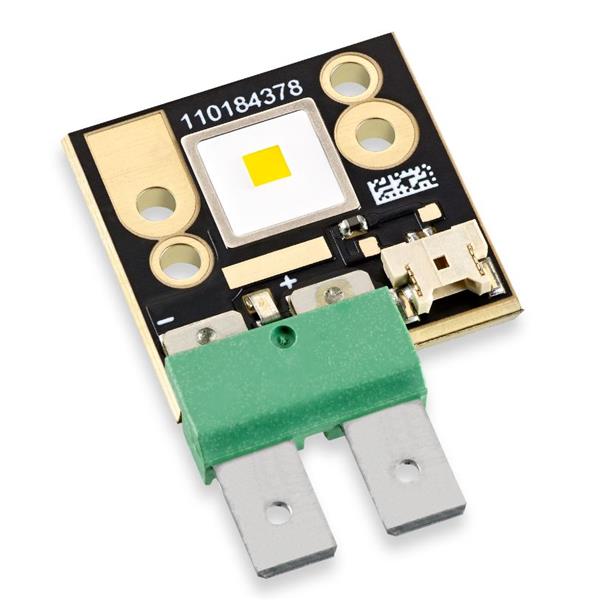
Where LED lighting components are used
LED-based lighting is used across a wide range of equipment, from machine status indication and control panels to architectural fixtures, automotive assemblies, display illumination, and compact embedded products. Different applications place different demands on the light source, including luminous flux, beam spread, forward voltage, color temperature, and mounting constraints.
For example, high-output white emitters and COB devices are often selected for general illumination or focused lighting assemblies, while smaller surface-mount devices are more suitable for indicators, signal functions, or dense PCB layouts. In systems that also rely on visual interfaces, related product groups such as displays may be relevant when lighting and indication need to work together in the same design.
Typical product formats in this category
This category spans multiple component styles rather than a single standardized form factor. Buyers may encounter discrete LEDs for indication and signaling, higher-power emitters for illumination, and LED modules that simplify mechanical and electrical integration in finished assemblies.
Examples from the range include the ams OSRAM GW CSSRM2.PM-N1N3-A737-1 LED Modules and the Cree LED MX6SWT-H1-0000-000CAA LED Modules, both illustrating how module-based solutions can help reduce integration effort in lighting subsystems. For projects needing more concentrated white output, parts such as the Cree LED CXA1816-0000-000N0YJ427H show the role of COB-style packaging in building compact, higher-flux light engines.
Key selection factors for engineers and buyers
A practical selection process starts with the intended lighting function. If the design is for visible indication, color wavelength, package footprint, and viewing angle may matter most. If the design is for illumination, the decision usually shifts toward lumen output, correlated color temperature, color rendering, thermal path, and drive conditions.
It is also important to review how the component will be mounted and driven in the final assembly. Surface-mount parts can support compact automated production, while higher-power devices may require more attention to board design and heat dissipation. Optical performance should be evaluated together with any surrounding lenses, reflectors, or backlighting components when uniformity or controlled light distribution is important.
Illustrative options from leading manufacturers
Several well-known suppliers appear in this category, including ams OSRAM, Broadcom, and Cree LED. Their products help illustrate the range of use cases found in LED lighting design, from compact uni-color devices to white emitters and integrated modules for broader illumination needs.
On the signaling side, parts such as the ams OSRAM Q65110A2185 and Broadcom HSMA-A100-Q7NJ1 reflect typical use in status indication or compact electronic equipment. For white-light applications, components like Cree LED XPEWHT-L1-R250-00DF5, Cree LED XMLAWT-00-0000-00LT30E7, and Broadcom ASMT-JY33-NRS01 show how designers can compare package size, light output class, and intended operating conditions across different lighting concepts.
Considering optical and system integration
An LED rarely works in isolation. The final result depends on how the emitter interacts with drive electronics, thermal design, optics, enclosure geometry, and target viewing distance. That is why component selection should consider not only the LED itself but also the wider lighting system around it.
In practical product development, beam control and visual uniformity may be just as important as raw brightness. A wide viewing angle can suit area lighting or diffuse visual output, while narrower optical control may be preferred for directed illumination. Where the broader project involves sensing or optical transmission rather than only visible lighting, adjacent categories such as fiber optics can provide useful context for optoelectronic system planning.
How to narrow down the right LED lighting solution
A useful way to compare options is to begin with four checkpoints: required light color, expected output level, package or module format, and electrical/thermal operating window. These criteria help eliminate mismatches early, especially in projects with fixed PCB area or enclosure dimensions.
From there, engineers can refine the shortlist based on viewing angle, color consistency, application environment, and assembly method. For example, a warm white module may be suitable for human-facing illumination, while a compact green or white discrete LED may fit signaling or interface tasks better. This approach is more reliable than choosing purely on headline brightness, because overall performance depends on the full application context.
Why this category matters in sourcing and design
For B2B procurement and engineering teams, the value of a focused LED lighting category lies in comparing component families with different integration levels in one place. Instead of treating every product as interchangeable, buyers can distinguish between discrete emitters, surface-mount lighting parts, and higher-output module or COB formats that serve different roles in a finished design.
That broader view is especially helpful when a project must align optical requirements with manufacturability, cost targets, and lifecycle considerations. By reviewing representative offerings from manufacturers such as ams OSRAM, Cree LED, and Broadcom, teams can build a more structured shortlist before moving into detailed design validation.
Final thoughts
LED lighting selection is ultimately a system-level decision shaped by optical goals, electrical constraints, thermal management, and installation space. This category is designed to support that process by bringing together component types suited to everything from simple indication to integrated illumination assemblies.
If you are comparing discrete LEDs, white emitters, or module-based solutions, start with the application requirement first and then match it to the package style and operating conditions that make sense for the design. That leads to better component choices and a smoother path from evaluation to production sourcing.
Get exclusive volume discounts, bulk pricing updates, and new product alerts delivered directly to your inbox.
By subscribing, you agree to our Terms of Service and Privacy Policy.
Direct access to our certified experts