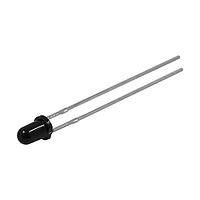
Optical Detectors & Sensors
Light-based sensing is used everywhere from industrial automation and safety systems to communications equipment and embedded electronics. When a design needs to convert light into a usable electrical signal, selecting the right Optical Detectors & Sensors category is an important step because performance depends on the sensing principle, wavelength response, package style, and target environment.
This category brings together core optoelectronic detector technologies used to measure light intensity, detect the presence of a beam, respond to infrared sources, or support higher-speed optical signal paths. It is relevant for engineers working on machine sensing, optical switching, instrumentation, consumer devices, and fiber-based communication systems where stable and predictable light detection matters.
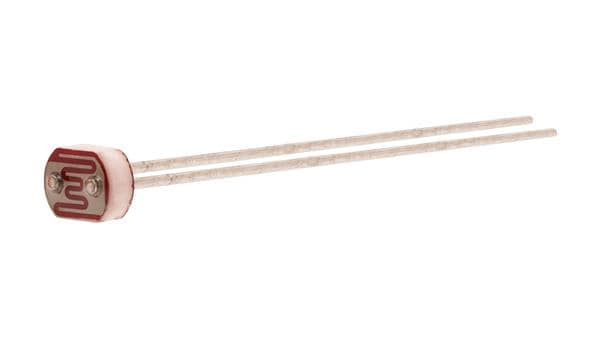
Where optical detectors and sensors are used
In practical systems, these components are chosen to detect visible light, infrared radiation, or specific optical signals generated by emitters, indicators, measurement sources, or communication links. Typical use cases include object detection, proximity sensing, optical encoders, smoke and flame-related sensing concepts, handheld instruments, and compact embedded products that need a small and efficient optical front end.
They also play a role in industrial and networking environments. Some applications rely on simple light/no-light detection, while others require fast response, spectral sensitivity in the near-infrared region, or array-based detection for optical channels. For adjacent technologies in machine vision and imaging workflows, readers may also explore cameras and accessories when a full image capture solution is needed rather than a single-point optical detector.
Understanding the main device types in this category
This category covers several sensing approaches, each suited to a different electrical and optical requirement. Photodiodes are widely used where fast response, good linearity, and compact integration are important. They are often selected for light measurement, infrared detection, optical receivers, and precision circuits that need a current proportional to incident light.
Phototransistors provide optical detection with built-in gain, which can simplify interface circuitry in switching or presence-detection applications. In designs that need stronger output response to relatively small light changes, they can be a practical option. Other related detector types in the broader category support applications such as ambient light measurement, resistive light sensing, or highly sensitive low-light detection depending on the required operating principle.
Typical selection criteria for engineers and buyers
Choosing the right part usually starts with the wavelength response. Many optical detectors are optimized for visible or near-infrared operation, so the detector should match the emitter or light source used in the system. If the design uses IR LEDs, laser sources, or optical links around specific wavelength bands, spectral compatibility becomes one of the first filters during part selection.
Electrical behavior is equally important. Engineers often compare output type, photocurrent level, switching speed, package style, mounting method, and suitability for industrial conditions. For example, a surface-mount photodiode can be a better fit for compact PCB assemblies, while array-based devices may be more relevant in communication or multi-channel optical reception. If the project extends into optical communication hardware, the broader fiber optics range can provide useful context for related components.
Representative products in this range
Several parts in this category illustrate the range of available detector options. The ams OSRAM portfolio includes devices such as SFH 4229, SFH 2703, SFH 4232A, SFH 4249-U, and SFH 4250S-ST photodiodes, which are relevant for designs that need compact light sensing across common optoelectronic applications. The BP 104 FAS-Z is also a useful example of an industrial photodiode, with context indicating surface-mount construction and peak sensitivity around 1100 nm.
For designers evaluating alternative detector structures, the ams OSRAM Q62702P3600 provides a phototransistor example, while the Honeywell SDP8105-001 represents a photodarlington style for applications where optical amplification behavior may be beneficial. In communication-oriented environments, the Finisar Corporation P850-2124-001 highlights how photodiode arrays can be relevant where multiple optical channels or higher-density signal detection are involved.
How detector choice affects system design
The detector is only one part of the optical signal chain, but it strongly influences the analog front end, signal conditioning strategy, and mechanical layout. A photodiode often works with transimpedance amplification or measurement circuitry to convert low-level photocurrent into a stable voltage signal. This makes detector dark current, noise behavior, and response time important considerations in both precision and high-speed designs.
Mechanical integration also matters. Package geometry, viewing angle, optical filtering, and board placement can all affect how reliably the sensor receives light from an emitter or target surface. In practical industrial systems, designers often evaluate the detector together with the light source, housing, contamination risk, and ambient light conditions rather than choosing the sensing component in isolation.
Manufacturer landscape and sourcing considerations
This category features recognized optoelectronic suppliers used across industrial and electronic design workflows, including ams OSRAM, Finisar Corporation, and Honeywell. Broader manufacturer coverage in the catalog also helps buyers compare alternatives based on availability, package preference, application fit, and integration requirements without moving outside the same product ecosystem.
When reviewing parts, it is useful to balance performance needs with assembly method, lifecycle considerations, and application environment. A detector intended for a compact embedded product may be selected very differently from one used in industrial beam sensing or optical communications. Related optoelectronic products such as displays may also sit in the same project bill of materials when the design both senses and visually presents system status.
Finding the right fit for your application
For straightforward light detection, start by defining whether the application needs measurement, switching, or communication-grade reception. Then narrow the choice by wavelength, speed, packaging, and circuit interface requirements. This approach makes it easier to distinguish when a standard photodiode is sufficient, when a phototransistor offers a simpler path, or when a more specialized detector should be evaluated.
With a category that spans multiple sensing principles, the best results come from matching the detector to the optical source and the real operating environment. Whether the goal is IR sensing, beam interruption, compact industrial detection, or multi-channel optical reception, this range of optical detectors and sensors supports a broad set of electronic and industrial design needs.
Get exclusive volume discounts, bulk pricing updates, and new product alerts delivered directly to your inbox.
By subscribing, you agree to our Terms of Service and Privacy Policy.
Direct access to our certified experts