Load Cell Online Controller
Accurate force and weight signals are critical in automated filling, batching, packaging, and test systems. When a process depends on stable load cell input, the controller becomes the point where measurement, display, communication, and control logic come together. This is why choosing the right Load Cell Online Controller matters not only for measurement quality, but also for integration with PLCs, HMIs, alarms, and plant-level monitoring.
In industrial environments, these devices are used to convert millivolt-per-volt signals from load cells or strain gauges into practical data for control and supervision. Depending on the application, the requirement may be simple weight indication, relay-based control, analog retransmission, or serial communication for a larger automation architecture.
Where load cell controllers fit in industrial systems
A load cell controller is typically installed between the sensing element and the control layer of the machine. It receives the low-level signal from the load cell, processes it with appropriate A/D conversion and filtering, and provides readable values or control outputs that can be used for dosing, limit control, alarming, and data exchange.
These controllers are commonly used in weighing hoppers, filling machines, check systems, force monitoring rigs, and packaging lines. In some projects, they are selected as standalone weighing units; in others, they are part of a broader control setup alongside multi-function controllers or machine-specific monitoring devices.
Typical product types in this category
This category covers more than one style of device because real applications vary widely. Some systems need a full-featured weighing controller with display, keypad, relay logic, and communication ports. Others require signal conditioning or analog conversion so the load cell signal can be transmitted reliably to another controller or recorder.
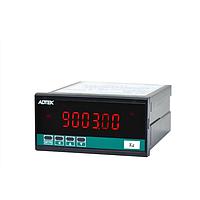
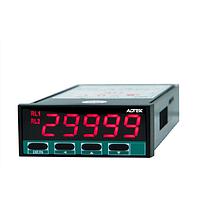
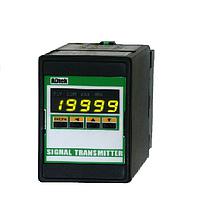
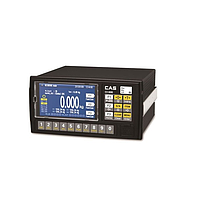
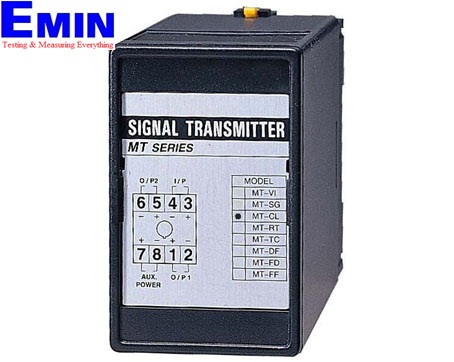
Examples in this range include the CAS CI-605A Weighing Controller and CAS CI-601A, which are designed for weighing control tasks and support common industrial interfaces. For strain gauge and load cell signal handling, Adtek models such as the ST-SG conditioner, NT-SG converter, MT-SG transmitter, CS3-SG indicator, and A6-SG weighing controller illustrate how the category can cover indication, conversion, retransmission, and local control in different machine architectures.
Key selection points before you choose
The first step is to define the signal and process requirement clearly. Some applications only need stable display and basic output, while others need fast sampling, external inputs, programmable relays, analog output, or RS232/RS485 communication. It is also important to confirm the expected load cell signal range, the number of connected load cells, and whether the system requires legal-for-trade related approvals or only internal process control.
Another important factor is the level of integration needed. A compact indicator may be enough for local operation, but automated machines often benefit from a weighing controller with external I/O and serial communication. If the load signal must be converted into standard voltage or current for another control loop, a transmitter or converter may be more suitable than a display-focused controller.
- Input compatibility: load cell or strain gauge signal range, sensitivity, and impedance.
- Control functions: relay outputs, tare, zero, batching logic, alarm or compare functions.
- Communication: RS232, RS485, Modbus RTU, or analog retransmission where required.
- Installation conditions: panel space, operating temperature, power supply, and protection level.
CAS and Adtek solutions for weighing and strain gauge applications
CAS is well known in weighing applications, and the CI-605A and CI-601A represent controller options for systems that need modern display capability, numeric input, and industrial communications. In practical terms, these devices are suitable when the user wants a dedicated interface between load cells and the machine control system, especially in packaging or general weighing operations.
Adtek adds flexibility for projects that combine weighing, force measurement, and signal conversion. The CS3-SG indicator and A6-SG controller are useful when local indication and control are both required, while the ST-SG, NT-SG, and MT-SG devices are relevant when the main goal is signal conditioning, retransmission, or conversion into standard analog outputs for downstream equipment.
Applications across automation, testing, and process control
Load cell online controllers are used in many sectors because force and weight signals appear in more places than conventional scale systems alone. In packaging and filling equipment, they help monitor target weight and trigger output actions. In process machines, they can support feeder control, discharge monitoring, or alarm thresholds tied to material level and load conditions.
They also play an important role in test benches and machinery that use strain gauge signals for force measurement. In these cases, an indicator or conditioner can improve usability by providing calibration support, better display, and easier communication with a PC or PLC. Where the broader machine also includes other condition-monitoring functions, related categories such as vibration monitoring devices may be part of the same system design.
Why signal quality and communication options matter
Load cell outputs are low-level signals, so controller quality affects stability, repeatability, and noise resistance. Good A/D conversion, suitable resolution, and proper filtering help the system respond consistently, especially in dynamic machinery where vibration, electrical noise, or unstable material flow can influence readings.
Communication is equally important in modern plants. A controller with serial ports, relay logic, or analog output can simplify integration with supervisory systems, PLC panels, and local operator stations. For some applications, the controller serves as both a measurement device and a compact automation node, reducing the need for additional interface hardware. In more specialized setups, it may be paired with a power controller or other control equipment as part of a coordinated machine process.
Choosing by application rather than by model list
Instead of starting with model numbers, it is often more effective to begin with the process objective. If the job is straightforward weighing with operator interaction, a controller with display and keypad may be the best fit. If the signal must be passed to another platform, a transmitter or converter can be the better engineering choice. For systems that need local compare logic, alarm outputs, or communication to a PLC, a controller or indicator with built-in I/O is usually more appropriate.
This category therefore supports a range of engineering needs, from simple measurement interfaces to more complete industrial weighing control solutions. Reviewing the available products by signal type, control method, and integration requirement will usually lead to a better match than comparing hardware only by appearance or basic display features.
Final considerations
A well-matched load cell controller helps maintain stable measurement, cleaner integration, and more reliable machine behavior over time. Whether the requirement is a dedicated weighing controller from CAS or a strain gauge indicator, conditioner, or transmitter from Adtek, the most important step is aligning the device with the actual signal path and control logic of the application.
For buyers, system integrators, and maintenance teams, this category provides a practical starting point for selecting equipment that supports measurement accuracy, usable outputs, and straightforward industrial communication. If your project also involves related monitoring or control functions, exploring adjacent controller categories can help build a more complete and efficient automation solution.
Get exclusive volume discounts, bulk pricing updates, and new product alerts delivered directly to your inbox.
By subscribing, you agree to our Terms of Service and Privacy Policy.
Direct access to our certified experts