Multi-function controller
In many industrial processes, one controller has to do more than execute a single loop. Plants often need a device that can read multiple input types, manage outputs, support communications, and present process data in a practical interface for operators and maintenance teams. That is where a multi-function controller becomes especially useful across monitoring, treatment, thermal processing, and machine control applications.
This category brings together controllers designed for broader control and monitoring tasks rather than one narrowly defined function. Depending on the model, that can mean support for digital and analog sensor inputs, configurable output behavior, relay handling, data visibility, and integration with wider automation systems.
Where multi-function controllers fit in industrial systems
A multi-function controller is typically selected when the process requires flexible signal handling and adaptable control logic. Instead of installing separate dedicated devices for each variable, users can often centralize monitoring and control functions in one platform, simplifying panel design and daily operation.
This makes the category relevant for water and wastewater treatment, furnace atmosphere control, OEM equipment, utility monitoring, and process skids. In some cases, users may compare these products with a power controller or other specialized control devices, but multi-function models are generally chosen when the application spans more than one measurement type or requires broader connectivity.
Common capabilities users look for
The value of this category usually comes from how well a controller can combine inputs, outputs, interface, and communications in one device. Buyers are often evaluating not only the measurement side, but also how the controller fits into the rest of the control architecture.
Typical considerations include support for digital or analog sensors, relay outputs, analog output modes such as linear or PID behavior, display readability, enclosure suitability, and mounting flexibility. Communication options also matter, especially in facilities that need integration with PLCs, SCADA, or remote monitoring platforms. For applications requiring wider process visibility, some users also explore a vibration monitoring solution alongside controller-based architectures.
Examples from leading manufacturers
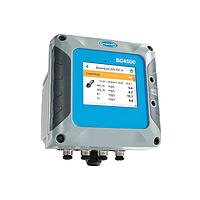
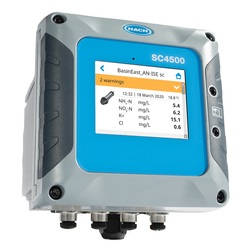
Several manufacturers in this category illustrate how multi-function controllers are used in practice. HACH offers SC4500-based controller variants that support different combinations of digital and analog inputs, including pH/ORP and conductivity-related configurations. These models are relevant in liquid analysis environments where one controller may need to manage multiple measurement points while still supporting outputs, relays, and network connectivity.
For example, the HACH LXV525.99A11521 Digital Controller (2pH/ORP), HACH LXV525.99A11551 Digital Controller (2DigSensors), and HACH LXV525.99A11111 Digital Controller (2 analog pH/ORP) show how the same controller family can address different sensor arrangements. This kind of variation is useful for engineers who want a common platform while matching the exact input structure of a project.
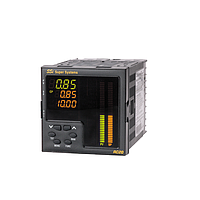
SUNX and Super Systems add further context to the category. The SUNX LC4H-R6-DC24VS Control is an example of a compact control device suited to machine or equipment-level tasks, while the Super Systems AC20 Single-Loop Atmosphere Controller highlights how some applications need multifunctional control in specialized thermal process environments, including monitoring variables such as carbon, dew point, and oxygen.
How to choose the right controller for your application
The first step is to define the process variables you need to measure and control. Some projects only require digital sensor support, while others need mixed analog and digital inputs. If your process includes pH/ORP, conductivity, or multiple sensor channels, the available input combinations become one of the main selection criteria.
Next, look at output and control requirements. A controller may need to provide analog retransmission, relay switching, or PID-based output behavior depending on whether it is used for indication, closed-loop control, alarm handling, or supervisory monitoring. Communication is equally important if the device must exchange data with higher-level systems over industrial networks.
Environmental and installation details should not be overlooked. Panel, wall, or pole mounting, enclosure protection, power supply range, and operating temperature can all influence long-term reliability. In operations where a controller must coordinate several measurements and interface points, a broader multi-function control platform is often more efficient than combining several single-purpose units.
Input configuration matters more than it seems
Many buyers focus first on screen size or communication options, but the actual input architecture often determines whether a controller will fit the process without extra hardware. Within the HACH range alone, there are versions for two digital sensors, one digital plus one pH/ORP input, two analog pH/ORP inputs, and other mixed arrangements.
This has practical consequences in design and commissioning. Choosing a controller with the right native input mix can reduce signal conversion, simplify wiring, and make future expansion easier. It can also help standardize maintenance procedures because the operating philosophy remains similar even when the connected sensor types differ.
Applications across process industries
Multi-function controllers are used wherever process control needs to stay adaptable. In water quality systems, they may support online liquid analysis with alarms, data display, and networked communication. In furnace or heat-treatment systems, they can help maintain atmospheric conditions and process stability. In machinery and equipment panels, they may serve as compact control hubs for timing, switching, or sequence-related tasks.
They are also relevant in projects where users want to combine local visibility with system-level integration. A modern controller can act as the bridge between sensors, operators, and automation software, especially when the installation needs more than a simple indicator or single-variable loop controller. For broader control strategies, some users may also review a load cell controller or other application-specific devices in parallel.
Why this category is useful for engineering and procurement teams
From a sourcing perspective, this category helps narrow down controllers intended for more versatile industrial duties. Rather than browsing highly specialized products one by one, engineers can compare devices that are closer in purpose: handling multiple input types, offering broader control functions, and fitting into connected industrial environments.
That is especially helpful during retrofit work, panel redesign, and new equipment development. A well-matched controller architecture can reduce integration effort, improve operator usability, and leave room for future changes in sensor configuration or communications.
Final considerations
Selecting a multi-function controller is rarely just about one specification. The better approach is to evaluate the full operating context: sensor types, control method, output needs, communications, mounting conditions, and the level of flexibility required over time. Models such as the HACH SC4500 variants, the SUNX LC4H-R6-DC24VS Control, and the Super Systems AC20 illustrate how different industries interpret multi-function control in different ways.
By comparing input structure, control features, and integration options carefully, buyers can identify a controller that supports both current process demands and future system changes with fewer compromises.
Get exclusive volume discounts, bulk pricing updates, and new product alerts delivered directly to your inbox.
By subscribing, you agree to our Terms of Service and Privacy Policy.
Direct access to our certified experts