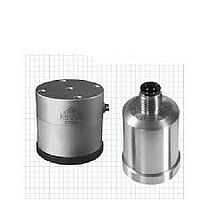
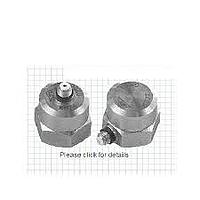
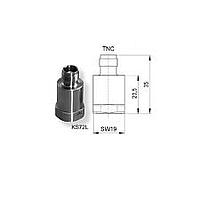
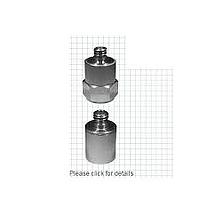
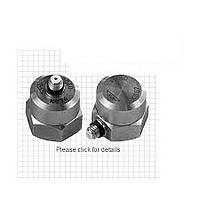
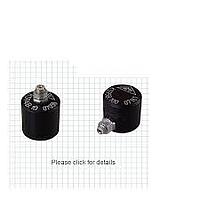
Vibration Online Monitor, Sensor
Unexpected vibration is often one of the earliest signs that rotating equipment needs attention. In production plants, utilities, and maintenance programs, having a reliable vibration online monitor and sensor in place helps teams detect changes in machine condition before they develop into unplanned downtime, secondary damage, or safety risks.
This category brings together devices designed for continuous or periodic vibration tracking on motors, pumps, fans, gearboxes, and other critical assets. Depending on the application, the right solution may be a compact switching device for local alarm and shutdown logic, or a wireless sensing system that supports broader condition monitoring across multiple points.
Where vibration monitoring fits in industrial maintenance
Vibration is a practical indicator of machine health because many common mechanical issues show up as changes in overall velocity, acceleration, or frequency behavior. Problems such as imbalance, misalignment, looseness, bearing wear, and mounting issues can often be identified earlier when measurement is taken continuously instead of only during occasional inspections.
For this reason, online vibration devices are widely used where machines operate for long hours, where access is difficult, or where failure would disrupt production. If your application requires broader continuous tracking with connected devices, you may also want to explore our online vibration monitoring solutions for different installation and system needs.
Common device types in this category
Not every monitoring task requires the same level of analysis. Some users need a straightforward sensor or switch that reacts when vibration exceeds a defined threshold, while others need a distributed system that gathers data over time for trend analysis and maintenance planning.
A compact example is the Dwyer VBS-1 or Dwyer VBS-2, which combine vibration sensing with a switching function and analog output in a rugged housing. These types of devices are often chosen when a machine needs a simple alarm point, local integration to a PLC, or a shutdown signal based on RMS vibration monitoring rather than a full diagnostic platform.
At the system level, products such as the FLUKE 3562 screening series and FLUKE 3563 analysis series are suited to applications where users want to monitor multiple assets and compare vibration behavior over time. Screening-oriented devices are helpful for identifying machines that need attention, while analysis-focused devices support deeper investigation with wider frequency coverage and richer measurement data.
How to choose the right vibration online monitor or sensor
Selection usually starts with the machine itself and the maintenance objective. For basic machine protection, users often prioritize a clear trip point, stable output, environmental protection, and easy mounting. For condition-based maintenance, attention shifts toward measurement range, frequency response, sampling capability, communication method, and how the data will be reviewed by maintenance or reliability teams.
It is also important to consider the installation environment. In industrial areas with washdown exposure, outdoor duty, or dust, enclosure protection matters. Devices in this category include options with industrial ingress ratings such as IP66 or IP67, making them suitable for harsh areas where durability and stable long-term operation are important.
Another key point is system integration. Some applications only need a 4 to 20 mA signal or switching output into an existing controller. Others benefit from networked monitoring that can scale across many assets. Where machine status needs to be consolidated with other process signals, a multi-function controller may be relevant in the wider control architecture.
Representative products and use cases
The Dwyer VBS-1 and VBS-2 are good examples of compact field devices for direct machine protection. Their adjustable set point and delay make them suitable for installations where nuisance trips must be reduced, and where maintenance teams want a straightforward way to monitor vibration velocity and trigger a local response.
For wider asset coverage, FLUKE offers screening and analysis sensor systems that fit predictive maintenance workflows. The FLUKE 3562-8 PK, 3562-16KIT, and 3562-32KIT are oriented toward scalable screening of machine condition, while the FLUKE 3563-8PK and 3563-16KIT support more detailed analysis for assets that require closer attention.
These examples illustrate an important distinction: one device may be ideal for threshold-based protection on a single machine, while another is more appropriate for plant-wide monitoring, maintenance prioritization, and long-term trend visibility. Choosing between them depends less on brand and more on the level of diagnostic depth your reliability program actually needs.
Key considerations for installation and integration
Mounting quality has a direct effect on vibration data quality. A sensor installed on an unsuitable surface, or with inconsistent mounting practice, may produce readings that are difficult to compare over time. For that reason, users should think about mounting method, sensor orientation, cable or connector arrangement, and access for maintenance before finalizing the device choice.
Signal handling is equally important. Some sensors are intended to feed analog values into existing plant control systems, while others transmit measurement data at configured intervals for remote review. If the project involves additional machine-side instrumentation or broader panel integration, related controller categories such as power controllers can also be part of the overall system design depending on the application.
Wireless and self-powered monitoring options can be especially useful where cabling is difficult or where many assets need to be covered with minimal installation disruption. In those cases, battery life, transmission intervals, environmental exposure, and access for commissioning should all be reviewed alongside the raw measurement specifications.
Industries and equipment that benefit from online vibration sensing
Online vibration monitoring is relevant in many sectors, including manufacturing, water treatment, energy, HVAC, material handling, and process industries. Any site with rotating assets can benefit from earlier warning of changing machine behavior, especially when maintenance resources need to be directed toward the most critical equipment first.
Typical monitored assets include pumps, compressors, blowers, motors, conveyors, and fans. On simpler machines, a compact switch may be enough to provide basic protection. On more critical assets, a connected sensor system can support condition monitoring, maintenance scheduling, and faster troubleshooting when process stability depends on machine health.
What to compare before ordering
Before selecting a product from this category, it helps to compare the intended monitoring style, the number of machines involved, and the level of response required. A local alarm output, a shutdown interlock, a periodic wireless update, and a deeper frequency-based analysis workflow each point to different device types.
- Measurement purpose: machine protection, screening, or analysis
- Output and communication: switch output, analog signal, or transmitted data
- Environmental suitability: temperature range, enclosure protection, and mounting conditions
- Coverage scale: single critical asset or multi-machine deployment
- Maintenance workflow: local indication, controller integration, or trend-based diagnostics
If your application already includes equipment from Dwyer or FLUKE, keeping the monitoring approach aligned with your existing maintenance and control environment can simplify deployment and support day-to-day use.
Support a more informed maintenance strategy
The right vibration online monitor or sensor helps turn machine behavior into actionable information. Whether you need a compact protective switch for a single asset or a broader sensing system for predictive maintenance, this category supports a practical path toward earlier fault detection and better uptime planning.
Review the available models based on installation method, monitoring depth, and integration needs. A well-matched device will not only fit the machine physically, but also fit the way your team responds to alarms, trends, and maintenance decisions over time.
Get exclusive volume discounts, bulk pricing updates, and new product alerts delivered directly to your inbox.
By subscribing, you agree to our Terms of Service and Privacy Policy.
Direct access to our certified experts