
Low Resistance Meter Inspection Service
Accurate resistance measurement is essential when verifying grounding continuity, bonding quality, busbar joints, switchgear contacts, and other low-ohmic paths in electrical systems. Even a small deviation in a low resistance meter can affect maintenance decisions, troubleshooting results, and acceptance testing, which is why regular inspection plays an important role in quality control and operational safety.
Low Resistance Meter Inspection Service is intended for organizations that rely on stable, traceable measurement performance in field service, plant maintenance, manufacturing, utilities, and testing environments. This service helps confirm that the instrument operates within expected performance conditions and remains suitable for the applications where low-value resistance readings matter most.
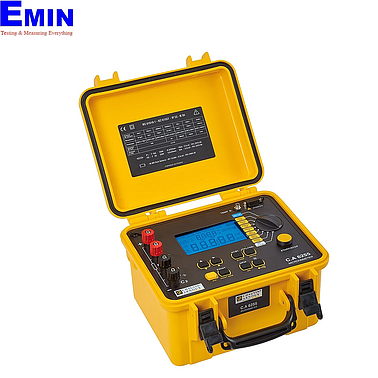
Why inspection matters for low resistance meters
Low resistance meters are commonly used where the measured values are very small and the margin for error can be equally small. In these applications, instrument condition directly influences the reliability of test data. An inspection service helps identify issues that may affect repeatability, reading stability, terminal condition, lead performance, or overall measurement confidence.
For maintenance teams and technical departments, periodic inspection also supports a more structured equipment management process. It can reduce the risk of using a meter with unnoticed drift or wear, especially in environments where instruments are moved frequently, exposed to demanding site conditions, or used across a wide range of electrical assets.
Typical applications that depend on dependable low resistance measurement
This type of service is relevant wherever low-ohm measurement is part of routine inspection, commissioning, or failure analysis. Common use cases include checking continuity in grounding systems, evaluating contact resistance in switching devices, verifying cable connections, and assessing conductive joints in power distribution equipment.
It is also valuable in manufacturing and assembly processes where electrical connection quality must be verified before delivery. In these situations, confidence in the measuring instrument supports consistent documentation, clearer pass/fail judgment, and better alignment between production checks and final quality requirements.
What a low resistance meter inspection service generally helps verify
Although the exact inspection workflow may vary depending on the instrument and service scope, the objective is to assess whether the device remains suitable for intended use. This can include reviewing general operating condition, checking core measurement behavior, and confirming that the instrument responds properly under normal test conditions.
Attention is often given to practical factors that affect real-world use, such as connector integrity, display behavior, input and lead condition, and overall measurement consistency. For users who work in regulated or quality-driven environments, this process supports better traceability and helps maintain confidence in recorded test results.
When to consider scheduling inspection
Many companies plan inspection at regular intervals as part of preventive maintenance for test equipment. However, there are also practical situations where earlier review makes sense, such as after heavy field use, after transport between sites, after long storage, or when the meter shows unstable or unexpected readings.
If your workflow includes multiple electrical test instruments, it can be useful to coordinate inspection planning across related equipment categories. For example, teams handling broader electrical safety and commissioning tasks may also review services such as withstand voltage test inspection or breaker testing equipment inspection to keep their measurement tools managed on a consistent schedule.
How inspection supports maintenance, quality, and compliance workflows
In industrial and commercial environments, test instruments are often part of a wider documentation chain. Readings taken by a low resistance meter may be used in maintenance reports, inspection records, commissioning documents, or internal quality procedures. A verified instrument condition helps strengthen trust in those records and supports more defensible technical decisions.
This is particularly useful for organizations working with formal maintenance plans, contractor reporting requirements, or internal audit processes. By including instrument inspection within the equipment lifecycle, teams can manage risk more effectively and reduce uncertainty when measurement results are used to approve, reject, or further investigate an electrical asset.
Related inspection needs in the same testing environment
Low resistance measurement rarely stands alone. In many electrical testing workflows, it is part of a broader set of checks that may involve insulation evaluation, dielectric verification, or cable fault analysis depending on the asset under test. Reviewing related service categories can help build a more complete maintenance plan for your test equipment fleet.
Where applicable, users may also be interested in insulating materials tester inspection or cable fault tester inspection. These adjacent services are relevant when your team works across multiple diagnostic methods and wants a more coordinated approach to electrical test equipment upkeep.
Choosing the right service for your instrument management process
When selecting a service, it helps to consider how the meter is used, how often it is deployed, the criticality of the measurements it produces, and the documentation expectations within your organization. Instruments used in acceptance testing, shutdown maintenance, or high-accountability reporting may need closer inspection planning than meters used only occasionally for basic checks.
A practical approach is to align inspection intervals with both equipment usage and the consequences of measurement error. This allows technical teams to manage resources efficiently while still protecting the reliability of the data they depend on in day-to-day operations.
Conclusion
A low resistance meter is often used in tasks where small values carry significant meaning, so maintaining confidence in the instrument is essential. Low Resistance Meter Inspection Service helps support dependable measurement performance, better equipment control, and stronger consistency across maintenance and testing activities.
For organizations that rely on accurate electrical verification, periodic inspection is a practical step toward reducing uncertainty and keeping test workflows dependable over time.
Get exclusive volume discounts, bulk pricing updates, and new product alerts delivered directly to your inbox.
By subscribing, you agree to our Terms of Service and Privacy Policy.
Direct access to our certified experts