
High Speed Camera Inspection Service
When conventional visual inspection cannot capture a fast event clearly, a high-speed imaging approach becomes essential. In manufacturing, research, maintenance, and failure analysis, being able to slow down rapid motion frame by frame helps engineers identify root causes that are otherwise missed in real time. That is where High Speed Camera Inspection Service is most valuable: it turns short, complex events into usable evidence for technical evaluation and decision-making.
This type of inspection service is commonly used when a process involves impact, vibration, sudden movement, rapid mechanical cycling, fluid behavior, material deformation, or intermittent faults. Instead of relying only on operator observation, recorded image data supports more accurate analysis, better reporting, and more confident corrective action.
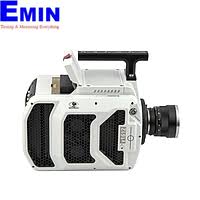
Why high-speed camera inspection is used
Many industrial problems happen too quickly for the human eye or standard video systems to interpret properly. A machine may appear to run normally, yet a component can vibrate excessively, misalign during motion, or fail only for a fraction of a second. A high-speed camera inspection allows these transient events to be captured and reviewed in slow motion, making hidden process behavior visible.
This is especially useful when troubleshooting recurring defects, validating machine performance, observing test events, or documenting dynamic behavior during development work. In a service context, the goal is not simply to record video, but to produce inspection data that can support diagnosis, verification, and communication between technical teams.
Typical industrial applications
High-speed imaging is relevant across a wide range of B2B environments. It is often applied in automated production lines, product testing, motion studies, equipment diagnostics, and engineering investigations where speed and timing directly affect quality or reliability. The service can help reveal whether an issue comes from the machine, the part, the timing sequence, or the surrounding process conditions.
Common use cases include observing rapid actuator movement, monitoring assembly operations, evaluating packaging line behavior, checking part ejection, reviewing impact events, or documenting short-duration failures. It can also support R&D activities where teams need visual evidence of how a design behaves under dynamic conditions before making process or product changes.
What an inspection service typically helps you evaluate
In practice, this category of service is valuable when the main question is not only “what happened,” but also when, how, and in what sequence it happened. A frame-by-frame review can clarify the timing relationship between moving parts, reveal instability, and show whether an event occurs consistently or only under certain conditions.
Depending on the inspection objective, users may be looking to evaluate motion path, cycle consistency, deformation, contact timing, oscillation, splash or spray behavior, breakage sequence, or the interaction between multiple components. This is particularly helpful when a process fault is intermittent and difficult to reproduce under normal observation.
- Failure analysis for fast mechanical or process events
- Motion verification in automated equipment
- Test documentation for engineering review
- Process optimization based on visual timing data
- Quality investigation for recurring or unclear defects
How to determine whether this service fits your inspection need
Not every inspection task requires high-speed imaging. If the target event can be observed with standard visual methods, a simpler inspection method may be more practical. However, when the event is too fast, too brief, or too inconsistent to capture reliably, high-speed recording becomes a more suitable technical choice.
It is also important to consider the inspection environment. Lighting, working distance, access to the target area, trigger conditions, and the type of motion being observed all influence whether the recorded footage will be useful for analysis. In some cases, if the inspection target is located inside narrow, enclosed, or hard-to-reach spaces, an industrial video borescope inspection service may be a better fit than external high-speed imaging.
Benefits for troubleshooting and process improvement
One of the main strengths of this service is that it reduces guesswork. Teams can review actual visual data rather than relying only on assumptions, operator impressions, or repeated trial-and-error adjustments. This can shorten troubleshooting time and help prioritize the most likely root causes.
High-speed footage is also useful as a communication tool. Maintenance, quality, process engineering, and management teams can review the same event from a common visual reference, making technical discussions more productive. In many cases, the inspection output supports both immediate corrective action and longer-term process improvement by documenting how equipment behaves under real operating conditions.
Position within a broader visual inspection workflow
High-speed imaging is one part of a broader visual inspection toolkit. It is particularly strong for analyzing events that happen externally and quickly, especially when sequence and timing matter. In contrast, other inspection methods may be better suited to internal cavities, static visual checks, or close-up examination of hidden areas.
Organizations that regularly investigate machine behavior, product defects, or inaccessible structures often combine multiple service approaches depending on the problem. If your inspection needs span different kinds of visual analysis, you may also want to review related options within high-speed camera inspection services and specialized camera-based inspection workflows based on access conditions and event speed.
When to request this service
This service is worth considering when standard cameras cannot clearly show the event, when a fault appears only during operation, or when you need objective visual evidence for engineering analysis. It is also a practical choice during commissioning, validation, maintenance investigations, and production problem-solving where fast motion directly influences output quality.
Before arranging an inspection, it helps to define the target event, the expected trigger point, and the main question you want the recording to answer. A clear inspection objective leads to more useful footage and a more efficient review process.
Conclusion
Fast-moving events often contain the key information needed to solve persistent equipment and process issues, but that information is easy to miss without the right imaging method. High Speed Camera Inspection Service provides a practical way to capture, review, and interpret rapid motion in a form that supports technical diagnosis and process understanding.
For manufacturers, maintenance teams, and engineering departments, the value of this service lies in clearer visibility into short-duration events and better confidence when making corrective decisions. If the challenge involves motion that happens too quickly to observe directly, this inspection approach can be an effective next step.
Get exclusive volume discounts, bulk pricing updates, and new product alerts delivered directly to your inbox.
By subscribing, you agree to our Terms of Service and Privacy Policy.
Direct access to our certified experts