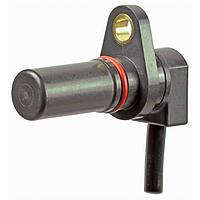
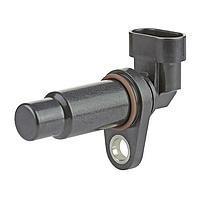
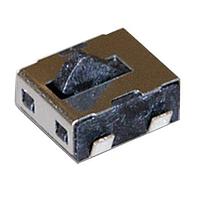
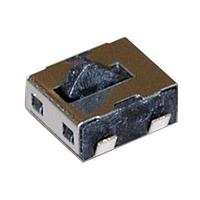
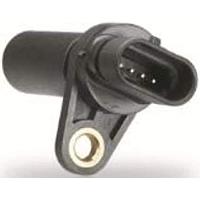
Speed Sensors
Reliable motion feedback is essential wherever equipment needs to measure rotation, track movement, or monitor machine condition in real time. In industrial automation, this often starts with selecting the right speed sensors for the environment, target material, mounting constraints, and control architecture.
On this page, you can explore speed sensing solutions used in machinery, drives, conveyors, rotating assemblies, and process equipment. The category is relevant for engineers and maintenance teams looking for dependable signal generation for speed monitoring, synchronization, overspeed protection, or general machine feedback.
Where speed sensors are used in industrial systems
Speed measurement is a core requirement in many automated systems. Sensors in this category are commonly applied to detect shaft rotation, wheel speed, gear tooth passing, pulley movement, fan speed, and other repetitive motion that must be monitored by a PLC, controller, drive, or condition-monitoring system.
Typical use cases include packaging equipment, material handling systems, motors and gearboxes, pumps, compressors, and transport lines. In these applications, the sensor output helps confirm whether equipment is running at the expected rate, whether movement has stopped unexpectedly, or whether process timing remains within tolerance.
How speed sensing supports control and monitoring
A speed sensor generally works by detecting recurring motion events and converting them into an electrical signal that can be counted or interpreted by downstream electronics. Depending on the machine design, this may involve sensing rotating metal targets, passing teeth, magnets, or other moving features tied directly to mechanical speed.
That signal can then be used for several purposes: closed-loop control, machine interlocking, preventive maintenance, and fault detection. In some systems, speed sensing is primarily a control input; in others, it is a diagnostic layer that helps identify slip, stall, overload, or abnormal mechanical behavior before a larger failure occurs.
Key factors when selecting speed sensors
Choosing the right device starts with the application rather than the catalog alone. Important considerations usually include the sensing principle, operating distance, target geometry, environmental conditions, required output type, and how the signal will be processed by the control system.
Engineers also need to evaluate mounting space, cable routing, electrical noise, vibration exposure, and temperature range. In rotating equipment, alignment and repeatability are especially important, because inconsistent target detection can affect count accuracy and make speed calculations less stable at low or varying RPM.
It is also helpful to consider the full automation context. If the project involves related sensing tasks such as process airflow verification or machine orientation feedback, nearby categories like flow sensors & pitot tubes or inclinometers may be relevant to the wider system design.
Important application differences to keep in mind
Not every speed sensing job has the same requirements. A compact machine operating indoors may prioritize integration simplicity and signal stability, while outdoor or heavy-duty industrial equipment may place greater emphasis on rugged housing, contamination resistance, and long-term reliability under vibration or temperature variation.
Another distinction is whether speed must simply be detected or measured with higher precision. Basic run/stop verification can be less demanding than applications involving synchronization, motion profiling, or feedback into more advanced control logic. Understanding this difference early helps narrow the suitable options and avoids over- or under-specifying the sensor.
Manufacturers commonly considered for this category
This category may include solutions associated with established industrial and sensing brands such as Honeywell, Allegro MicroSystems, Infineon, NXP, SIEMENS, and TE Connectivity. These manufacturers are widely recognized across automation and electronic sensing applications, making them relevant starting points when comparing technologies, integration preferences, and sourcing strategies.
In applications where switch heritage or industrial interface familiarity matters, MICRO SWITCH / Honeywell and Carlo Gavazzi may also be part of the evaluation process. The best fit depends less on brand name alone and more on the actual installation conditions, target speed range, electrical interface, and maintenance expectations.
Related sensor categories in the same automation ecosystem
Speed sensing is often only one part of a broader machine feedback architecture. A system may also need environmental or optical data to improve process visibility, operator safety, or product quality. For example, projects involving building systems, enclosed equipment, or environmental monitoring may also review air quality sensors.
Likewise, machines that depend on optical detection for presence, contrast, or surface evaluation may be complemented by color sensors. Looking at these related categories can be useful when designing a more complete sensing layer instead of treating speed feedback as an isolated component.
What to review before ordering
Before selecting a part, it is worth confirming the target type, expected speed range, available supply voltage, output compatibility, and the mechanical method for installation. Signal interpretation on the controller side is just as important as the sensor itself, especially when pulses must be counted accurately under changing operating conditions.
For maintenance and replacement planning, teams should also check connector style, housing format, and whether the chosen sensor aligns with existing plant standards. A practical selection process reduces commissioning issues and helps ensure the sensor performs consistently across normal operation, startup, and abnormal machine states.
Choosing speed sensors with the application in mind
The most effective selection usually comes from matching sensor behavior to the machine’s real operating conditions rather than focusing on a single specification. When speed feedback is used for control, protection, or diagnostics, small differences in mounting, target design, and signal handling can have a meaningful impact on performance.
By reviewing application needs carefully and comparing suitable industrial sensing options from recognized manufacturers, buyers can build a more reliable motion feedback system. This category is intended to support that process by bringing together speed sensor solutions relevant to industrial automation, machine monitoring, and B2B technical sourcing.
Get exclusive volume discounts, bulk pricing updates, and new product alerts delivered directly to your inbox.
By subscribing, you agree to our Terms of Service and Privacy Policy.
Direct access to our certified experts