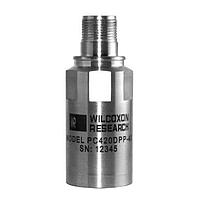
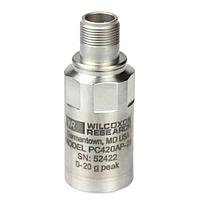
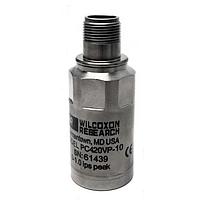
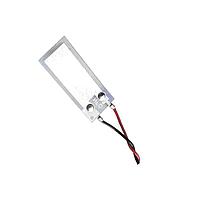
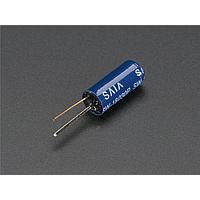
Vibration Online Monitor, Sensor
Unplanned vibration is often one of the earliest signs of mechanical trouble in rotating equipment. In production lines, HVAC systems, pumps, compressors, and motors, continuous monitoring helps maintenance teams detect abnormal movement before it leads to downtime, secondary damage, or unsafe operating conditions.
Vibration online monitor, sensor solutions are used where periodic checks are not enough and a machine needs ongoing condition feedback. This category is relevant for engineers looking to build or expand a machine health strategy with sensing devices and monitoring components suited to industrial environments.
Where vibration monitoring fits in industrial maintenance
Vibration data is widely used in predictive maintenance because it can reveal imbalance, misalignment, looseness, bearing wear, and other mechanical issues at an early stage. Instead of waiting for a visible failure, maintenance teams can track changes over time and investigate when values drift from normal operating patterns.
Online monitoring is especially useful on assets that run continuously, are difficult to access, or have a high cost of failure. In these cases, a permanently installed sensor or monitor supports trend analysis and faster response compared with occasional handheld inspection alone.
Typical devices in this category
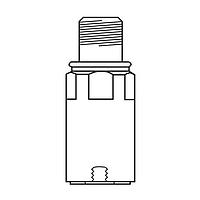
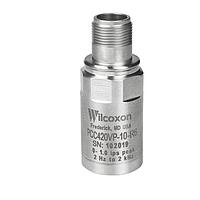
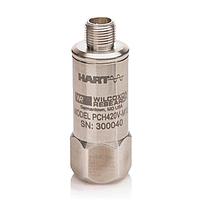
This category generally includes vibration sensors for continuous installation as well as online monitoring devices that collect, transmit, or process vibration signals. Depending on the application, the monitoring chain may involve the sensing element itself, signal interface hardware, and system-level integration with PLC, SCADA, or condition monitoring platforms.
Suppliers represented in this space include Amphenol PCB Piezotronics, Amphenol, Dwyer, Advantech, and FLUKE. Each may serve different needs within an industrial monitoring ecosystem, from core sensing to broader connectivity and instrumentation workflows.
Common applications for online vibration sensors
These devices are commonly selected for rotating machinery such as motors, fans, blowers, pumps, gearboxes, and compressors. Facilities use them to monitor equipment health in manufacturing, utilities, building systems, processing plants, and other operations where reliability and uptime matter.
They are also relevant when a maintenance team wants to move from reactive servicing to a more data-driven approach. Continuous vibration feedback can support alarm thresholds, maintenance scheduling, root-cause analysis, and long-term asset performance review.
Key selection factors before choosing a device
The right choice depends on the machine, the installation point, and how the data will be used. Engineers typically review factors such as mounting method, signal type, environmental conditions, required monitoring continuity, and whether the output needs to integrate into an existing control or data acquisition system.
It is also important to distinguish between a simple sensing requirement and a broader monitoring requirement. A sensor may only provide the raw vibration signal, while an online monitor may add local indication, alarm logic, communication capability, or compatibility with supervisory systems. For applications that also depend on wider environmental inputs, related devices such as flow sensors & pitot tubes or air quality sensors may be part of the same plant monitoring strategy.
Sensor integration and system considerations
A vibration monitoring setup is most effective when it is treated as part of a broader condition monitoring architecture. That means considering cable routing, mounting quality, noise immunity, data logging, alarm thresholds, and how maintenance personnel will interpret and act on the information.
In some projects, users also need industrial computing or edge connectivity to move sensor data into dashboards or plant networks. This is one reason brands such as Advantech may be relevant in the discussion, particularly when the goal is not only measurement but also data visibility and integration into digital maintenance workflows.
How vibration sensors differ from other industrial sensors
Unlike sensors that primarily track environmental conditions, vibration devices focus on the dynamic behavior of machinery and structures. Their role is not simply to record a static value, but to help identify changes in movement patterns that may indicate emerging mechanical faults.
That makes them complementary to other sensing technologies. For example, where vibration monitoring helps assess machine condition, devices such as inclinometers are more suitable for measuring tilt or angular position. Choosing the right sensor type depends on whether the priority is asset health, process control, environmental awareness, or positional feedback.
Why continuous monitoring can improve reliability
Periodic inspection still has value, but machines do not always fail on a convenient schedule. A permanently installed vibration sensor or online monitor can detect developing problems between maintenance rounds, giving teams more time to plan intervention and reduce unplanned stoppages.
This approach can also improve maintenance efficiency. Instead of replacing components purely by calendar interval, teams can use real operating data to prioritize inspections and repairs where the mechanical condition shows actual change.
Choosing a suitable solution for your application
When comparing products in this category, it helps to start with the asset type, operating criticality, and the level of diagnostic detail required. A straightforward monitoring point on a small motor may call for a different solution than a multi-point system on a critical pump or compressor train.
Reviewing installation constraints, signal handling, and downstream integration requirements will usually narrow the options quickly. With the right online vibration monitoring setup, users can build a more informed maintenance program, improve equipment visibility, and support more reliable plant operation over time.
Get exclusive volume discounts, bulk pricing updates, and new product alerts delivered directly to your inbox.
By subscribing, you agree to our Terms of Service and Privacy Policy.
Direct access to our certified experts