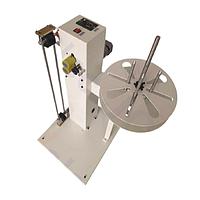
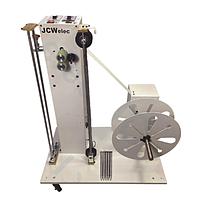
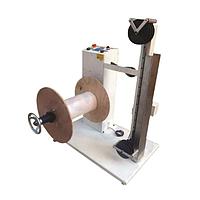
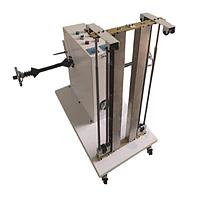
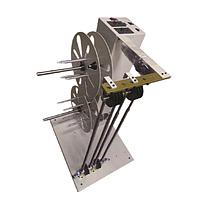
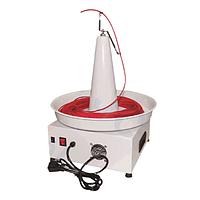
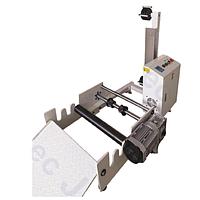
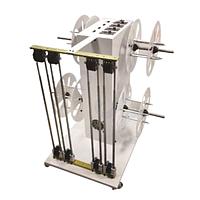
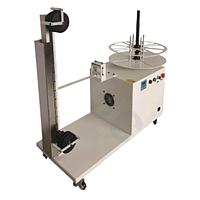
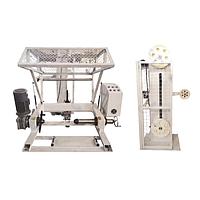
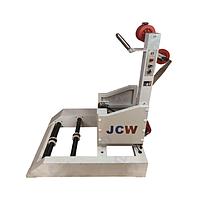
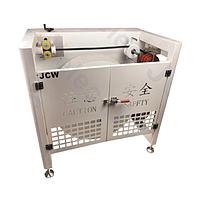
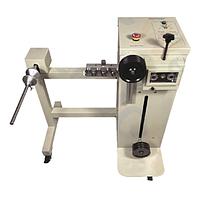
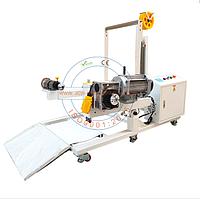
Cable Prefeeding Machine
Stable cable feeding is one of the small process details that has a major impact on output quality. When reels are heavy, wire tension changes frequently, or upstream and downstream equipment run at different speeds, a dedicated Cable Prefeeding Machine helps keep material supply smooth, controlled, and consistent throughout the production line.
In wire and cable processing, prefeeders are commonly used to reduce manual handling, improve feeding stability, and support safer movement of reels, coils, and drums. This category covers equipment for a range of cable sizes and spool formats, from compact wire prefeeders for lighter reels to larger systems designed for heavy cable drums and higher loading capacity.
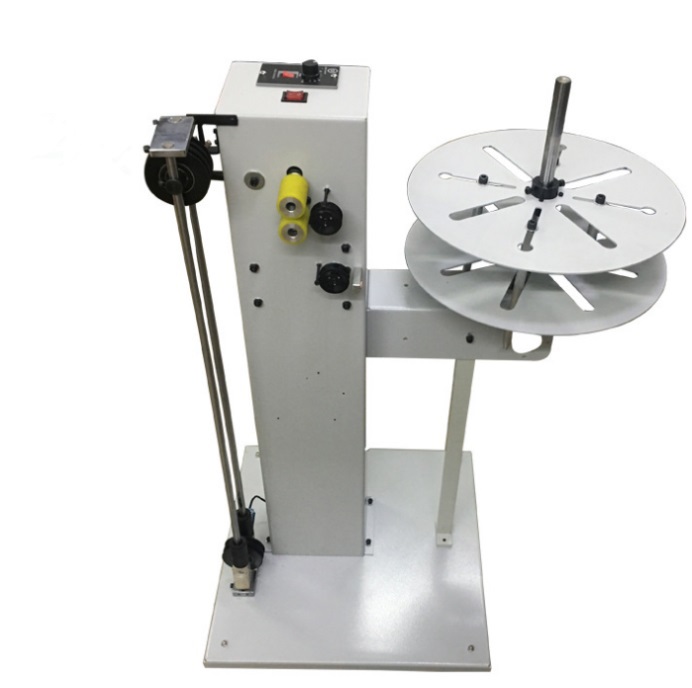
Where cable prefeeding machines fit in the process
A prefeeder sits between stored cable material and the next processing station. Its role is to deliver wire or cable at a controlled pace, helping downstream equipment receive material more evenly and with less interruption. This is especially useful in automated lines where feeding instability can affect cut length accuracy, stripping quality, crimping consistency, or overall cycle time.
In practical applications, these machines are often paired with equipment such as a wire and cable cutting machine or a wire stripping machine. By reducing drag from reels and minimizing sudden tension changes, prefeeders support smoother operation across the full cable handling workflow.
Typical machine types in this category
This category includes several prefeeding approaches based on reel size, loading method, and cable format. Compact models are suitable for smaller reels and lighter wire diameters, while larger machines are built to handle broad reel diameter ranges, higher mass, and more demanding production conditions.
Some systems are designed for upright reel placement, others for horizontal placement, and some are configured for cable drums with larger dimensions. There are also application-specific versions for corrugated tube feeding or free-standing wire support. The right configuration depends less on machine appearance and more on how your material is stored, how heavy it is, and how the next process consumes it.
Examples from leading manufacturers
Sedeke is prominently represented in this category with solutions covering compact automatic prefeeders through to larger heavy-duty models. For smaller and mid-range applications, examples such as the Sedeke PF-08, PF-30, and PF-100 illustrate options for lighter reels, digital or motor-driven control, and faster feeding in compact production environments. For larger reels and heavier loads, models like the Sedeke PF-90-I, PF-90-II, PF-120, and PF-150 reflect the broader industrial side of cable handling.
JCW adds useful coverage for specific prefeeding and unwinding needs. The JCW-WP15 free-standing wire prefeeder is aimed at lighter wire handling, while the JCW-WP16 heavy cable drum unwinding machine is relevant where larger drums and higher loading requirements are part of the process. JCW-WP14 also shows how this category can extend into specialized tube prefeeding applications when corrugated material needs controlled supply.
What to consider when selecting a cable prefeeder
The first point is material format: reel wire, roll wire, cable drum, or corrugated tube. A machine that performs well with small reel wire may not suit large drums or wider spool widths. Reel outer diameter, inner hole size, spool height, and placement method all affect whether loading and feeding will work reliably in daily operation.
The second point is load capacity and cable size. In this category, available solutions range from lighter-duty units for small spools up to machines intended for very heavy reels and drums. If the production line handles thicker cable, larger spool mass, or wider drums, selecting enough capacity at the prefeeder stage helps prevent unstable feeding and unnecessary mechanical stress.
Another key factor is speed coordination. Some machines focus on compact, moderate-speed feeding, while others support higher feed rates or adaptive stepless speed regulation for changing line demand. Matching prefeeder behavior to the speed profile of downstream equipment is often more important than simply choosing the fastest specification on paper.
Benefits in automated wire and cable production
The most direct advantage of a cable prefeeder is more consistent material delivery. This can help reduce pulling resistance, tangling, uneven unwinding, and the need for repeated operator intervention. In automated production, that stability supports better repeatability from one batch to the next.
There is also a workflow benefit. Operators spend less time manually guiding heavy reels or correcting feed problems, which can improve line efficiency and reduce handling fatigue. In integrated setups that include a wire crimping machine or downstream bundling equipment, more controlled feeding contributes to a cleaner and more predictable process overall.
Choosing by application scale
For small to medium wire processing, compact prefeeders are often the practical choice. Machines such as the Sedeke PF-08, Sedeke PF-30, Sedeke PF-100, or JCW-WP15 are relevant when reel sizes are limited, available floor space is tighter, and the main goal is stable feeding into semi-automatic or automatic workstations.
For larger industrial lines, heavier-duty options become more appropriate. The Sedeke PF-120 and PF-150, for example, are aligned with larger reel dimensions and significantly higher loading capacity, while the JCW-WP16 addresses heavy cable drum unwinding scenarios. This makes the category suitable not only for bench-level wire processing but also for more demanding assembly line environments.
How prefeeders support the wider cable handling ecosystem
A prefeeder is rarely a standalone productivity upgrade. Its value becomes clearer when it is part of a connected production flow that also includes cutting, stripping, crimping, wrapping, or post-processing. Feeding quality influences how consistently the next machine can perform, particularly when line speed, cable weight, or spool resistance changes during operation.
For manufacturers looking at complete workflow efficiency, it can also be useful to review related solutions such as winding and bundling machines. Looking at the full process rather than one station in isolation often leads to a more reliable equipment selection.
Find the right cable prefeeding setup
This category brings together equipment for controlled unwinding and supply of wire, cable, and related materials across a wide range of production needs. From compact automatic wire prefeeders to large drum-handling systems, the available options are suited to different reel sizes, cable diameters, loading weights, and installation methods.
If you are comparing machines, focus on the real operating conditions: reel dimensions, cable type, load, line speed, and downstream process requirements. A well-matched cable prefeeding solution helps create a steadier production flow, reduces manual intervention, and supports more dependable performance across the entire wire and cable processing line.
Get exclusive volume discounts, bulk pricing updates, and new product alerts delivered directly to your inbox.
By subscribing, you agree to our Terms of Service and Privacy Policy.
Direct access to our certified experts