
Wire & Cable Cutting Machine
Fast, repeatable wire preparation is a basic requirement in cable assembly, panel building, and many electronics production environments. When output volume increases or cut accuracy becomes more important, a Wire & Cable Cutting Machine helps streamline the first step of processing by reducing manual handling, improving length consistency, and supporting cleaner downstream operations.
On this page, buyers can explore equipment used for cutting a wide range of cable types in industrial workflows. Depending on the application, these machines may be selected for simple length cutting, integrated cut-and-strip functions, or compatibility with different insulation materials and conductor sizes.
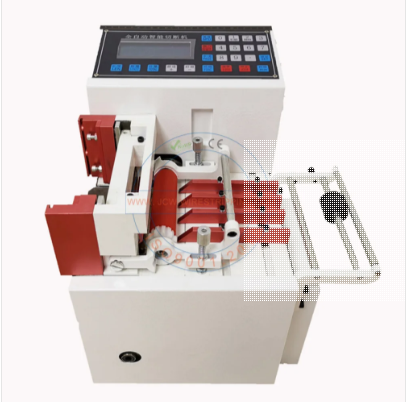
Where wire and cable cutting machines fit in production
In many manufacturing lines, cable preparation is not a standalone task. It sits within a broader process that can include stripping, crimping, marking, bundling, and final harness assembly. A dedicated cutting machine helps create a stable starting point by delivering uniform lengths before the next operation begins.
This is especially useful in applications where repeatability matters, such as control cabinet wiring, appliance manufacturing, automotive sub-assemblies, and electronics production. If your workflow also includes terminal attachment, it may be useful to review related equipment such as a wire crimping machine as part of a more complete processing setup.
Common capabilities to consider
Not every machine in this category serves the same production need. Some are designed mainly for straight cutting to preset lengths, while others combine cutting with insulation removal to reduce handling between steps. The right choice depends on wire type, required throughput, and the level of automation your operation needs.
Key considerations often include supported conductor cross-section, adjustable cutting length, tolerance, blade durability, and material compatibility. For many buyers, processing flexibility is just as important as speed, especially when the same workstation may need to handle PVC, silicone, Teflon, or other cable constructions across multiple jobs.
Material and wire-type compatibility
Wire and cable materials behave differently during cutting. Soft insulation, thin conductors, and specialty cables may require more careful setup to avoid deformation, incomplete cuts, or insulation damage. That is why machine compatibility with the intended cable type should be checked early in the selection process, not after installation.
In practical terms, buyers often look for support across common industrial wire families, from standard hookup wire to more demanding constructions. For operations that also require insulation removal as a dedicated process, a separate wire stripping machine can be relevant when a combined cut-and-strip solution is not the best fit for the production layout.
An example from this category
One representative model is the HSNCO HS-BX06 automatic multi-core and single cable cut & stripping machine. It is listed for handling wire cross-sections from 0.1 mm² to 16 mm² and supports adjustable cutting lengths, along with front and rear stripping settings. This makes it relevant for users looking for more than basic cutting alone.
The machine is also presented for use with several wire types, including PVC, silicone wire, Teflon, and coaxial cable. For buyers comparing brands, the HSNCO product range can provide additional context on available cable processing equipment and help identify whether a single supplier can support adjacent processing stages.
How to choose the right machine for your workflow
A useful starting point is to define whether your main requirement is length accuracy, cycle time, cable variety, or labor reduction. For short-run production with frequent changeovers, setup simplicity and parameter adjustment may be more valuable than maximum speed. For higher-volume environments, consistency over long runs and stable blade performance can have a stronger impact on productivity.
It is also important to consider what happens after cutting. If cables must be organized into kits or harness groups, the next step may involve handling and packing efficiency rather than only raw cutting speed. In those cases, related equipment such as a winding and bundling machine may support a more efficient end-to-end process.
Why automation matters in cable preparation
Manual cutting can work for low-volume jobs, but it becomes harder to maintain consistency when order volume rises or when multiple operators are involved. Automated cutting equipment helps reduce variation between batches, supports repeatable output, and can improve traceability at the process level when standard settings are used for recurring jobs.
Another benefit is improved workflow control. Instead of relying heavily on operator judgment for each cut, production teams can standardize cutting parameters based on material and required length. This helps reduce rework, particularly in downstream tasks such as stripping, crimping, or assembly where incorrect cable length can create avoidable delays.
Selection considerations for industrial buyers
For procurement teams, maintenance staff, and production engineers, machine selection usually goes beyond the basic cutting range. Power requirements, machine footprint, blade replacement, supported cable constructions, and ease of adjustment all influence the long-term suitability of the equipment. A machine that matches the application well can support both output quality and smoother operator training.
It is also worth reviewing whether future production may involve more cable variants or additional process steps. Choosing equipment within a broader cable-processing ecosystem can make expansion easier later, especially when the goal is to connect cutting with stripping, crimping, wrapping, or bundling functions over time.
Final thoughts
Choosing a wire and cable cutting solution is ultimately about matching machine capability to the way your production actually runs. Cable type, required length control, degree of automation, and downstream operations all play a role in finding the right fit.
This category is intended to help industrial buyers compare suitable equipment for cable preparation tasks, from straightforward cutting needs to integrated cut-and-strip applications. If you are building or upgrading a processing line, reviewing the wider set of related machines can help create a more efficient and consistent workflow from the first cut onward.
Get exclusive volume discounts, bulk pricing updates, and new product alerts delivered directly to your inbox.
By subscribing, you agree to our Terms of Service and Privacy Policy.
Direct access to our certified experts