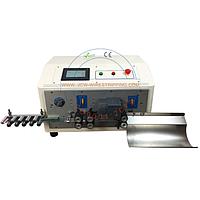
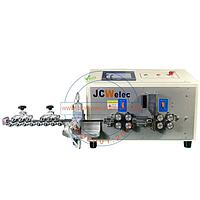
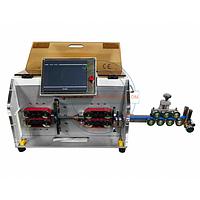
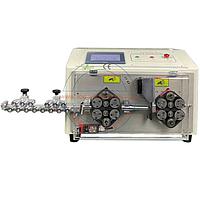
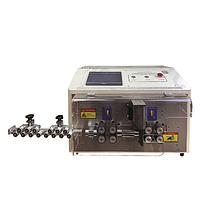
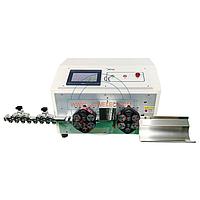
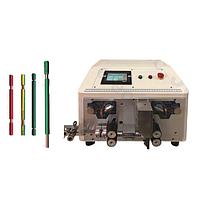
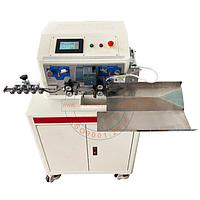
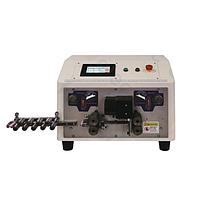
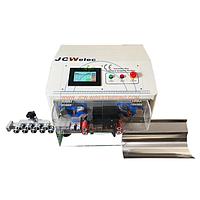
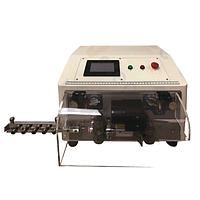
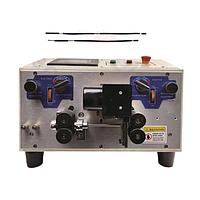
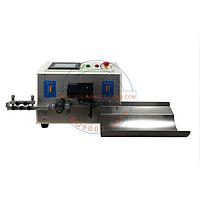
Wire stripping machine
Accurate insulation removal is one of the most important steps in wire preparation, especially when consistency, conductor protection, and production speed all matter at the same time. In cable assembly, control panel manufacturing, and harness production, the right stripping setup helps reduce scrap, improve downstream processing, and keep every cut-and-strip cycle repeatable.
Wire stripping machines are used to remove insulation from electrical wires and cables with better control than manual methods. For B2B users, this category is relevant not only for basic stripping tasks, but also for integrated preparation workflows that may include cutting, bending, crimping, bundling, or wrapping depending on the application and line layout.
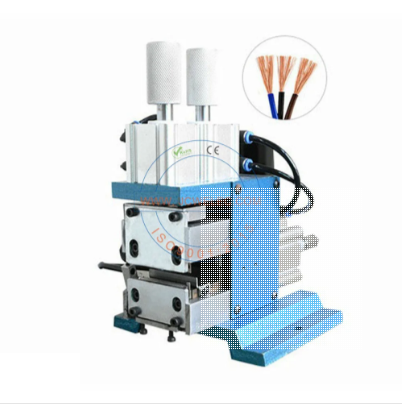
Where wire stripping machines fit in cable processing
In industrial production, stripping is rarely an isolated task. It usually sits between wire feeding and the next assembly step, which may include terminal attachment, routing, shaping, or packaging. That is why buyers often evaluate stripping equipment as part of a broader wire-processing workflow rather than as a standalone machine.
Depending on the process sequence, users may also compare this category with wire and cable cutting equipment when length control is the first priority, or with wire crimping machines when stripped conductors will move directly into terminal assembly. This kind of category overlap is common in production planning, and it helps narrow down the right machine configuration more efficiently.
What buyers typically look for in a stripping machine
Selection usually starts with the wire range. Cable diameter, conductor cross-section, insulation type, and required stripping length all influence whether a machine is suitable for the job. In many applications, the real challenge is not simply removing insulation, but doing so without nicking the conductor or creating variation that affects later termination quality.
Production teams also pay attention to programmability, setup time, and repeatability. A modern machine with a touch interface and stored programs can be useful in environments where multiple wire types are processed in short runs. For contract manufacturers and panel builders, repeatable stripping length and easy recipe changes can matter just as much as raw hourly output.
Typical applications across industrial environments
Wire stripping machines are commonly used in harness manufacturing, appliance wiring, control cabinet assembly, electronics production, and other operations where prepared conductors must meet consistent assembly standards. They are especially helpful where manual stripping would slow production, increase operator variability, or create unnecessary material loss.
For some jobs, stripping is combined with shaping or routing preparation. In those cases, machines that support more than one processing step can help reduce handling between stations. If the workflow continues into cable organization after stripping, users may also review winding and bundling systems to improve packaging or batch handling at the end of the line.
Example equipment in this category
One representative option is the Kingsingmanufacturer range, which includes equipment for wire preparation tasks. A relevant example from the current assortment is the Kingsing KS-W0110 Wire Stripping and Bending Machine, designed for applications that require both insulation removal and controlled wire forming in a single workflow.
Based on the available product data, the KS-W0110 supports wire diameters from 0.5 to 10 mm², adjustable stripping length, bidirectional bending, multi-segment bending programs, and a color touch-screen interface. It also supports stored program groups, which can be useful in production environments that switch between part numbers. Rather than viewing this type of machine as only a stripper, it is more accurate to see it as part of a multi-step wire preparation solution for operations that need more than a simple cut-and-strip cycle.
How to choose the right machine for your process
A practical way to compare models is to begin with the end result required on the wire. If the job only needs insulation removal, a standard stripping-focused machine may be sufficient. If the wire must also be cut to length, bent to a defined geometry, or prepared for immediate terminal attachment, then a more integrated machine may reduce handling time and improve consistency between stages.
It is also important to consider batch size, operator skill level, and changeover frequency. A machine that supports stored programs and a clear operating interface can be valuable for mixed production. Pneumatic requirements, power supply, and installation footprint should also be reviewed early, especially when equipment will be added to an existing assembly line or compact workshop layout.
Why process consistency matters
In wire preparation, small deviations can create larger issues later. Uneven stripping length may affect crimp positioning, exposed conductor length, connector fit, or overall assembly appearance. Damage to the conductor can also reduce reliability, particularly in applications where vibration, repeated handling, or electrical performance is critical.
This is why many manufacturers move from manual tools to dedicated equipment as volume increases. A properly selected wire stripping machine helps improve process stability, reduce dependence on operator technique, and support more predictable quality from one batch to the next. For companies balancing throughput and workmanship, that consistency is often the main reason to invest in automation.
Building a more efficient wire-processing workflow
For many buyers, the best decision is not just about one machine, but about how that machine connects to the rest of the production process. Stripping may be followed by crimping, taping, bundling, or final assembly, so it makes sense to evaluate equipment in relation to actual line requirements instead of comparing isolated specifications alone.
This category is therefore most useful for teams looking to improve wire preparation accuracy, support repeatable production, and reduce unnecessary manual handling. Whether you need a dedicated stripping solution or a machine that combines stripping with added functions such as bending, reviewing the process sequence first will make it easier to choose equipment that fits both the product and the workflow.
Get exclusive volume discounts, bulk pricing updates, and new product alerts delivered directly to your inbox.
By subscribing, you agree to our Terms of Service and Privacy Policy.
Direct access to our certified experts