Air Drying Equipment
Controlling moisture is a critical part of oil handling, transformer maintenance, and many industrial drying processes. When ambient air carries too much humidity, it can compromise insulation performance, reduce fluid quality, and slow down maintenance work. Air Drying Equipment helps create a stable supply of low-moisture air for applications where water contamination must be minimized.
In practice, this category is relevant for facilities that work with transformer oil, lubricating fluids, and process systems that depend on controlled drying conditions. The equipment in this range supports both direct air drying and related treatment workflows, making it easier to manage moisture, protect assets, and maintain more consistent process quality.
Where air drying equipment fits in industrial oil and transformer work
Dry air is often used to reduce the risk of moisture entering sensitive systems during service, storage, or oil treatment. In transformer-related applications, low-dew-point air can support insulation drying tasks and help maintain controlled conditions during maintenance. In oil handling environments, it also plays a role in limiting water ingress that may affect dielectric strength or overall fluid condition.
This is why air drying systems are often considered alongside related equipment such as oil dryer solutions. While the two categories serve different functions, they are closely connected in workflows where both air quality and oil condition need to be controlled.
Typical equipment approach in this category
Most systems in this category are designed to generate dry air with a low dew point and deliver it at a controlled pressure and temperature. Depending on the process, the air may be used for drying internal spaces, supporting regeneration cycles, or maintaining low-humidity conditions around sensitive equipment.
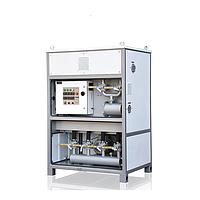
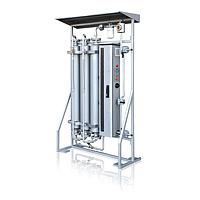
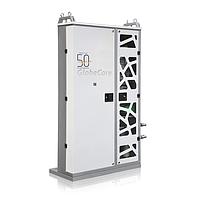
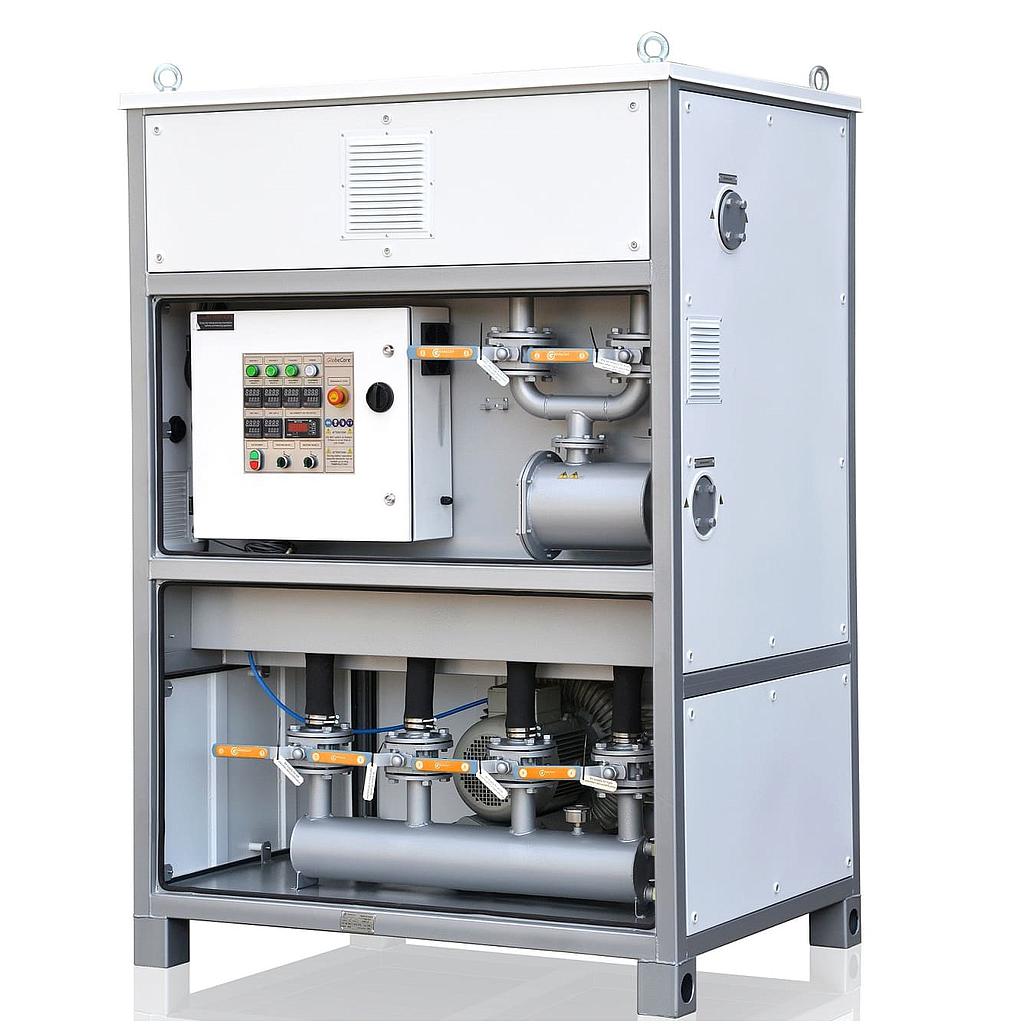
A practical example is the GlobeCore Mohave Heat series, which is designed for air drying duties in industrial settings. Models such as the Mohave Heat 0,7 and Mohave Heat 4 illustrate how different capacity levels can be selected depending on airflow demand, operating scale, and the overall drying task.
Representative GlobeCore solutions
GlobeCore is the main manufacturer represented in this category context, with equipment aimed at transformer and oil-processing environments. The Mohave Heat 0,7 Air Drying Unit is suited to applications requiring a dry air capacity of 100 m³/h, while the Mohave Heat 4 provides a higher 150 m³/h capacity for larger or more demanding operations.
These units are characterized by low dew point performance and elevated outlet air temperature, which are important when the process requires effective moisture removal or adsorbent regeneration support. Rather than viewing them as generic blowers, it is more accurate to see them as part of a controlled drying system used in maintenance and fluid-treatment ecosystems.
How to choose the right air drying equipment
Selection usually starts with the process requirement: how much dry air is needed, how low the dew point must be, and whether heated air is necessary. Airflow capacity, delivery pressure, and thermal conditions all affect whether a unit will match the intended operating scenario. A system sized too small may prolong drying time, while an oversized unit can add unnecessary energy and installation burden.
It is also important to consider the regeneration method, adsorbent configuration, and power demand. For example, some applications require continuous availability of dry air, while others prioritize regeneration performance for the drying medium itself. Evaluating these points early helps narrow the choice to equipment that is technically appropriate rather than simply comparable on headline capacity alone.
Relationship to transformer dry-out and oil treatment workflows
Air drying equipment is frequently used as part of a broader moisture-control strategy rather than as a standalone purchase. In transformer service environments, it may be associated with online dry-out systems that focus on reducing moisture in insulating oil and solid insulation under operating conditions. Products such as the GlobeCore TOR-4 and CMM-260C show how drying and oil treatment functions can be integrated into maintenance programs.
Where process verification is important, users may also look at complementary categories such as fuels testing equipment to assess fluid condition and support maintenance decisions. The exact combination depends on whether the priority is preventive monitoring, restoration, or a complete oil handling workflow.
Key considerations for operation and integration
Beyond nominal capacity, buyers should look at installation footprint, utility requirements, and how the equipment will be integrated into the existing process. Power supply, regeneration temperature, air heater demand, and overall machine dimensions can affect site readiness, especially in industrial maintenance areas with limited space or predefined electrical infrastructure.
Another important factor is process continuity. If the equipment will be used in planned transformer maintenance or routine oil service, ease of deployment and compatibility with surrounding treatment systems matter just as much as drying performance. In many cases, the goal is to build a reliable moisture-control setup that supports repeatable work rather than solving a one-time drying task.
Why this category matters for long-term asset care
Moisture is one of the most common causes of performance deterioration in insulating fluids and related equipment. By supplying dry air under controlled conditions, these systems help reduce the chance of contamination during service and support more stable maintenance outcomes. That makes them relevant not only for immediate drying operations, but also for broader asset reliability and lifecycle management.
For organizations working with transformer oils, lubricants, or fluid treatment processes, this category offers equipment that addresses a very specific but important need: maintaining low-moisture conditions where ordinary ambient air is not suitable. If your application also involves specialized heating and moisture control, it may be useful to review related air drying system options across the available range.
Final overview
Choosing air drying equipment is ultimately about matching the drying method to the process, not just comparing capacities. Dew point performance, temperature, airflow, regeneration design, and system integration all influence whether a unit will perform effectively in real operating conditions.
For buyers evaluating equipment for transformer maintenance, oil handling, or industrial drying support, this category provides a focused starting point. Reviewing the available GlobeCore models alongside the wider moisture-control workflow can help identify a solution that fits both the technical requirement and the operating environment.
Get exclusive volume discounts, bulk pricing updates, and new product alerts delivered directly to your inbox.
By subscribing, you agree to our Terms of Service and Privacy Policy.
Direct access to our certified experts