Sensor Development Tools
Early-stage sensor design moves faster when engineers can validate signal behavior, interface choices, and measurement stability before committing to a full hardware spin. Sensor Development Tools help bridge that gap by providing practical platforms for evaluation, prototyping, and application testing across a wide range of sensing technologies.
Whether you are comparing accelerometers, current sensing devices, optical sensors, or temperature-related solutions, these tools make it easier to characterize performance in realistic conditions. For engineering teams, lab environments, and embedded developers, they reduce setup time and support more confident design decisions.
Where sensor development tools fit in the design workflow
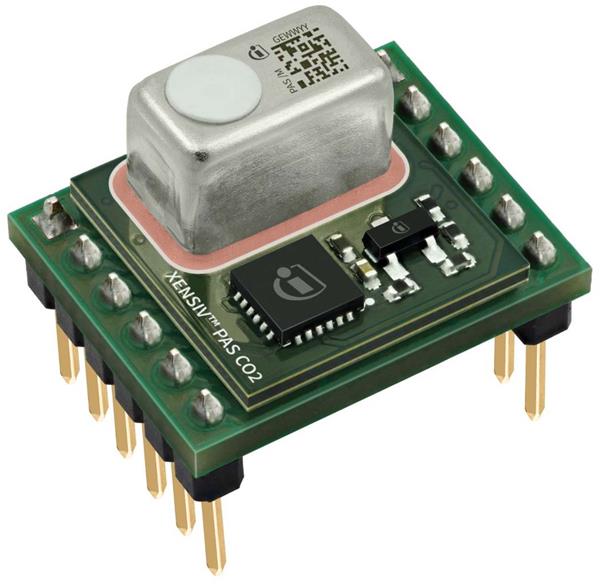
Development boards and evaluation kits are commonly used to test a sensor before it is integrated into a final product. Instead of building a custom test circuit from scratch, teams can use a ready-made platform to review output behavior, communication methods, and basic operating conditions. This is especially useful when comparing multiple sensing approaches for the same application.
In practice, these tools support activities such as proof-of-concept work, firmware bring-up, interface verification, and system-level testing. They are also valuable when a project depends on interaction with adjacent platforms such as communication development tools or when sensor output needs to be combined with other embedded subsystems during prototyping.
Common sensor types covered in this category
This category spans a broad set of evaluation platforms rather than a single sensing method. Depending on the project, engineers may need tools for motion detection, current measurement, optical response, environmental monitoring, magnetic field sensing, or position feedback. The value of the category lies in giving users a practical starting point for multiple sensor classes within one engineering workflow.
Examples from this range include boards for accelerometer evaluation, temperature-related testing, infrared sensing, barometric measurement, and optical or color-based detection. Some kits are focused on a single sensor function, while others are better suited to multi-parameter evaluation where several environmental variables or output modes are considered together.
Representative platforms and use cases
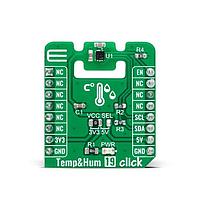
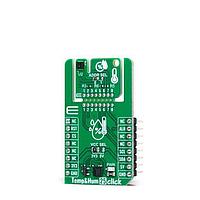
Several products in this category illustrate how development tools are used in real engineering tasks. The Analog Devices EVAL-ADXL001-250Z and EVAL-ADXL001-70Z are examples of accelerometer evaluation boards intended for reviewing motion and vibration sensing behavior. For teams working on thermal monitoring or environmental measurement, the Analog Devices EVAL-ADT7X20EBZ provides a convenient platform for temperature- and humidity-related evaluation.
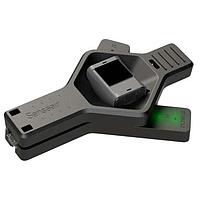
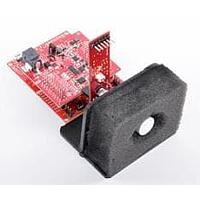
Current sensing and magnetic-related design work can be explored with the Allegro MicroSystems ASEK724LLC-20AB-T, while optical and vision-oriented projects may benefit from platforms such as the ams OSRAM NANEYEC RASPBERRY MONO EVK or TCS3472EVM. Simpler breakout-style options also appear in this category, including Adafruit boards for infrared or barometric sensing, which can be useful in education, rapid proof-of-concept work, and embedded experimentation.
How to choose the right evaluation board
The first consideration is the sensing principle required by the application. Motion, temperature, pressure, optical response, and current measurement all introduce different electrical interfaces, mounting considerations, and test methods. Choosing the right tool starts with identifying what physical parameter must be measured and how that signal will be used inside the system.
Next, look at how the board fits into your existing development environment. Some teams prioritize fast bench testing with straightforward connections, while others need compatibility with host processors, software utilities, or rapid integration into a broader embedded setup. If the project also includes imaging or visual acquisition, related categories such as cameras and camera modules may be relevant during the same development phase.
It is also worth considering whether the goal is component validation, algorithm development, or system integration. A compact breakout board can be enough for basic signal checks, while a more complete evaluation kit may be better suited for structured testing, repeatable measurements, and software-assisted analysis.
Leading manufacturers in this category
This selection includes development tools from widely used suppliers such as Analog Devices, ams OSRAM, Allegro MicroSystems, and Adafruit. Each brand brings a different emphasis to the category, from precision sensing and motion evaluation to optical platforms and maker-friendly prototyping hardware.
For example, Analog Devices appears prominently in accelerometer, battery-related sensing evaluation, and environmental sensing boards, while ams OSRAM is strongly represented in optical and position-oriented development platforms. Adafruit products in this area are often practical for quick interface testing and educational prototyping, especially when a project needs a simple path from sensor breakout to firmware experimentation.
Integration considerations for engineering teams
A development board is only one part of the evaluation process. Engineers also need to think about data capture, calibration approach, signal conditioning, host communication, and mechanical placement during testing. These factors can have a major impact on observed sensor behavior, especially when moving from a benchtop setup to a field or production environment.
In some workflows, sensor boards are paired with memory, control, or connectivity platforms to simulate the final product architecture more closely. When projects involve data logging or firmware validation beyond the sensor itself, adjacent resources such as memory IC development tools can help extend the prototype into a more complete test system.
Who benefits from this category
Sensor development tools are relevant to product designers, embedded engineers, R&D teams, test engineers, and technical educators. They support early feasibility studies, design comparison work, and the practical validation needed before final circuit design or enclosure decisions are made.
They are equally useful in industrial electronics, smart devices, instrumentation, and application labs where teams need to shorten evaluation time without sacrificing technical clarity. By starting with a proven development platform, users can focus more on interpreting sensor behavior and less on building basic support hardware from the ground up.
Final thoughts
A well-chosen sensor evaluation platform can make the difference between a slow trial-and-error process and a more structured development cycle. This category brings together tools that support real testing across motion, optical, environmental, magnetic, and current-related applications, giving engineers a practical route from concept to design validation.
If you are narrowing down options, focus on the target measurement type, required interface workflow, and the level of integration needed for your prototype. That approach will help you identify the most suitable development board or kit for your next sensing project.
Get exclusive volume discounts, bulk pricing updates, and new product alerts delivered directly to your inbox.
By subscribing, you agree to our Terms of Service and Privacy Policy.
Direct access to our certified experts